
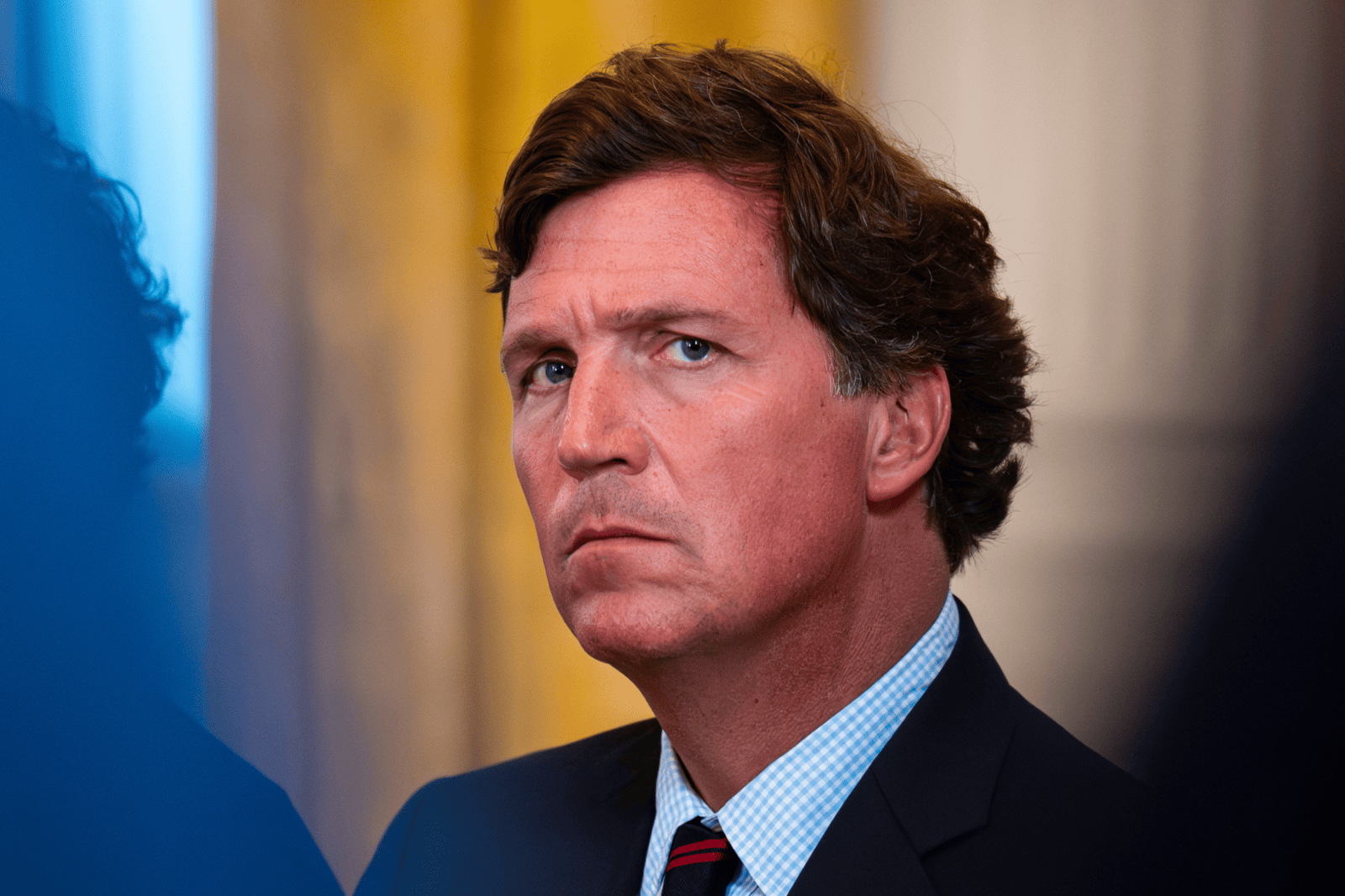
Tucker Carlson has ignited controversy following remarks suggesting Britain’s decision to engage Nazi Germany in World War II was misguided. In a conversation with former British lawmaker Sir Jacob Rees-Mogg, Carlson questioned whether Britain should prepare for a potential conflict with Russia and examined the historical decision to enter WWII.
The exchange, over an hour long, was posted on Carlson’s social media account, transitioning from current security concerns to the value of Britain’s WWII entry. Carlson clarified he was not excusing Hitler, stating, “I’m certainly not here defending Hitler.”
Importance of the Discussion
Carlson’s perspective challenges a widely accepted historical consensus, drawing criticism from American right-wing figures. This places Carlson at the center of broader debates on military intervention, national interests, and the costs of war.
Main Arguments
The conversation began as Rees-Mogg noted the inevitability of innocent deaths in WWII. Carlson responded by questioning the rationale for the war. Addressing Hitler’s territorial ambitions, Carlson mentioned Germany’s losses post-Treaty of Versailles as justification for the invasion of Poland. He argued that the war diminished Britain’s imperial power without clear benefits for its citizens. Rees-Mogg countered that defeating Nazism was essential, calling it “the classic good versus evil” battle that prevented German domination.
Carlson criticized this notion by questioning the tangible improvements for Britons post-WWII. Rees-Mogg dismissed this economic view, emphasizing preserved national pride by overcoming what he termed “the greatest evil the world has known.”
Conservative Reactions
Republicans and other conservative commentators widely rejected Carlson’s stance. U.S. Ambassador Mike Huckabee accused Carlson of implying Britain should have accepted Nazi rule, referencing Hitler’s atrocities. Former MEP Lance Forman echoed Huckabee, stating Carlson was beyond help. Texas Senator Ted Cruz affirmed that both the UK and the USA are better for winning WWII.
British commentator Christopher Snowdon critiqued Carlson’s logic, suggesting that foreign occupation impacts nationhood, unless hypothetically Nazi, in which case the matter was trivialized. Meghan McCain mocked the conversation as absurd, urging comedy shows to highlight its absurdity.
Carlson’s Argument and Ideology
Despite Carlson’s provocative comments, he did not endorse Nazi ideology. His critique focused on questioning the benefits of Britain’s war decision and the necessity of German deterrence. The interview exposed Carlson’s noninterventionist views, suggesting that governments should justify wars by proving material benefits to their populace. Rees-Mogg differed, viewing resistance against an aggressive regime as inherently valuable.
The debate raised significant questions about evaluating national survival, both in terms of postwar outcomes and the futures avoided by conflict.
Other Topics Addressed
The interview also covered Britain’s support for Ukraine and military readiness, with Rees-Mogg advocating for strength without provoking Russia. They also discussed the atomic bombings of Hiroshima and Nagasaki, NATO, immigration, and free speech. On the issue of free speech, both agreed on its importance despite agreeing on little else.