
President Trump’s strategy to resolve the conflict with Iran involves postponing the most difficult issues. This method has previously shown mixed outcomes, such as in Gaza.
The ongoing negotiations between the United States and Iran reflect President Trump’s usual approach to Middle East crises. The plan includes agreeing to a cease-fire and addressing the tougher problems at a later stage.
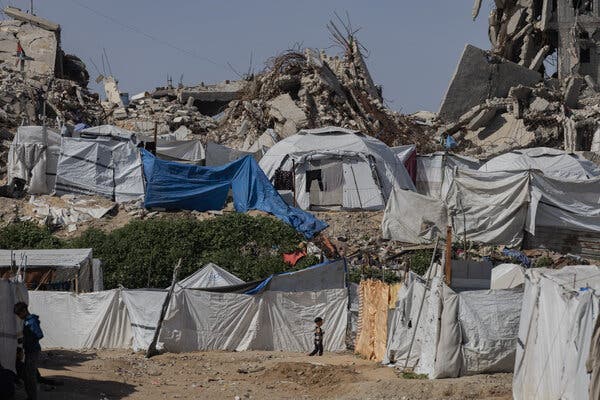
Experts note that this strategy has had varying levels of success in the Gaza Strip. Last year, President Trump helped broker a truce between Israel and Hamas, a militant group supported by Iran. However, plans for a Phase 2 agreement have faltered. This phase was supposed to lead to disarmament by Hamas and the reconstruction of Gaza. Similar risks might jeopardize U.S. talks with Iran.
The Trump administration’s recent proposal targets lifting Iran’s blockade of the Strait of Hormuz. This vital passageway in the Persian Gulf is crucial for oil and gas shipments. Iran imposed a near blockade here following a U.S. and Israeli attack in February, causing energy prices to surge and increasing domestic pressure on President Trump due to rising costs.
Some of the more complex issues, which President Trump cited as reasons for initiating the war, would be addressed later. These include ending Iran’s nuclear program and tackling its missile stockpiles and militia support across the Middle East.
Michael Koplow, chief policy officer at the Israel Policy Forum, argues that a phased approach to negotiations can be effective. However, in Trump’s case, it might allow him to declare success without resolving fundamental conflicts.
Analysts also point out that Iran’s leaders, buoyed by the military confrontation, may be less willing to make concessions in upcoming discussions.