
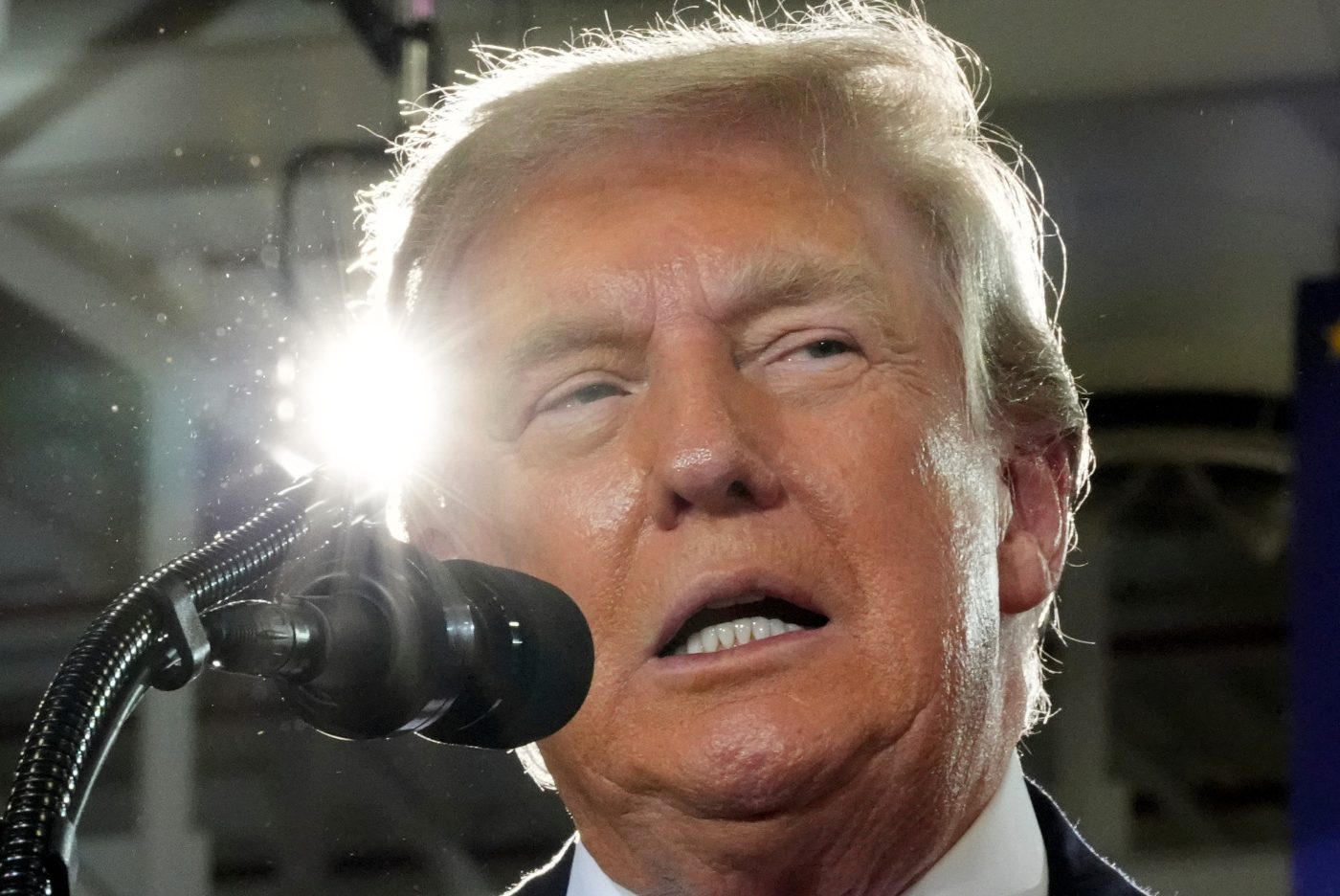
President Donald Trump recently spoke at General Motors’ proving ground in Milford, Michigan, delivering a campaign rally that raised eyebrows. He praised the American auto industry’s so-called success, attributing it to hard-working Republicans in Washington. However, his claims seem disconnected from reality.
Under Trump’s policies, including tariffs, the auto industry has faced severe challenges. Since 2025, these tariffs have led to over 60,000 job cuts among auto industry suppliers. General Motors alone reported more than 3,300 layoffs in the previous year.
Ford executives in April asked the White House to ease tariffs, which had sharply reduced sales of the F-150, a bestselling truck for decades. The negative impact on the industry is further evidenced by Stellantis reporting a significant loss of $26.3 billion, its first since 2021, following Trump’s decision to cut tax credits for electric vehicles.
Despite these struggles, Trump claimed, “I’ve done more for you than your parents.” He spoke to GM employees about how tariffs and the election benefited General Motors, despite the company experiencing a 3.5 percent drop in auto parts manufacturing jobs within the last year.
Trump’s refusal to acknowledge the adverse effects of his tariffs on the American auto industry remains concerning. The Supreme Court deemed these tariffs illegal this summer. Yet, Trump’s commitment to his policies seems unyielding, regardless of their fallout on consumers.
Since 2024, public sentiment toward Trump’s tariff strategy has soured. A Navigator Research survey in August 2024 revealed that only about 35 percent of voters disapproved of Trump’s tariffs at that time. However, voter disapproval grew month by month in 2025. Currently, around six in 10 voters disapprove of his tariff approach. More significantly, the opposition is often strong.
Republicans defending swing districts in upcoming elections find Trump’s stance challenging. Republican strategist Marc Short noted, “This is going to be punishing for Republicans politically.” The effect of his policies is noticeable among the Republican electoral base, though seemingly unrecognized by the administration.
According to the latest Navigator data, 52 percent of non-MAGA Republicans and independents disapprove of Trump’s tariffs. Of these voters, 64 percent found Democrats’ messages on affordability effective, highlighting how the tariffs increased costs for ordinary people.
“Trump’s most unpopular issue is putting the economy’s impact front and center for those it hurt the most.”
Trump’s decision to promote his tariffs in Detroit appears misguided. Who advised him on this strategy? The administration’s handling of this situation underscores a disconnect from the White House’s perception of its policies.
As November approaches, Democrats aim to heighten public awareness of Trump’s pride in policies perceived as detrimental to the industry and the public. This political season provides a chance for voters to express their discontent and recalibrate priorities.
Max Burns, a seasoned Democratic strategist and founder of Third Degree Strategies, authored this analysis. © 2026 Nexstar Media Inc. All rights reserved. Unauthorized reproduction is prohibited.