
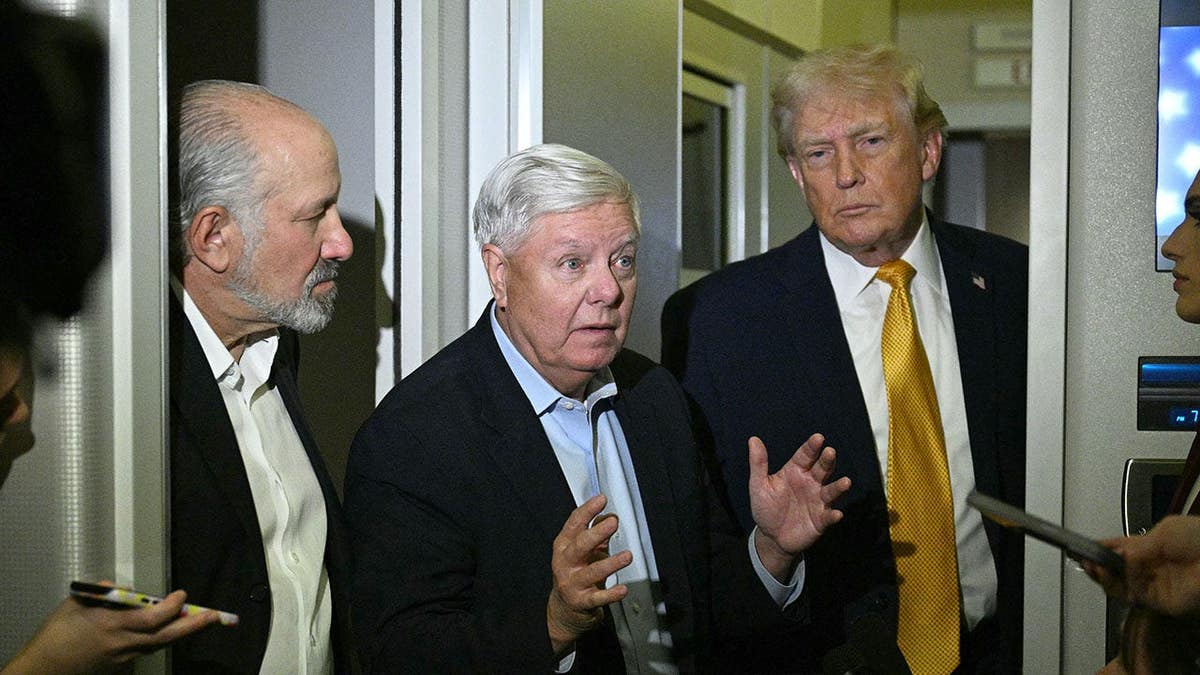
In 2015, Sen. Lindsey Graham called Donald Trump a “jackass” and warned Republicans that nominating him would result in a disaster. Trump retaliated by announcing Graham’s personal cellphone number during a campaign rally, urging his supporters to call the senator from South Carolina.
Initially, the rivalry between Graham and Trump appeared unlikely to turn into a pivotal foreign policy partnership. Trump gained traction advocating for an end to America’s “endless wars,” challenging traditional Republican foreign policy. Graham, on the other hand, had consistently supported projecting American influence globally.
FROM ‘DISGRACE’ TO ‘FAMILY’: TRUMP’S REMARKABLE JOURNEY WITH LINDSEY GRAHAM
Despite their differences, over the next decade, Graham emerged as one of the few lawmakers with consistent access to President Trump on matters of national security. He became a prominent Republican voice on key issues such as Iran, Ukraine, Israel, and NATO.
Graham’s Senate career was largely built around foreign policy. While many of his peers spent weekends at home, he frequently traveled abroad, meeting presidents, visiting conflict zones, and negotiating agreements between allies and the White House.
Following Graham’s sudden death on Saturday, Trump described him as “like a member of the family.” Trump was among the last people to speak with Graham after his return from Ukraine just hours before his passing.
During Trump’s presidency, as he reshaped Republican foreign policy with his “America First” agenda, Graham was one of the few voices in Congress with regular access to the president regarding issues of war and peace. Graham often advocated for a strong U.S. presence abroad, even as Trump questioned established alliances and warned against prolonged military engagements.
Graham managed to establish one of the closest working relationships with Trump, granting him considerable influence as the administration dealt with conflicts from Ukraine and Iran to Israel and NATO.
Whether Graham simply echoed Trump’s instincts or played a role in shaping them may be a key question regarding his foreign policy legacy.
GRAHAM REPORTEDLY REFUSED MEDICAL HELP BEFORE SCHEDULED TV APPEARANCE
“He would call me all the time,” Trump told Fox News. “I’d say, ‘Stop calling me, Lindsey.’ It was amazing. He just never stopped. He was a worker — a total workaholic politician.” Colleagues noted that Graham lived and breathed the Senate’s work, serving as an informal envoy between the U.S. and allies worldwide.
Before his death, Graham told a confidant he felt unwell but joked he couldn’t pass away yet because he still had work to do. He was focused on advancing a bipartisan Russia sanctions bill, Saudi-Israel normalization, and confronting Iran under the Trump administration.
Graham had made ten trips to Ukraine and maintained strong relationships with President Volodymyr Zelenskyy, Israeli Prime Minister Benjamin Netanyahu, and other international leaders.
Jack Keane, a retired Army general and Fox News strategic analyst, described Graham as someone who preferred direct contact with world leaders rather than writing op-eds or making speeches. “He wanted firsthand contact with leaders,” Keane told Fox News Digital. “He was interested in getting the results.”
Graham had conceded that Trump understood the American public better than he did and decided to become useful for the president.
According to Keane, “Graham knew the world better than almost anyone in Washington and likely knew many foreign leaders better than Trump’s appointees.” Graham’s decision to offer advice and counsel led to a personal and professional relationship with Trump.
Graham’s worldview was influenced by late Senators John McCain and Joe Lieberman, forming the “Three Amigos,” who championed an interventionist Republican foreign policy.
Graham often disagreed with Trump over Iran negotiations and pushed for a firmer stance against Russia regarding Ukraine.
Despite differences, Graham sought to maintain his role as one of Trump’s closest advisors.
Whenever Trump seemed to lean towards negotiating settlements with Iran, Graham would remind the White House about Congress’s review role for lasting agreements.
After Trump announced a memorandum of understanding with Iran, Graham argued for congressional scrutiny and involvement.
By the time of his death, Graham had become a trusted intermediary between the White House, Congress, and foreign leaders. His presence in Washington was pivotal for Ukraine.
Oleksandr Merezhko, a Ukrainian lawmaker, described Graham’s loss as huge and unexpected, noting his crucial role as a connection between Ukraine, its president, and Trump.
Sen. Amy Klobuchar praised Graham’s eagerness and commitment to his responsibilities worldwide.
White House deputy chief of staff Stephen Miller described Graham as a dedicated senator who thoroughly believed in the office’s splendor.
While Trump often questioned NATO’s value, Graham remained steadfast in his belief in its strategic importance.
Graham viewed alliances as America’s strategic advantage, and although he agreed European nations needed more defense spending, he considered the alliance crucial for deterring Russia.
Israel was central to Graham’s worldview. He spent years strengthening ties between Israel and Arab states.
Without Graham in Washington, Ukraine fears losing an indispensable advocate.
“Our position in Trump’s entourage might be weaker,” stated Merezhko.
The future navigation of Graham’s Russia sanctions bill remains uncertain, leaving the administration to manage wars without his guidance.