
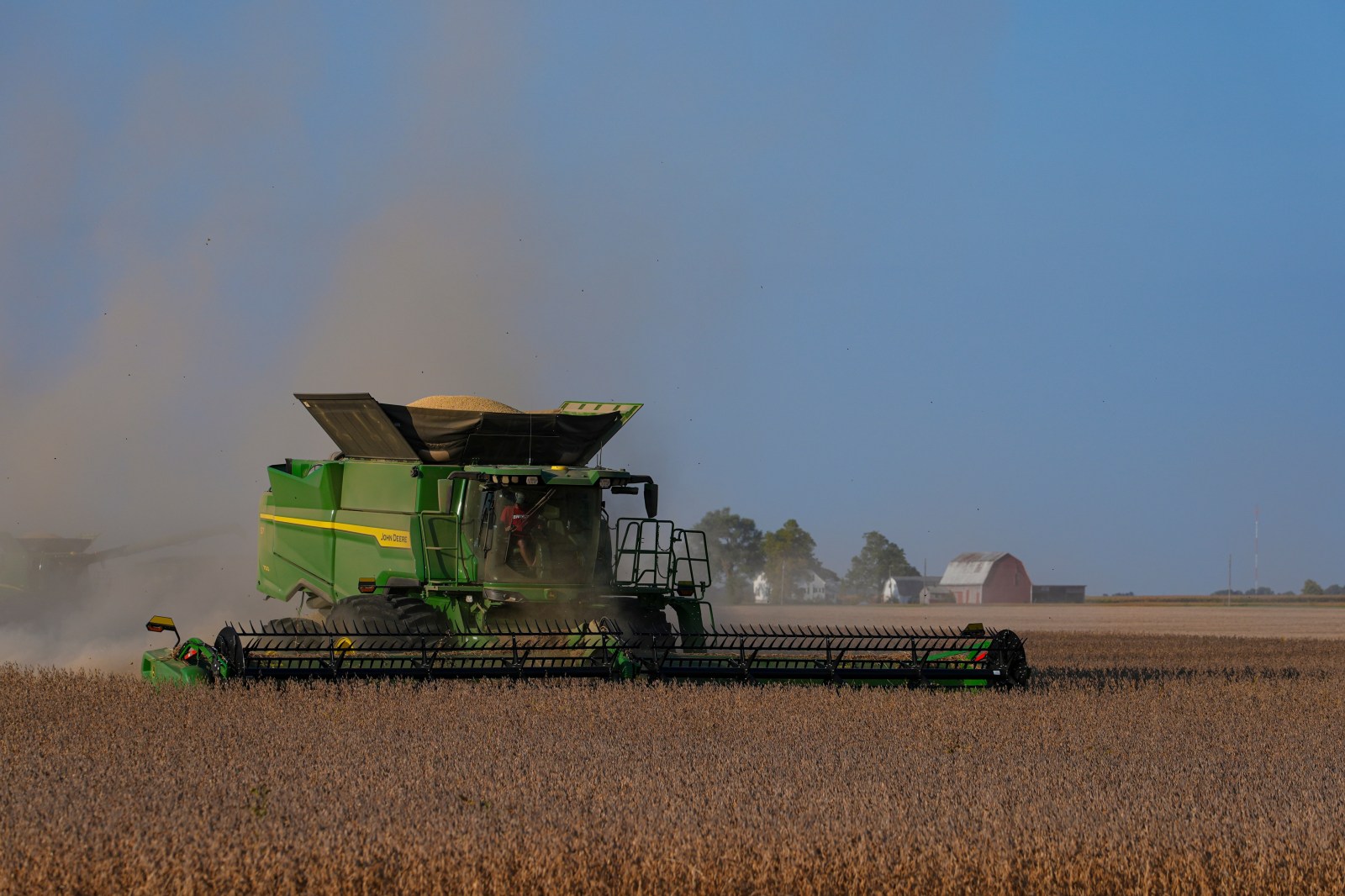
The Trump administration announced the allocation of $8 billion in one-time payments aimed at assisting farmers burdened by increased input costs. These costs are primarily associated with diesel prices, which averaged over $6 per gallon nationally at the time of the announcement. The aid, according to Aaron Lehman, president of the Iowa Farmers Union, represents a temporary measure insufficient to address the underlying issues causing farmers’ financial difficulties. Lehman criticized the timing and impact of the aid, calling it a ‘Band-Aid response’ two weeks before the election, citing the Iowa Farmers Union’s endorsement of Democratic candidates for the November 3 midterm elections.
As the midterm elections approach, the administration is implementing the Harvest Fuel Relief program during the fall harvest season. This program, set out by the U.S. Department of Agriculture (USDA), aims to alleviate temporary market disruptions and increasing input costs. The funding, authorized through the Commodity Credit Corporation Charter Act, will be managed by the Farm Service Agency.
The announcement was made with pride by Agriculture Secretary Brooke Rollins, who expressed optimism about the program’s ability to bring certainty to farmers, allowing them to continue their vital role in feeding the nation.
The USDA plans to provide assistance using a specific formula that factors acreage reported to the Farm Service Agency, production-cost estimates from the Economic Research Service, and yield and price information from the USDA’s World Agricultural Supply and Demand Estimates. While payment rates for Title I commodities are expected to be detailed in November, other commodity eligibility guidelines are yet to be announced. As of Tuesday, no application opening date or payment schedule had been disclosed.
This program follows earlier provisions of $12 billion in Farmer Bridge Assistance payments to over 560,000 farmers. The rise in diesel prices on a global scale, influenced by conflicts such as the Iran War, has been a notable cause of this financial strain.
Critics like Lehman emphasize the need for sustained efforts beyond one-time payments. By attributing the economic strain to trade disputes and military conflicts, Lehman called for genuine solutions addressing these root causes to protect farmers from the consequences of policy decisions. Additional critique from Mark Williams, finance lecturer at Boston University, points out that the $8 billion subsidy lacks the ability to resolve underlying factors such as international energy disruptions.
Williams argues that instead of temporary financial assistance, resolving conflicts like the one with Iran and establishing stable energy policies are necessary for lowering diesel prices and fertilizer costs. While fostering lasting relief, these measures could mitigate international energy disruptions affecting farmers.
Though the USDA’s program intends to provide proportional payments based on a uniform formula, the rollout lacks detailed payment rates, eligibility methodologies, and schedules. Concerns include potential favoring of large corporate farming operations over smaller farms and the risk of overwhelming federal agencies, creating bottleneck issues.
Throughout the debate on temporary assistance, farm leaders have welcomed aid but called for comprehensive solutions. National Farmers Union President Rob Larew acknowledges the aid will help some farmers but insists on the need for more stable, long-term solutions. Likewise, National Corn Growers Association President Matt Frostic urges durable, bipartisan actions recognizing increasing input costs.
Amid national diesel price averages surging from $3.62 per gallon a year ago to about $6.32 on October 20, these figures reflect the substantial price increase, as evident in Iowa’s diesel price trends.
On Monday, Trump announced the program at a Kansas campaign rally, affirming support for Republican Senator Roger Marshall. He linked future aid prospects to a Republican victory, promising even more funding for farmers.
Facing mounting pressure from farmers struggling with higher operating expenses, the $8 billion package arrives in a politically charged climate where agricultural concerns have become central in midterm discussions.