
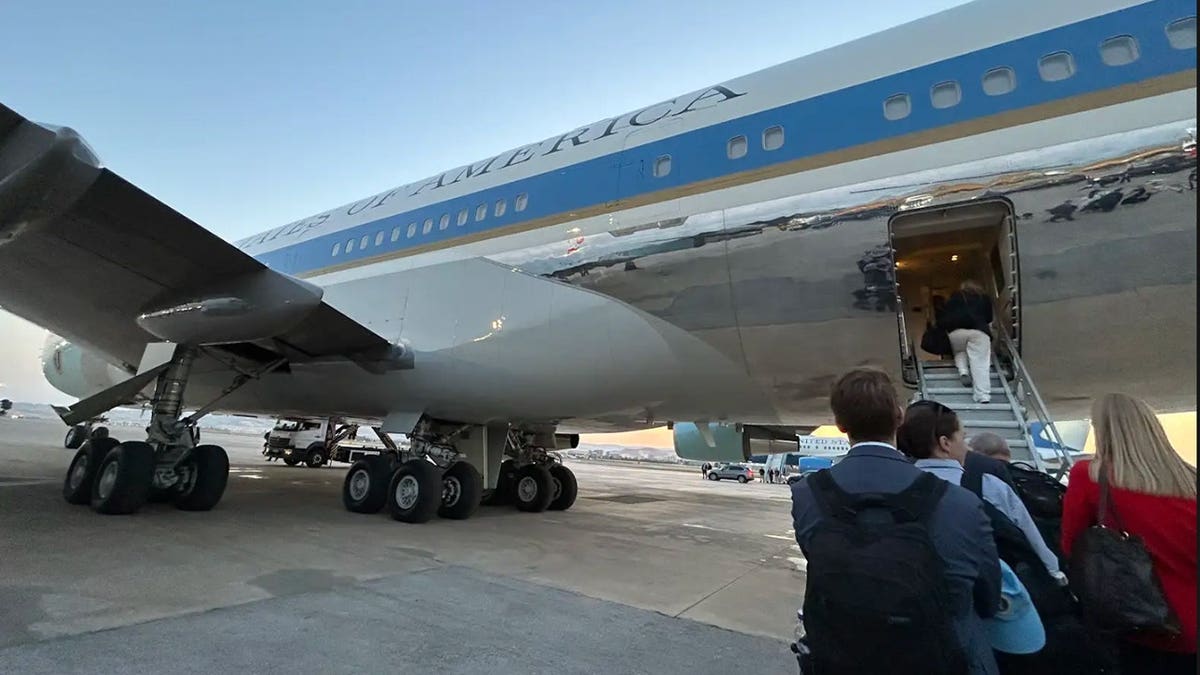
President Donald Trump’s recent security maneuvers during his trips on Air Force One have attracted attention due to their complexity and historical precedence. One significant occurrence was his departure from Ankara, Turkey, which was marked by a sophisticated decoy operation amidst a credible threat from Iran.
Historical Context
The strategy of using decoy operations to mask the president’s movements aboard Air Force One is not new. Trump’s approach, involving discreet departures and alternative aircraft, has roots in earlier presidential trips. A key example is his unexpected visit to Iraq on December 26, 2018, which included a darkened cabin and an altered call sign to obscure the jet’s presence. This attempt was foiled by a British plane spotter, leading to further enhanced tactics in the following years.
Ankara Departure
On July 8, Trump conducted an elaborate maneuver while leaving a NATO summit in Ankara due to a perceived Iranian threat. He used a catering truck to discreetly exit from Air Force One and boarded a modified Boeing 757, the Air Force C-32A, with the initial aircraft taking off with journalists aboard as a decoy. This operation featured a change in call signs to keep enemies uncertain about his whereabouts.
Trump’s public persona included boarding the legacy Air Force One visibly and waving before the decoy aircraft departed. Reports later revealed how he switched planes out of the view of most of the entourage.
Previous Precautions
Trump had previously dealt with heightened security during other trips to hostile regions. His Christmas trip in 2018 was conducted under strict secrecy, including discreet operations similar to those used for flights into conflict zones.
The 2019 Thanksgiving Day trip to Afghanistan reinforced the need for concealment. It involved misdirection with decoys, such as keeping a presidential aircraft at Palm Beach, while Trump traveled on a smaller, less conspicuous aircraft.
Comparative Examples
The decoy tactic is not unique to Trump. In 2000, President Bill Clinton used a similar approach on a risky trip to Pakistan. Such measures underscore the importance of security in high-risk environments.
The Ankara operation highlights the White House’s commitment to safeguarding the president. U.S. fighter jets escorted the decoy plane, ensuring its safety despite the ongoing threat. This sophistication reflects a developed strategy derived from past experiences.