
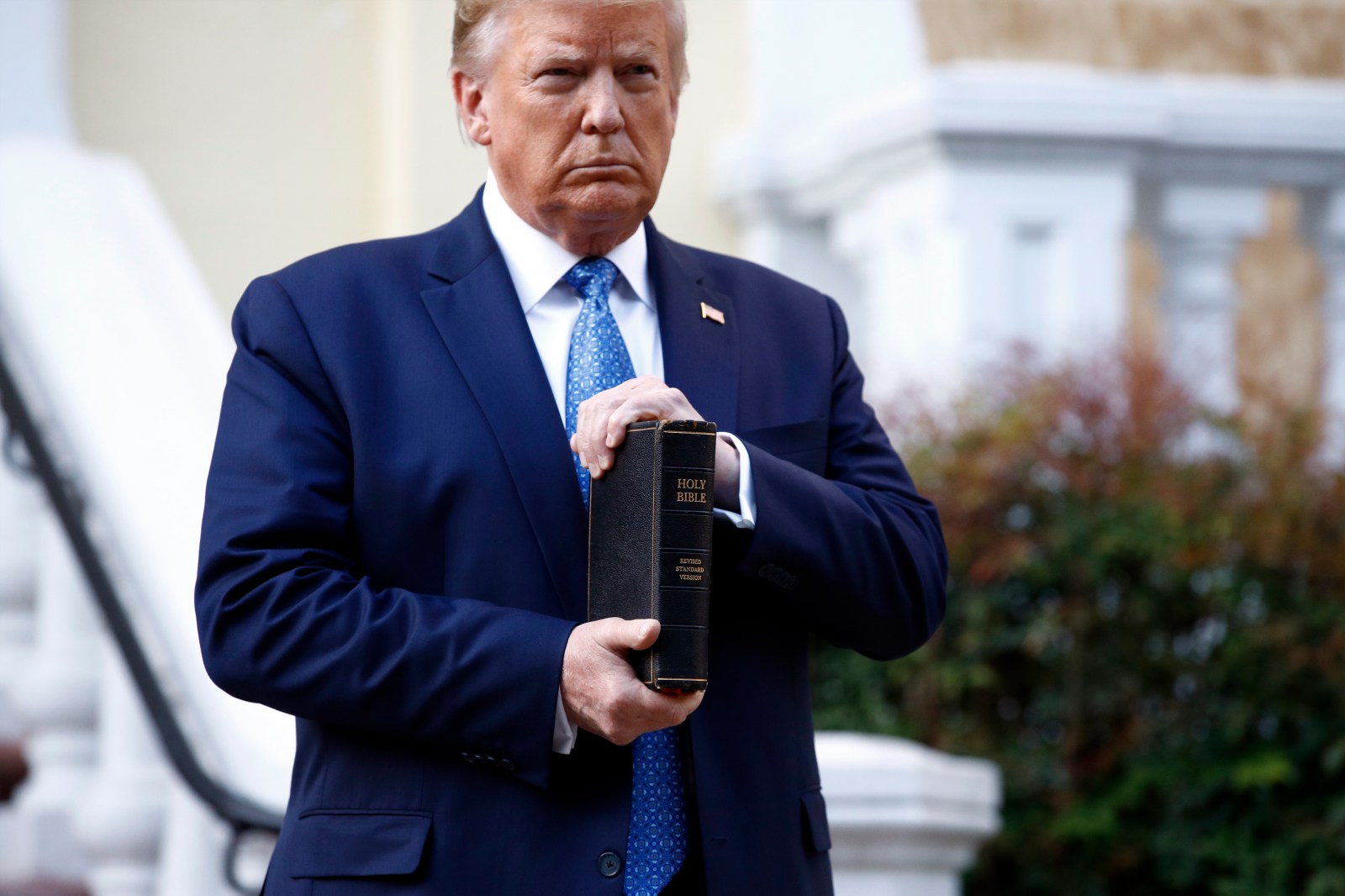
President Donald Trump’s latest warning to Iran suggests a biblical level of retaliation in the Strait of Hormuz. His statement indicates that for every missile, rocket, or drone attack on U.S. ships, the United States will respond by targeting an Iranian bridge or power plant.
On Wednesday, Trump announced on Truth Social that if Iran attacks ships in the Strait, the U.S. will retaliate by destroying infrastructure, even sites near Tehran. This aligns with Trump’s preference for straightforward policies easily comprehensible without complex explanations.
Trump’s approach to international relations often resembles a tit-for-tat strategy. His trade agenda showcased a similar methodology, focusing on fairness and reciprocity. After General Qassem Soleimani’s death in 2020, Trump had listed 52 Iranian targets, mirroring the number of Americans taken hostage in 1979. In 2019, tensions rose when Trump halted strikes on Iran, deeming the potential loss of life disproportionate.
The strategic importance of the Strait of Hormuz adds complexity to Trump’s retaliatory promise. The U.S. Energy Information Administration reported that in 2024, the strait facilitated the passage of about 20 million barrels of oil daily, constituting a significant portion of global consumption.
Iran’s recent history of aggressive actions has heightened concerns. U.S. Central Command reported over 30 attacks on commercial vessels by Iran in the past three months, threatening maritime security and navigation freedom.
The effectiveness of Trump’s threat rests on three factors: Iran’s belief in Trump’s resolve to act, the U.S.’s ability to manage potential escalation, and whether the Iranian regime considers the cost of a U.S. strike greater than its propaganda benefits.
This strategic rhetoric may function more as a negotiation tool, aiming to simplify deterrence and influence Tehran’s actions by attaching concrete consequences to their decisions. Iran faces several options: cease attacks, test the U.S.’s resolve with limited strikes, or escalate into a cycle of retaliation.
Geopolitical strategies resembling biblical justice present risks; while memorable, such approaches need adaptation to modern complexities, like ensuring the Strait of Hormuz remains operational.