
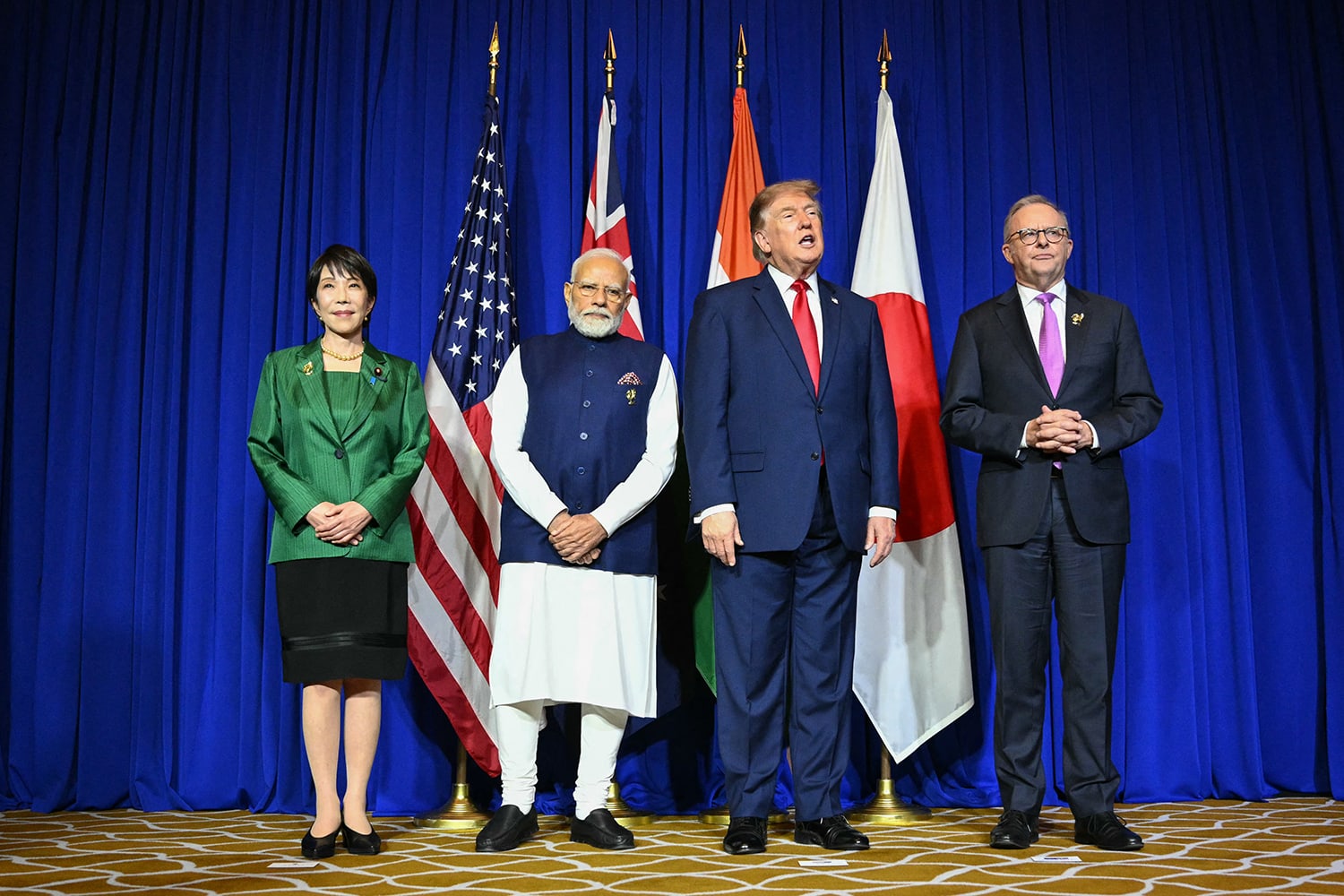
President Donald Trump has arrived in Manila for the ASEAN summit, marking his first stop on an extensive trip through Asia. During these regional gatherings, Trump will further engage with key leaders to address critical international issues.
Trump’s Agenda in Asia
Following his participation in the ASEAN summit, Trump will proceed to China for the Asia-Pacific Economic Cooperation forum. A significant part of this event will be a historic trilateral meeting with Chinese President Xi Jinping and Russian President Vladimir Putin, focusing on nuclear disarmament and the conflict in Iran.
Before departing, Trump expressed openness to the possibility of reappointing Jensen Huang as CEO of Nvidia after the latter stepped down amidst allegations of extramarital affairs with a suspected Chinese intelligence operative. Additionally, Trump alluded to a potential meeting with North Korean leader Kim Jong Un, suggesting a revival of their previous diplomatic dialogues.
Nvidia and U.S. Security Measures
In response to the recent Nvidia scandal, the company has instituted a national security oversight committee. This committee will address compliance with export controls and manage trade risks. Trump acknowledged this move as beneficial in light of heightened concerns over U.S. exports to China, especially concerning AI technologies.
In line with strategic moves, the Trump administration has announced plans to further limit China’s access to advanced AI chips produced by American companies like Nvidia and AMD. This move targets loopholes previously exploited through foreign data centers.
Trump and the Quad
Despite having previously sidelined the Quad, Trump has been actively strengthening ties with its members: Japan, India, and Australia. On this trip, he engaged with these leaders, reinforcing their collective stance in countering China’s influence.
Historically, the Quad has faced criticism from China, which views it as an effort to contain Beijing’s influence in the region. Contrarily, the Biden administration had prioritized more active Quad engagement, aiming to address broader issues like infrastructure and climate change.
Geopolitical Tensions and Infrastructure Initiatives
Amidst global geopolitical tensions, protests erupted in Manila by indigenous communities opposing U.S.-led initiatives like the Pax Silica. This program aims to create China-free supply chains for AI and critical minerals, crucial for ensuring energy and resource security but potentially affecting local communities.
As Trump navigates these diplomatic waters, he continues to prioritize strengthening international allies and addressing territorial disputes in strategic regions like the South China Sea.