
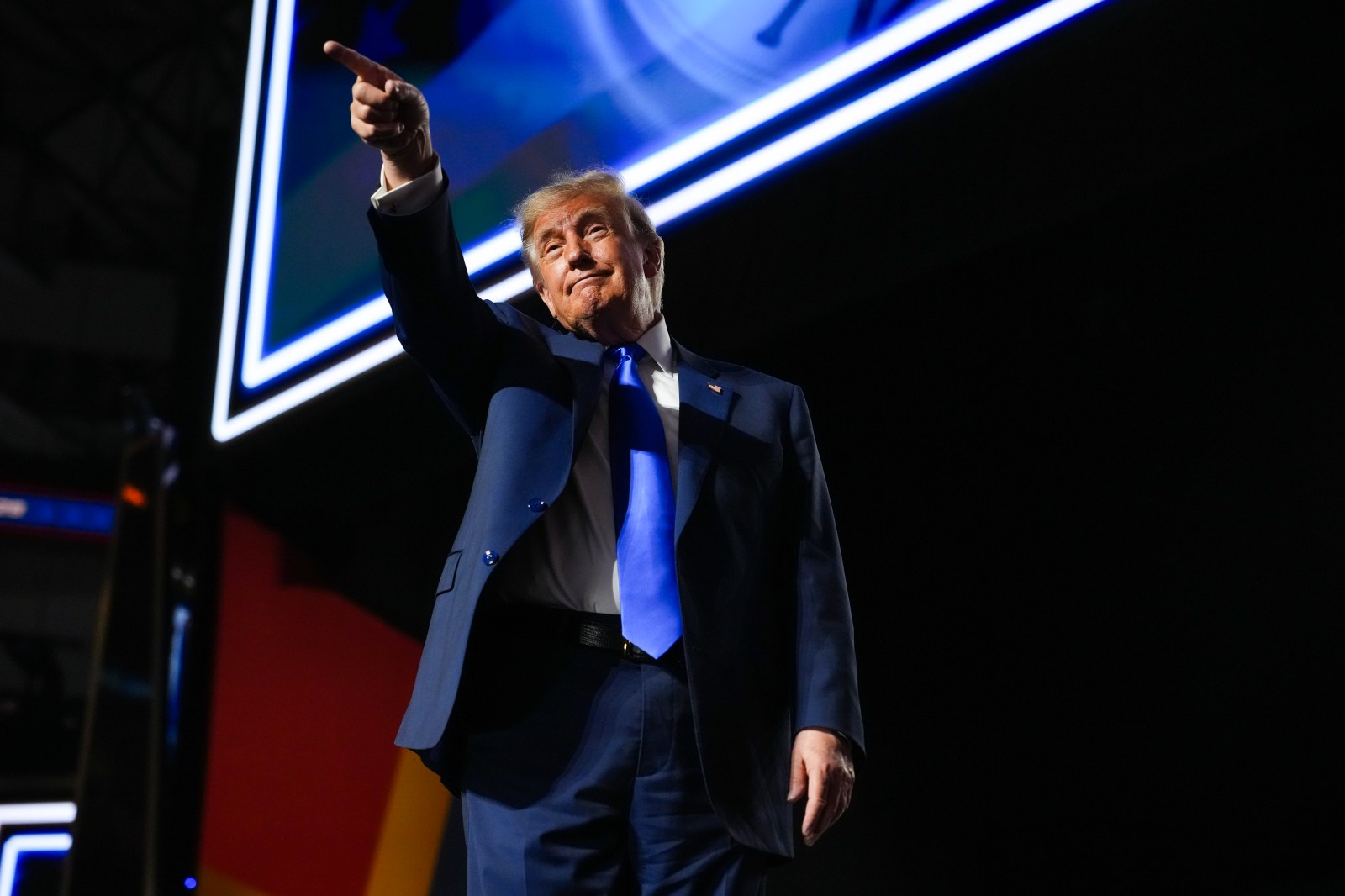
President Donald Trump proposed a $5,000 payment to Americans if Republicans secure victories in both the House of Representatives and the Senate during the 2026 midterms. Legal experts question whether this promise could withstand court challenges.
Trump’s Announcement at the Republican National Convention
During the Republican National Convention in Dallas, Trump made the announcement. He referred to the proposed payment as the “Trump dividend,” tying its distribution to Republican control of Congress. Trump’s statement comes amid polls showing Republicans struggling in key Senate races across states he won in 2024, such as Alaska, Iowa, Michigan, North Carolina, Ohio, Georgia, and Texas.
“Because of our tremendous strength and success economically, I will issue a dividend to every adult citizen in the United States of America for $5,000,” Trump stated. “Much like a successful company distributes cash to its shareholders.”
The Republican party held this unprecedented midterm GOP convention to energize their base. Despite these efforts, Trump’s approval ratings have declined, with voters voicing concerns over tariffs, inflation, and living costs. Historically, midterms pose challenges for sitting presidents. In his first term, Trump’s party lost 41 House seats.
Legal Challenges and Expert Opinions
Barbara McQuade, a former federal prosecutor, expressed doubts to Newsweek about the legal standing of Trump’s promise. She referenced 18 U.S.C. § 597, which criminalizes vote buying. She noted the statute’s relevance, mentioning Trump’s offer.
Michael McAuliffe, another former federal prosecutor, found Trump’s proposal “suspect.” He stated that such promises usually prompt preliminary investigations due to potential illegality, describing the financial inducement as a possible crime.
On the other hand, Neama Rahmani argued that while the promise could theoretically breach the statute, it might not lead to prosecution. According to him, courts might see Trump’s promise as an act protected by presidential immunity, and there is no quid pro quo since all citizens would receive the payment.
Statute Explanation
The statute specifies penalties for offering or accepting expenditure to influence voting behavior. Violators face fines or imprisonment up to two years if the act is willful. This is outlined by Cornell Law School’s Legal Information Institute.
Public and Expert Skepticism
Trump’s dividend proposal has drawn skepticism beyond legal circles. Critics remind the public of previous unfulfilled promises. Notably, Trump’s administration previously promised $2,000 tariff refunds and a “DOGE Dividend,” which did not materialize.
Representative Dan Goldman criticized the feasibility of the dividend, highlighting congressional authority over appropriations and legality concerns. Economist Erica York noted similar prior promises that were not delivered.
Republicans’ Prospects in the House
Trump linked his proposal to midterm results. However, current polls put Republicans in a precarious position in maintaining House control. Surveys from YouGov, Morning Consult, and Reuters/Ipsos all indicate Democratic advantages. Prediction markets give Democrats a high probability of flipping the House.
Senate Election Outlook
The Senate presents a substantial challenge for Democrats despite holding a 53-47 seat Republican majority. Democrats need to gain four seats while defending their current positions. They are defending territory in Trump-supporting states like Georgia and Michigan, while targeting GOP-held seats in Alaska, Iowa, Ohio, and Texas. The Cook Political Report marks these races as competitive, signaling a tough path for Democrats aiming to gain Senate control.