
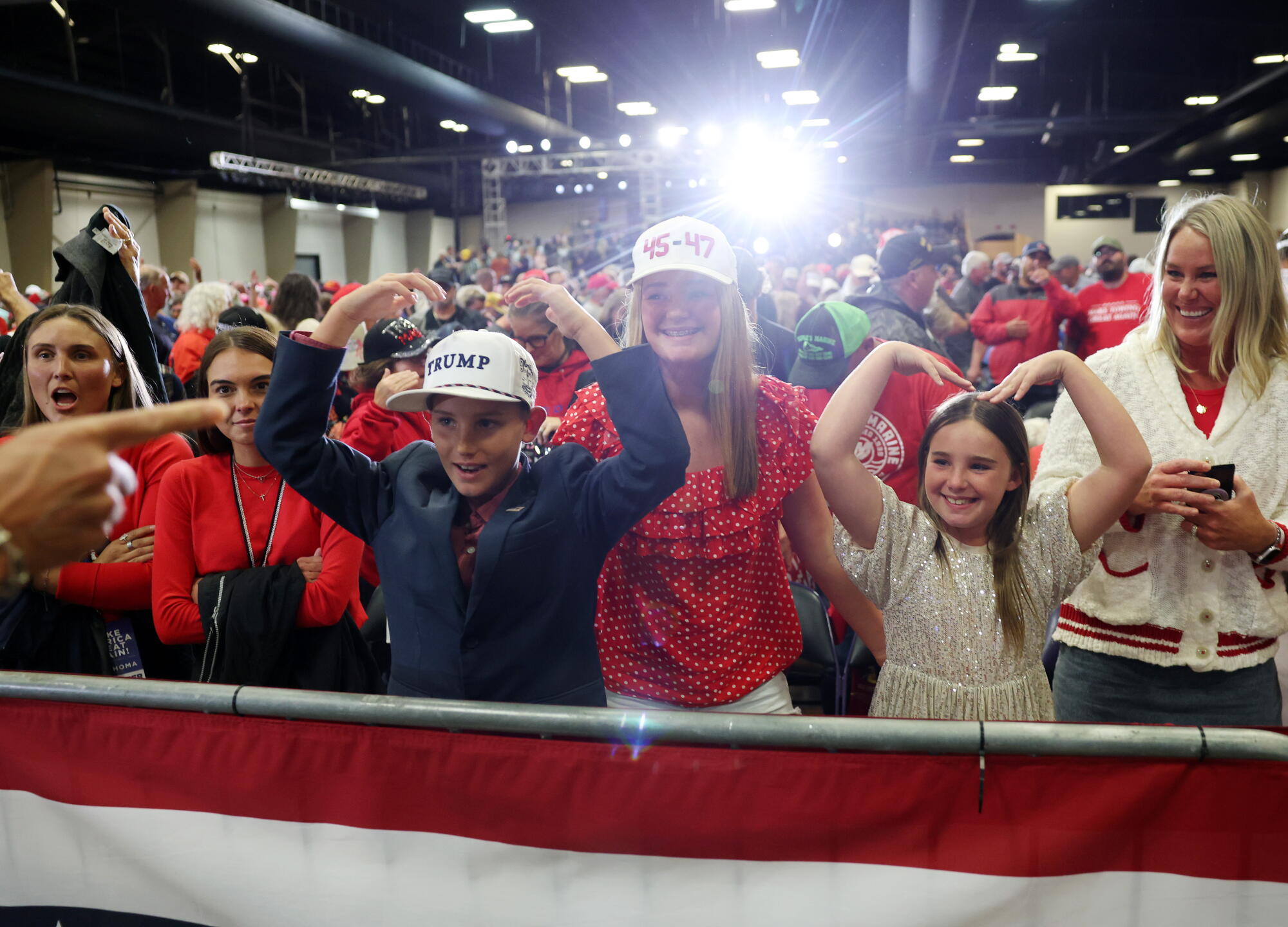
David Coleman from Oklahoma remains steadfast in his support for President Trump, despite not knowing much about the other Republican candidates. At Trump’s midterm rally in Durant, Oklahoma, Coleman and fellow attendees declared their readiness to support whoever Trump endorsed. Coleman even expressed he would rely on ChatGPT to identify those candidates and vote accordingly. This loyalty to Trump is part of the strategy he employs to galvanize his base ahead of the November elections.
In these final days before the election, Trump has prioritized campaigning in Republican-dominated areas like Texas, Oklahoma, and Alabama. He hopes his presence will motivate his supporters to vote, despite his absenteeism on the ballot. During a rally in Oklahoma, Trump encouraged the crowd to consider his agenda on the line, emphasizing the importance of electing GOP candidates such as Senate candidates Ken Paxton in Texas and Kevin Hern in Oklahoma. Trump urged them to vote, warning against complacency in assuming victory.
This approach diverges from Trump’s initial promise to campaign in the nation’s 35 most competitive districts. In many of these contests, his declining approval ratings have turned him into a potential political liability. The campaign for Ken Paxton, entangled in a tight race against Democrat James Talarico, reported challenges stemming from Trump’s convention in Dallas. Despite this, Trump continues to endorse Paxton, even remarking on occasion about his contentious nature yet underscoring the importance of Paxton’s victory to retain the Senate seat.
Democrats are capitalizing on these dynamics, investing heavily in reclaiming voters lost to Trump in the 2024 election cycle, including Latino voters in southern Texas who feel disillusioned by Trump’s policies on immigration and the economy. Trump remains dismissive of polls indicating his waning support among Latino voters, insisting that all candidates associated with him often succeed.
Despite his assertions, Trump has acknowledged looming concerns among Republicans about the potential outcomes in states like Michigan, Texas, and others. Recent increases in diesel prices, linked to the seven-month Iran conflict, pose a challenge, with national costs averaging $6.37 a gallon. This has particularly affected regular supporters, such as Ronnie Smith, who backs Trump wholeheartedly but recognizes the significant burden these prices place on the economy.
To address this, Trump announced an agreement with major industrial nations to release 100 million barrels of diesel and fuel products from strategic reserves, a decision he plans to highlight in forthcoming rallies. His efforts are both a response to the economic concerns and a bid to rally his base by visiting strategic locations near state borders, such as his visits to Durant and Mobile, Alabama.
Republican leaders like Senate Majority Leader John Thune stress the importance of mobilizing Trump’s followers, noting their pivotal role in midterm elections. Voter turnout remains a persistent challenge during non-presidential election years. Sylvia Sigler, an attendee of Trump’s rally in Oklahoma, exemplified the casual voter who participates in local but not federal elections since 2016. She acknowledged the economy could influence her decision to vote, though she wavered on whether Trump’s rally had swayed her perspective.