
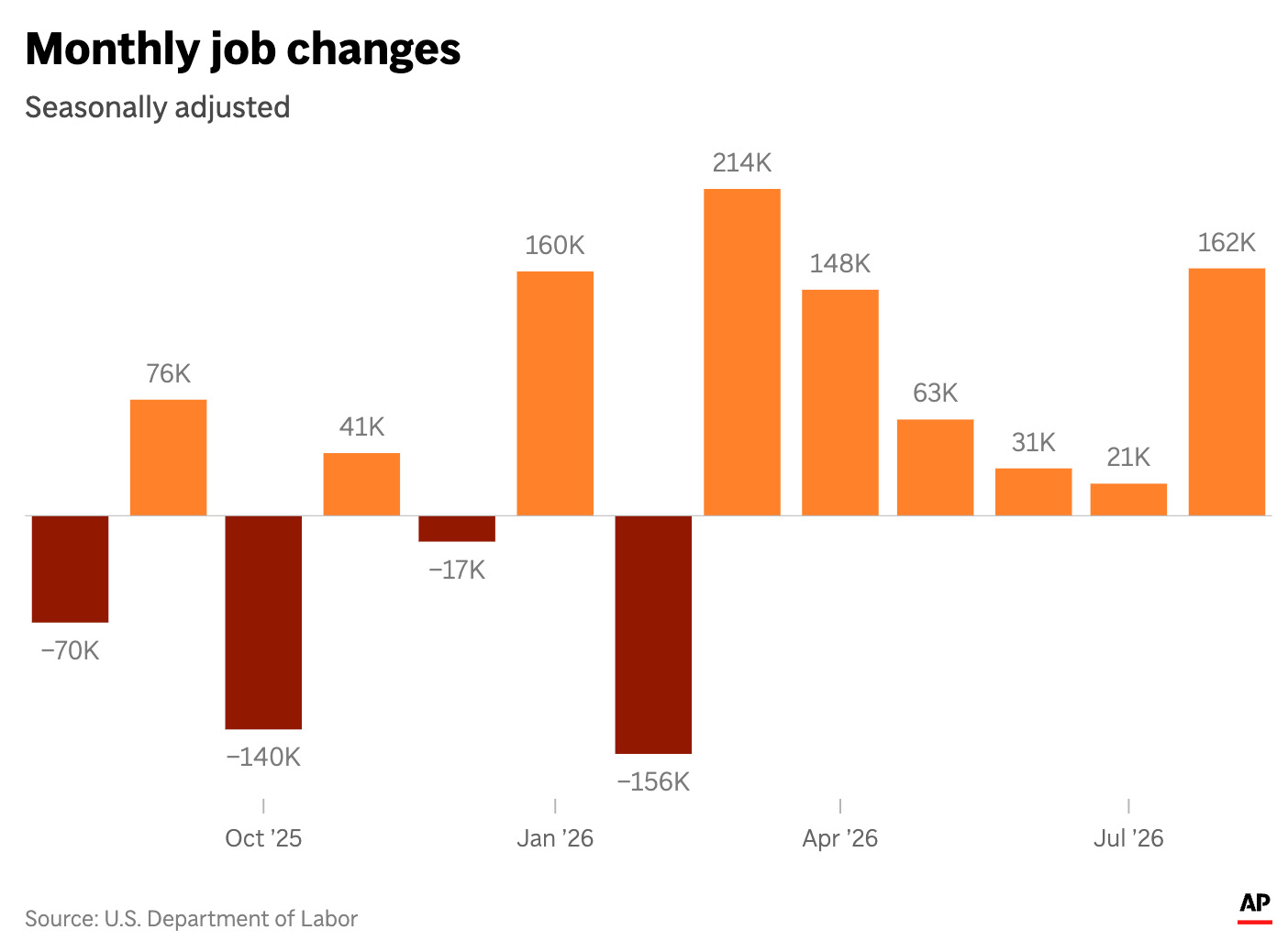
President Donald Trump has spent 20 months asserting that the American economy is on the verge of significant growth. Despite this, August’s positive jobs report prompted frustration from Trump. The report hinted at a recovery from months of sluggish hiring and inflation concerns, challenging Trump’s economic promises as election day approached.
Addressing the media from the Oval Office, Trump criticized financial markets, the Federal Reserve, and trade partners. He dismissed the idea that the unexpected gain of 162,000 jobs in August could lead to inflation. He stated, “Success does not cause inflation. Stupidity causes inflation,” expressing disbelief over stock market declines triggered by inflationary fears.
Throughout his second term, slow hiring and rising prices have been obstacles to Trump’s promise of unparalleled economic growth. He assured supporters at an August 2024 rally in North Carolina, “When I win the election, we will immediately begin a brand new Trump economic boom.” However, the economy’s growth rate has stalled at around 2% annually, trailing gains made during Biden’s presidency.
Trump attributes his inability to spur stronger growth to increased interest rates on U.S. government debt. He suggested retaliating against foreign countries by ceasing trade, exacerbating an already strained economic landscape. Rising rates are a response to persistent inflation, exacerbated by tariffs and oil shortages linked to conflicts like the Iran war. With the national debt exceeding $40 trillion, the 10-year U.S. Treasury note rate stands at 4.79%.
Challenges to Economic Credibility
The lack of promised growth has eroded public confidence in Trump’s economic management. Critics point to his policies as partly responsible for inflation and high interest rates. Joe Brusuelas, chief economist at RSM US, noted, “The administration’s credibility on growth, inflation, rates, debt and deficit dynamics have taken a hit given the outsized predictions that are not aligned with economic reality.” Lowering interest rates to pump more money into the economy, as Trump suggests, might worsen inflation.
The president remains unfazed by these concerns. He claimed on Friday that under his policies, GDP could grow at “12, 13, 14, 15%” if interest rates were reduced, despite potential inflation risks. Yet, his approval rating for economic management fell to 32% by mid-summer, a significant drop from 50% during the 2018 midterms.
Future Prospects and Economic Strategies
Trump’s threat to halt trade could harm growth and Republican chances in upcoming Senate races. His tariffs against Canada’s impact on the Maine and Michigan races exemplify these risks.
Nonetheless, Trump aides foresee a brighter future driven by AI, tariffs, and tax cuts. They argue these measures will increase productivity and business investment. According to Christopher Phelan, White House Council of Economic Advisers chairman, “We’re doing stuff to make good things happen.” Productivity gains could bolster growth, though they may not suffice to resolve financial challenges, particularly rising Social Security and Medicare costs.
An analysis by Ernie Tedeschi, head of economic insights at Stripe, underscores this point. If economic growth exceeds 3% annually for a decade, it might stabilize national debt. Tedeschi cautioned against overly optimistic assumptions about AI’s potential, noting past instances of exaggerated predictions.
Despite recent developments, Treasury Secretary Scott Bessent and Commerce Secretary Howard Lutnick have promoted growth prospects at global forums like the G20 summit. Simultaneously, Bessent collaborates with White House budget director Russ Vought to outline a strategy for reducing debt and deficits.
Seeking to address the national deficit of approximately $2 trillion, which risks surpassing $3 trillion in a decade, poses political challenges. Meaningful deficit reduction would necessitate spending cuts and tax increases, potentially encountering resistance. Brusuelas emphasized, “We need a period of slower growth in government spending — that includes outright reduction in spending in addition to tax increases that all would reduce deficits and interest rates.”