
Jay Feely contemplated joining politics during his decade-long NFL career and his time as a CBS broadcaster. As a pro athlete and media figure, he occasionally voiced political ideas, participated in cable news programs, and served on the NFL Players Association’s executive committee. It was President Trump’s brush with an assassination attempt in Butler, Pa., that spurred him to step into politics. “That was a big moment for me. I started asking myself, ‘All right, Jay. … What are you willing to sacrifice?’ It’s my time to go and serve,” Feely said in an interview with The Hill.
With multifaceted experience and having accumulated wealth, Feely enjoyed a stable broadcasting job at CBS. Now, he aims for Congress, representing Arizona’s 1st Congressional District as a Republican. He hopes to replace Rep. Andy Biggs, who plans to run for governor. Earlier this year, Trump endorsed Feely, emphasizing his reliability. This endorsement boosted Feely’s primary victory, paving the way for a faceoff with Democrat Amish Shah.
An interesting connection arises between Feely and Shah. Shah served as a team doctor for the New York Jets during Feely’s stint there. Feely noted this connection with humor, though he admitted not recalling Shah at the time. “I don’t think I ever met him or knew him when I was there,” Feely stated. However, he holds respect for Shah as a committed ER doctor.
Describing himself as a fiscal and social conservative, Feely aligns with Trump’s “America First” agenda. He believes his NFL locker room experiences offer insights into addressing conflicting political views constructively. He recounted discussions on politics and life during a 2005 night camp with teammates. Feely values dialoguing with diverse individuals, transcending racial divides within team dynamics.
Feely encourages former NFL players, like Drew Brees and Ben Watson, to consider political roles. He acknowledges the challenges of enduring public scrutiny and misinformation. Recalling an “SNL” parody post-missed field goals, he asserts overcoming fear of failure is pivotal. Feely argues that the intersection of sports and politics is critical in America today.
He shows openness to the NFL’s perspectives amid intensifying regulatory scrutiny in Washington, D.C. With ongoing Capitol Hill discussions around sports legislation, Feely envisions a collective bargaining agreement for college football, akin to the NFL system, to ensure equity without jeopardizing women’s and Olympic sports.
If elected, Feely sees himself as unconventional in Congress, advocating for public service over personal gains. “We need more people in office who have already been successful and aren’t going there to enrich themselves and be public servants,” he said.
Extra Points
The Protect College Sports Act stalled in the Senate, despite backing from the Big Ten and the SEC. Senator Josh Hawley raised concerns over effects on women’s sports laws, prompting further debate.
Former NBA player Enes Kanter Freedom’s declaration for the 2027 WNBA draft raised eyebrows amid ongoing discourse about transgender athletes in sports.
FIFA President Gianni Infantino faced backlash over his attempted World Cup privatization plan, with criticism from global football authorities.
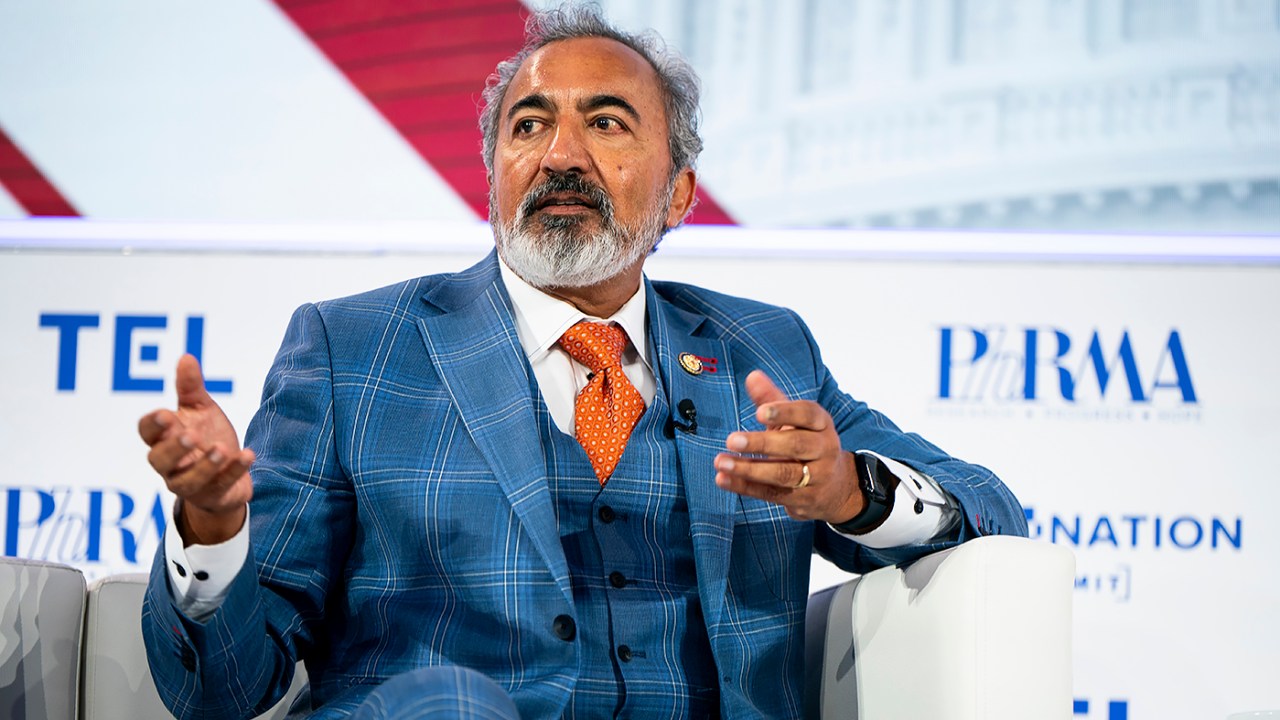
Rep. Ami Bera and anchor Laura Ingle engaged in a discussion on health geopolitics during the Hill Nation Summit. Bera also shared his sports preferences in a brief segment with The Hill.
Read the Coverage
The 2026 “Patriot Games” highlighted the intersection of politics and sports, with CNN providing coverage of this unique youth sports event sponsored by the Trump administration.
Baseball fan Lewis Kalb gained popularity for his impressive performance announcing a Philadelphia Phillies inning, achieving a dream moment.
As NFL preseason kicks off, Sports Illustrated lists potential bets for each team, capturing gambling enthusiasts’ interests.