
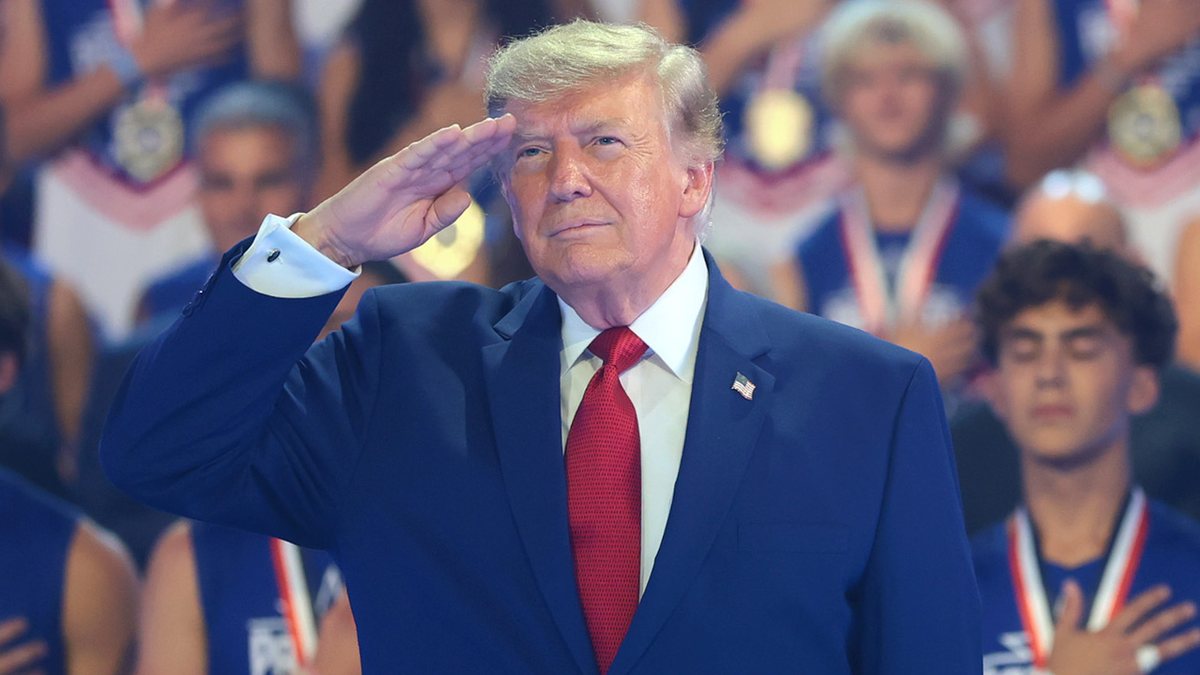
President Donald Trump dismissed a reporter’s question on Tuesday night regarding the possibility of him seeking a third term in 2028. He cited the constitutional limits on presidential terms. Speaking at Joint Base Andrews in Maryland, Trump remarked, “The law is very strong.”
He noted that he often gets asked the same question at various events, including earlier that day at the Patriot Games. Despite expressing a desire to run, he acknowledged that the law stands firm against it.
The 22nd Amendment
The 22nd Amendment to the U.S. Constitution prohibits any individual from being elected president more than twice. It was ratified in February 1951, following the presidency of Franklin D. Roosevelt, who served four terms.
Prior to Roosevelt, it was customary for presidents to serve only two terms, reflecting a tradition established by George Washington.
Throughout his tenure, Trump has made light-hearted references to a possible third term. He even joked about it during a speech at the White House Correspondents’ Dinner on July 24, 2026. Wearing a “Trump 2028” hat, he quipped about another term, but later clarified he was only kidding.
“Just like my presidency, the second time is always better. And the third time will be better yet. I’m only kidding,” Trump said.
In contrast, during an interview on March 30, 2025, with NBC’s Kristen Welker, Trump expressed a more earnest view about pursuing another term. He mentioned the possibility of Vice President JD Vance running as president with him as vice president. In this scenario, if Vance resigned, Trump believed he could assume the presidency again.
Legal Implications
Most constitutional experts disagree with Trump’s notion. Deborah Pearlstein, a Princeton University law professor, pointed to the 12th Amendment, which states that no one who is ineligible for the presidency can hold the office of vice president.
The amendment’s language effectively blocks Trump from circumventing the prohibition on a third term through the vice presidency.