
On Wednesday, representatives for former President Donald Trump submitted a brief in the New York Court of Appeals. They argued for the dismissal of his liability in a $464 million civil fraud case regarding real estate valuations.
The appeal highlighted what Trump’s team described as multiple legal flaws that should have disallowed the case. “This case should have never been brought, and the judgment cannot stand,” the brief stated. According to them, the case involved numerous problematic statements against Trump, his family, and his businesses.
Trump views this legal battle as another example of politically motivated legal actions during his time in office. This appeal gives him a chance to contest some penalties from the original verdict.
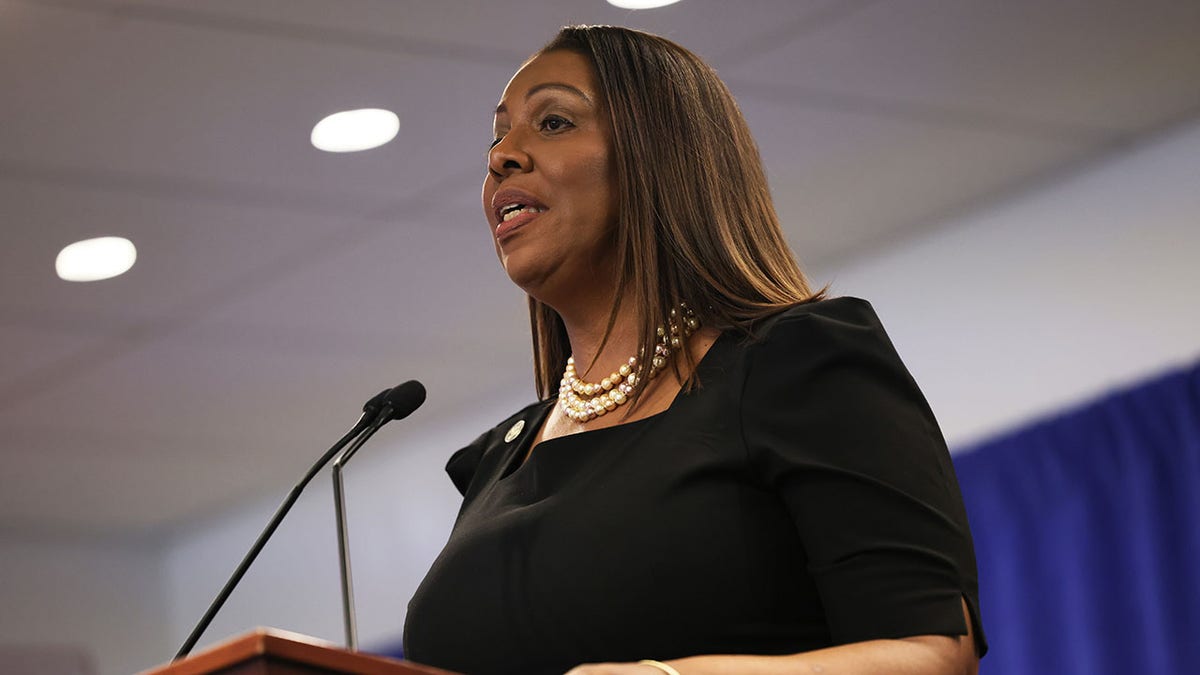
Attorney General Letitia James speaks after a verdict against former U.S. President Donald Trump in a civil fraud trial on February 16, 2024, New York City.
In 2022, New York Attorney General Letitia James filed a lawsuit against Trump. The suit claimed 200 fraudulent instances, focusing on frequently overvalued properties in New York City. These overvaluations allegedly violated New York Executive Law § 63(12).
This law defines fraud as any deception, misrepresentation, or unconscionable contractual provision. Trump was found liable in 2023.
Consequently, Trump had to pay $355 million plus interest and was prohibited from holding roles as an officer or director in any New York business for two years. He was also banned from seeking loans from any New York financial institution for three years. Although an intermediate court later vacated the monetary penalty, Trump’s lawyers demand the underlying liability and remaining restrictions be overturned too.
The appeal challenges the verdict on five principal grounds:
- Attorney General James allegedly lacked authority, emphasizing the case centers on private transactions, not public damage.
- Trump’s valuations were subjective estimates, independently scrutinized by lenders.
- Alleged victims are sophisticated banks and insurers who profited from interactions with Trump, without alleging injury.
- Prosecution’s focus on overvaluation is misconstrued, assuming real estate’s value is singular and deviations equate to fraud.
- Penalties, specifically the $450 million disgorgement, are described as excessive and unconstitutional.
The appeal also argues the case’s political overtones warranted dismissal.
NYAG cannot point to a single Section 63(12) enforcement action against developers based on practices similar to those alleged here.
The document cites James’ past statements, where she labeled Trump a “criminal” and vowed to examine his transactions.
Attorney General James’ office has not responded to requests for comment. The conflict highlights ongoing legal and political tensions surrounding Trump’s business dealings.