
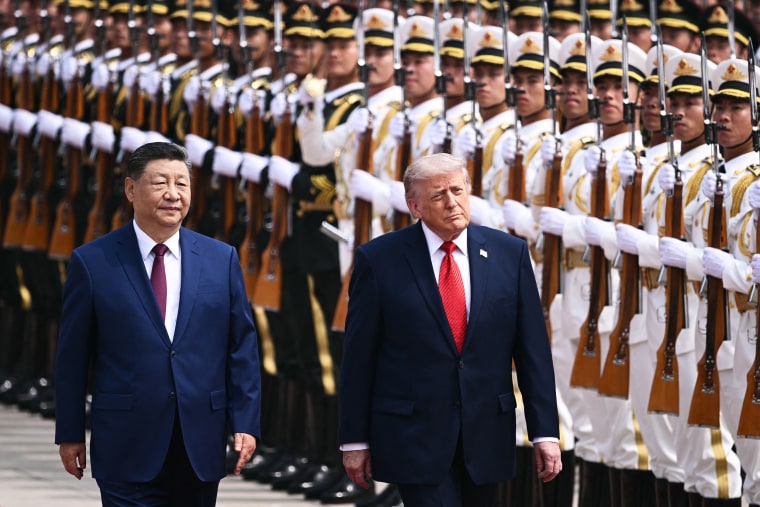
On May 14, 2026, President Donald Trump met with Chinese President Xi Jinping in Beijing. They discussed several significant issues, including the Iran war and the situation in the Strait of Hormuz. Secretary of State Marco Rubio, in an interview with NBC News, stated that the U.S. is not seeking China’s help regarding Iran.
According to Rubio, China opposes militarizing the Strait of Hormuz and the implementation of a toll system. This aligns with the U.S. position. The meeting between Trump, Xi, and their delegations extended over two hours, covering various topics.
During the interview, Rubio, who was in Beijing despite being under Chinese sanctions since 2020, mentioned that Trump and Xi also discussed Taiwan and the case of Hong Kong publisher Jimmy Lai. Lai was sentenced to 20 years in prison this year after a national security trial. Rubio stated that no request for assistance from China regarding the Iran conflict was made.
Trump was expected to seek China’s help in mitigating the U.S.-Israeli tensions with Iran and resolving the blockade at the Strait of Hormuz. This blockade has disrupted global energy supplies and increased gas prices. Although Trump credited China for bringing Iran to negotiations for a ceasefire, he emphasized that the U.S. does not require China’s help. Rubio highlighted the broader global implications of rising oil prices, suggesting that other nations need to address this.
The Iranian conflict caused Trump’s China visit to be delayed by six weeks. While China maintains close ties with Iran and criticized the U.S. and Israeli strikes starting February 28, it also calls for a diplomatic resolution to the conflict. Common ground was found with China reiterating its opposition to Iran developing nuclear weapons.
China’s readout of the discussions between Trump and Xi omitted any direct mention of Iran but indicated that both leaders exchanged views on various international and regional topics, including Middle East affairs.
No Change on Taiwan Policy
Another key topic was Taiwan, a sensitive issue in U.S.-China relations. Xi cautioned Trump that mishandling Taiwan relations could lead to conflicts. The U.S. has no official ties with Taiwan but supports it militarily, although it follows a policy of ‘strategic ambiguity’ regarding military defense.
Rubio affirmed that U.S. policies on Taiwan have been consistent across administrations. Despite Trump’s transactional approach, there are concerns that U.S. policy might shift from ‘not supporting’ to ‘opposing’ Taiwan’s independence, which Beijing desires.
There were also worries about U.S. arms sales to Taiwan potentially involving discussions with Beijing. However, Rubio clarified that arms sales were not a primary focus of the talks, despite a recent $11 billion arms package for Taiwan.
The growing military pressure from China on Taiwan, with frequent Chinese military movements near the island, remains a point of contention. Rubio stressed the importance of avoiding forced changes to the current status quo.
Discussion on Jimmy Lai’s Case
Trump addressed the situation of Jimmy Lai, an emblem of the crackdown on pro-democracy movements in Hong Kong. Xi’s attention was drawn to Lai’s case, along with other human rights issues, which Trump consistently raises.
Regarding Lai’s potential release and travel to the U.S., Rubio indicated an openness to arrangements that secure his freedom, without specifying details.