
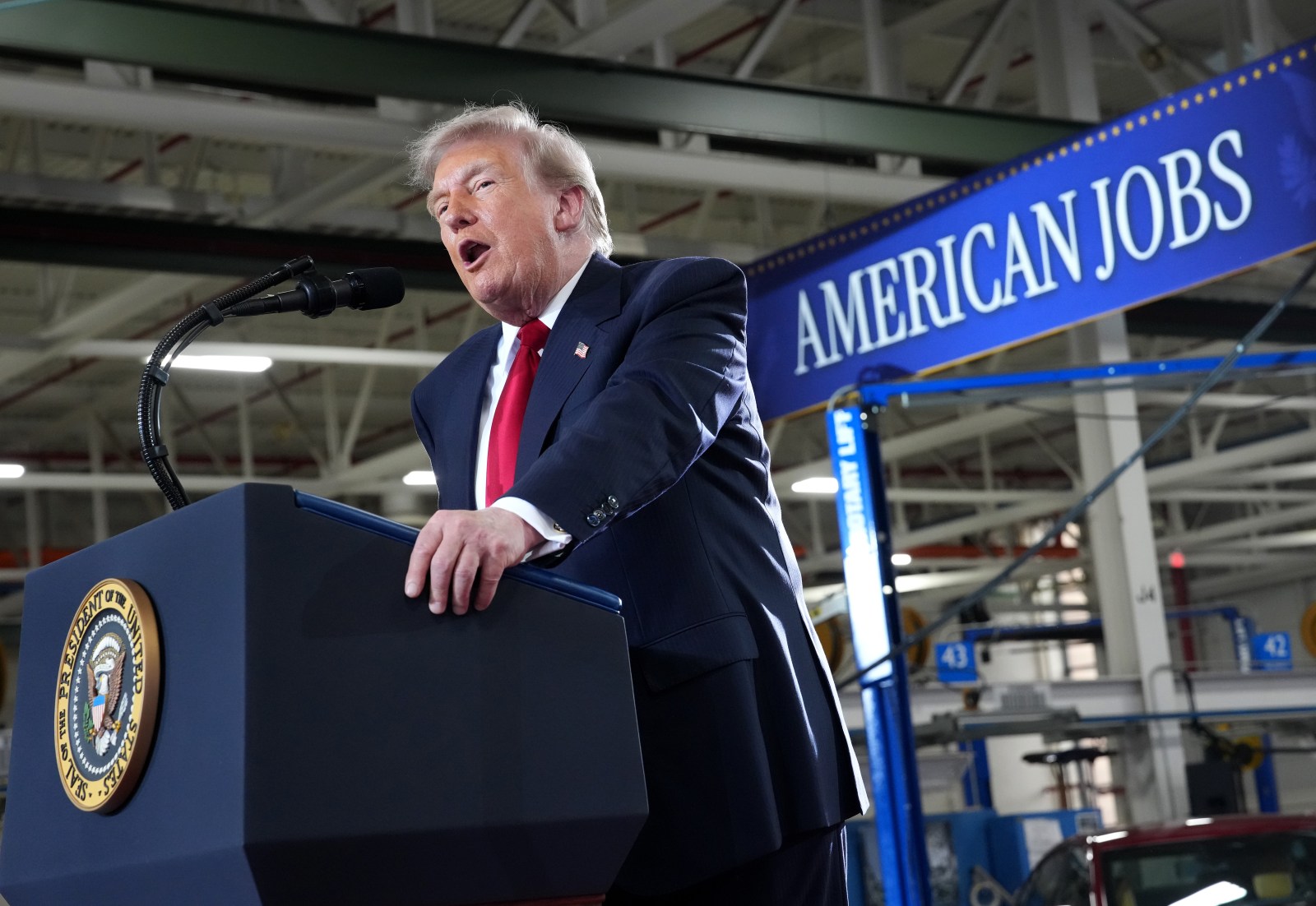
President Donald Trump announced the approval of new fuel economy standards aimed at repealing what he refers to as the Biden administration’s electric vehicle mandate. He claims these changes will reduce car prices and boost U.S. auto manufacturing. In a post on Truth Social, Trump argued that previous standards raised costs for both automakers and consumers, encouraging a shift towards electric vehicles. He asserted that the new regulations will lower prices and strengthen domestic auto production.
Trump emphasized lower prices for families, stating it would enable them to save significantly on new, safe cars. However, he did not provide specifics about these approved standards, nor did the administration release a final rule immediately following the announcement. Earlier proposals focused on easing future automotive fuel economy requirements.
Transportation Secretary Sean Duffy hinted at a major announcement in a social media post, although he did not confirm if it concerned the fuel economy standards mentioned by Trump. News outlets reached out to relevant authorities for further comments.
Trump discussed the potential benefits of the policy shift. He stated the new standards would attract manufacturing jobs and investments to states such as Michigan, Ohio, Indiana, and South Carolina. He believes this would simplify the process for automakers to produce vehicles that suit consumer preferences.
Trump expressed gratitude to Duffy and Commerce Secretary Howard Lutnick for their roles in advancing the administration’s automotive agenda. He noted that executives from companies like General Motors, Ford, and Stellantis have expressed intentions to expand manufacturing in the U.S.
In August, the administration signaled plans to lower fuel economy requirements more drastically than former President Joe Biden had during his tenure. Duffy mentioned the administration’s focus on consumer-favored vehicles rather than those preferred by policymakers.
A proposal by the National Highway Traffic Safety Administration last December suggested a fleetwide average of 34.5 miles per gallon by 2031, a significant reduction from the 50.4 mpg under Biden-era standards. However, Trump did not clarify whether the standards he referenced align with this proposal or if there are other changes involved.
Biden’s administration designed fuel economy rules to cut fuel use and reduce greenhouse gas emissions. Supporters believed these rules would lessen oil consumption and emissions from the transportation sector. Although Trump and his allies described these policies as mandating electric vehicles, the rules did not compel consumer EV purchases.
NHTSA criticized previous standards for over-relying on electric vehicle adoption projections and compliance credits contrary to federal law. Those advocating the rollback argued it could lead to lower vehicle prices and decreased compliance costs for automakers.
An earlier NHTSA proposal predicted a $930 reduction in new vehicle costs. It also projected an increase in fuel consumption by roughly 100 billion gallons through 2050, additional fuel spending of about $185 billion, and a 5 percent rise in carbon dioxide emissions.
Trump’s announcement aligns with his efforts to reverse electric vehicle adoption policies. Previously, Congress ended federal tax credits for EVs acquired after September 30, 2025, impacting potential consumer incentives worth up to $7,500.
Additionally, Congress blocked California’s plan to require zero-emission new passenger vehicle sales by 2035, leading to legal disputes over the state’s regulatory powers. Trump’s announcement did not specify when the new standards would be implemented, nor if they match the administration’s proposal from earlier this year or if more details will follow.