
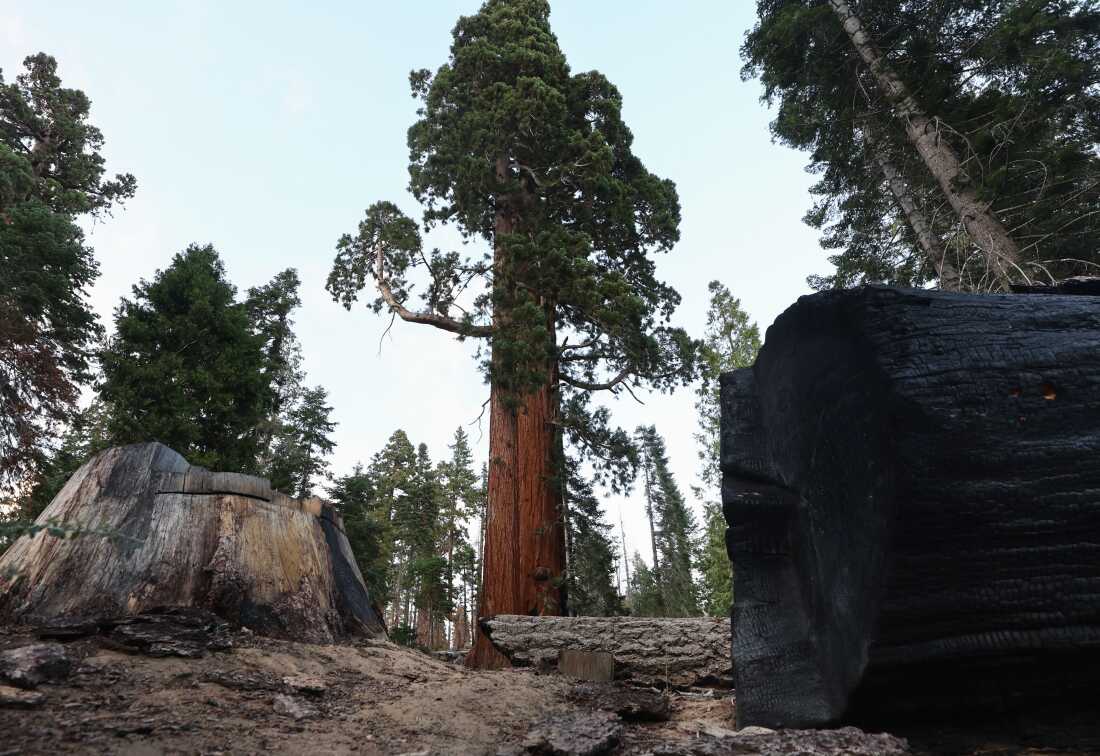
A giant sequoia tree, with a 70-foot circumference, stands prominently by the Trail of 100 Giants in California’s Sequoia National Forest. This scenic photo was taken on August 25, 2022.
The Trump administration announced a plan to rescind the roadless rule on Tuesday. This rule currently restricts road construction and thus, limits logging and mining on millions of acres of public forest land. Originally implemented by the Clinton administration in 2001, the rule has been a contentious issue in balancing economic interests with wild land conservation, notably in the Western United States.
“Our forests can’t afford another decade of inaction,” said Brooke Rollins, Secretary of the U.S. Department of Agriculture. “It’s time to turn the page on the failed roadless rule and return our forests to health and productivity.”
The move received support from Republican governors of Montana, Utah, and Wyoming, who commend the flexibility it allows in managing forests according to local needs. Utah Governor Spencer Cox commented on the importance of actively managing landscapes to protect them for future generations.
Proponents of the roadless rule argue it is a cornerstone in U.S. conservation policy, limiting industrial activities while safeguarding extensive areas of public forests and grasslands across the nation. Drew Caputo, a senior attorney with Earthjustice, said it safeguards America’s valuable public lands and is a critical land protection measure.
The Trump administration claimed the change would enhance economic activity, though supporters of the roadless rule highlight its role in ending unprofitable timber sales managed by the Forest Service, which once led to taxpayer-funded subsidies of private timber operations.
Steve Ellis, president of Taxpayers for Common Sense, explained, “Before the roadless rule, we would build roads into areas and conduct timber sales that incurred losses costing taxpayers billions.”
This rollback emerges amidst a severe wildfire season in the Western states. Administration officials believe that removing the roadless rule will provide forest managers more room to prevent and address wildfires. Rollins mentioned that preventable conditions such as overgrown forests have turned landscapes into wildfire hazards.
Nick Smith of the American Forest Resource Council expressed agreement, asserting that additional roads could aid fire crews in accessing remote areas more efficiently. However, Caputo from Earthjustice warned that more roads may increase fire incidents due to human activity, such as discarded cigarettes or overheating engines.
Currently, low snowpack and prolonged drought, exacerbated by climate change, have intensified the fire risk across the region. Public feedback on this proposed rule change is open until September 21, 2026.
This proposal aligns with other recent Trump administration actions that have relaxed environmental protections, including changes to the Endangered Species Act and opening national marine monuments to commercial fishing.