
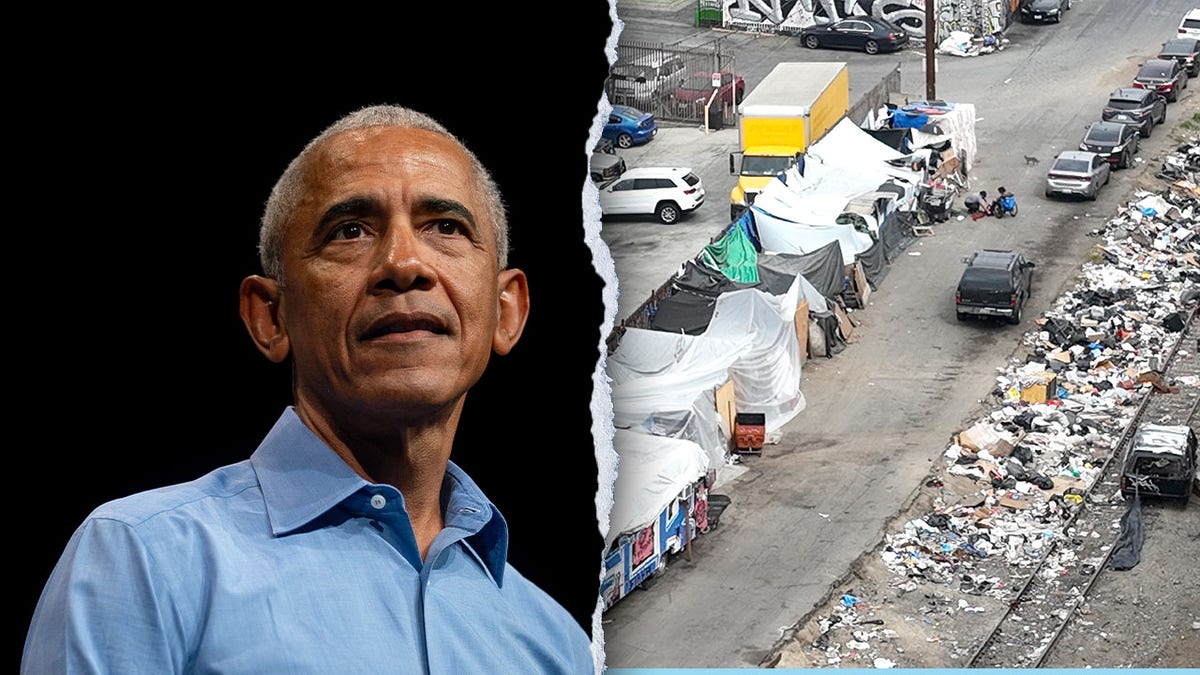
The decision by the Trump administration to cut federal funding for Los Angeles’ homeless agency represents a significant shift from policies established during the Obama era.
In a statement from the Department of Housing and Urban Development (HUD), they announced the end of their relationship with the Los Angeles Homeless Services Authority (LAHSA). Michele Steeb, an expert in homeless services, discussed this development with Fox News Digital.
Steeb criticized the Housing First model embraced by LAHSA. This approach, initiated during former President Obama’s administration, offered housing unconditionally, without requiring sobriety or mental health treatment. Obama had promised this method would eliminate homelessness by 2023, yet the homeless population increased by nearly 35% during this period.
Steeb argued that the Housing First program failed to achieve its goals. “They’re given housing for life without any requirements,” she said, emphasizing that the model lacks purpose for individuals.
Earlier in the year, Obama described the homelessness issue in Los Angeles as a moral crisis, advocating for programs that combine aid with accountability. He stated, “We should recognize that the average person doesn’t want to have to navigate around a tent city in the middle of downtown.”
California’s statewide adoption of the Housing First approach underscores its challenges. Despite increased government spending, homelessness rates have risen rather than achieving the intended reductions. Between 2016 and 2025, homelessness in California surged by 40%, while federal funding under this model increased by over 200% since 2013.
Los Angeles, in particular, saw a 60% to 70% rise in homelessness over the past five years, despite receiving over $1 billion in federal aid. Steeb called for greater accountability and emphasized the need for treatment requirements amid continued spending.
Steeb expressed concern over ongoing attempts to defend the system. “It’s a shame to me that the system, what I often call the homeless industrial complex, is trying to defend it,” she said, pointing to its ineffectiveness.
The Trump administration’s move to transfer LAHSA’s responsibilities to Los Angeles County is seen as an effort to improve accountability, especially after fraud and financial mismanagement allegations at LAHSA. Though Steeb admitted the county faces its own challenges, she hopes for better outcomes from the shift.
“I’m hopeful… I think it’s better than LAHSA, but I don’t think it’s going to be that much better,” Steeb remarked.