
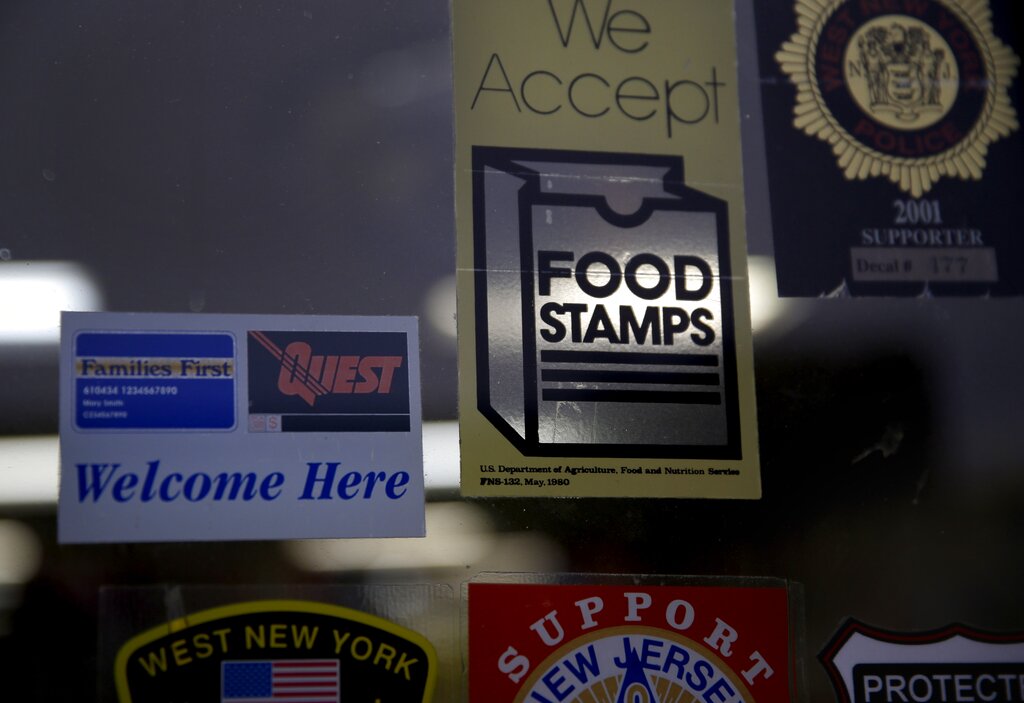
A supermarket in West New York, New Jersey once displayed stickers to indicate acceptance of food stamps, showcasing a loophole that has enabled middle- and upper-class Americans to wrongfully access welfare benefits. This loophole, dating back to the Clinton administration, has allowed individuals who do not meet the low-income criteria to enroll in the food stamp program. As the Trump administration looks to address this issue, there is anticipation of significant resistance from Democrats and media allies, who argue that the reforms will adversely affect school lunch programs.
The crux of the issue lies in a federal policy known as broad-based categorical eligibility. This policy allows states to grant food stamps to people who exceed income or asset limitations by simply offering them another type of benefit, sometimes trivial, such as a taxpayer-funded pamphlet. This has enabled wealthier Americans to exploit the system, with estimates suggesting that around 5.9 million people are improperly enrolled in the food stamp program.
The consequences of this loophole extend beyond food stamps. Federal regulations state that children qualify for the National School Lunch Program if their families receive benefits like food stamps. Consequently, the children of affluent families can access free or reduced-price school meals at public schools, bypassing legitimate eligibility checks.
The Trump administration’s move to eliminate the original food stamp loophole aims to ensure that only qualified recipients benefit from the program. Closing this loophole will also impact some ineligible families enrolled in the National School Lunch Program. Critics claim that this change might affect between 500,000 and a million children, risking their access to school meals. However, existing state and federal initiatives provide reassurance that nearly all children currently benefiting from school meal programs will continue to do so.
Estimates show that 99.9% of students participating in the National School Lunch Program will retain their access to taxpayer-funded meals once the eligibility loophole is closed. A mere 2,900 students from wealthier families will be removed from the program—families that do not meet legal qualifications for assistance. Thus, while the reform will minimally impact school lunches, it will bring impactful savings and refocus resources on those genuinely in need.
This initiative promises significant savings for taxpayers, cutting over $10 billion annually by removing ineligible beneficiaries. These savings are crucial amid rising costs of the food stamp program, which have exceeded $100 billion a year. The forthcoming changes, while sparking debate, ultimately aim to secure the safety net for its intended recipients, ensuring temporary support for those truly vulnerable.
Paige Terryberry, a Senior Research Fellow at the Foundation for Government Accountability, emphasizes the need for these reforms to uphold the integrity of welfare systems, supporting those genuinely in need while removing unwarranted benefits to wealthier families.