
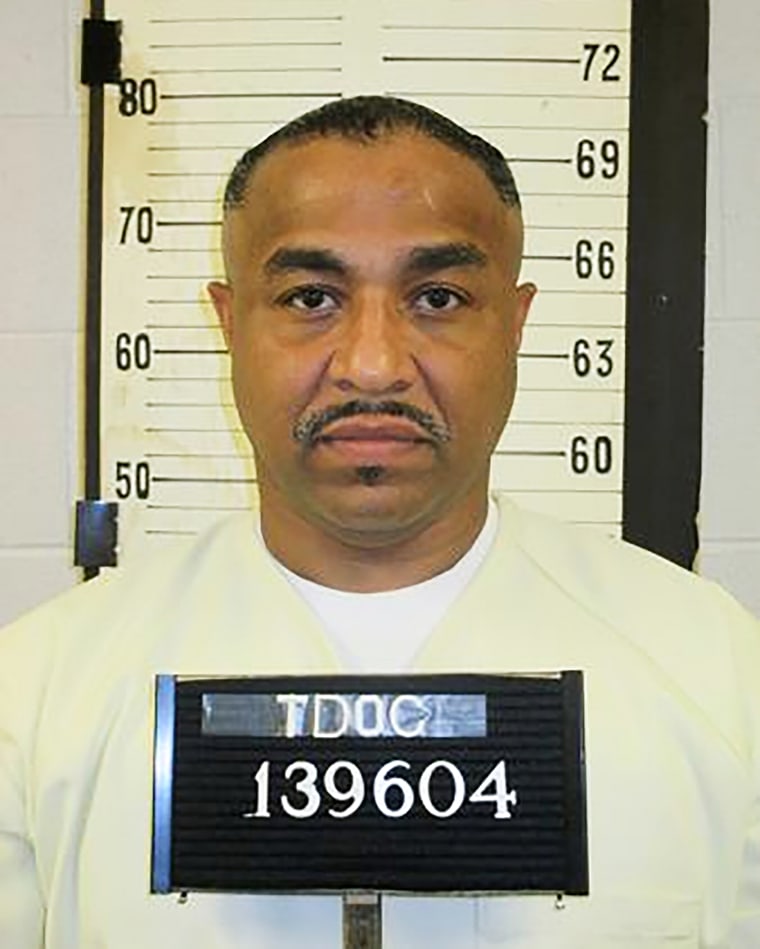
Tony Carruthers’ execution was halted after the Tennessee Department of Corrections struggled to establish necessary intravenous lines. This difficulty in setting a backup injection line led to a one-year reprieve granted by Gov. Bill Lee. The Tennessee Department of Corrections stated that a primary IV line was quickly established, but attempts to find a second vein for a backup line were unsuccessful. Efforts to insert a central line also failed, resulting in the execution being called off.
An emergency stay of execution was filed by Carruthers’ attorneys claiming difficulties in obtaining IV access to administer the lethal injection. Federal public defender Amy Harwell confirmed the execution is on hold, with Carruthers being medically evaluated. His legal counsel, Melanie Verdecia, criticized the state’s actions as unjust, arguing that Carruthers, who maintains his innocence, is being tortured.
Carruthers, convicted in 1996 for a triple kidnapping and murder case, faced execution concerns regarding the use of potentially expired drugs. His attorneys requested assurances from the Tennessee Department of Corrections that expired drugs would not be used, but no explicit guarantees were provided. Tennessee resumed executions after a three-year pause, which followed findings that lethal injection drugs were not properly tested for purity and potency.
Problems sourcing execution drugs, such as pentobarbital, affect several states due to pharmaceutical companies’ objections to their use in executions. As a result, states, including Tennessee, have spent significantly above market rates to procure these drugs. A public records request revealed that Tennessee incurred $650,000 in execution-related expenses after lifting the moratorium.
Carruthers was convicted alongside James Montgomery after their trial in 1996. No physical evidence directly linked Carruthers to the 1994 crimes. The state’s case relied heavily on testimony from a paid informant. The trial argued that Carruthers and his co-defendants kidnapped Marcellos Anderson to rob him. Jonathan Montgomery, another suspect, was found hanged prior to trial.
Carruthers had multiple attorneys and ultimately represented himself during a trial. His performance, described as ineffective due to mental illness, was a point of contention. An appeals court later overturned Montgomery’s conviction, granting him a new trial where his request for additional DNA testing at the crime scene was denied, despite potential evidence pointing to an alternative suspect. Montgomery was ultimately released in 2015 after accepting a plea deal.