
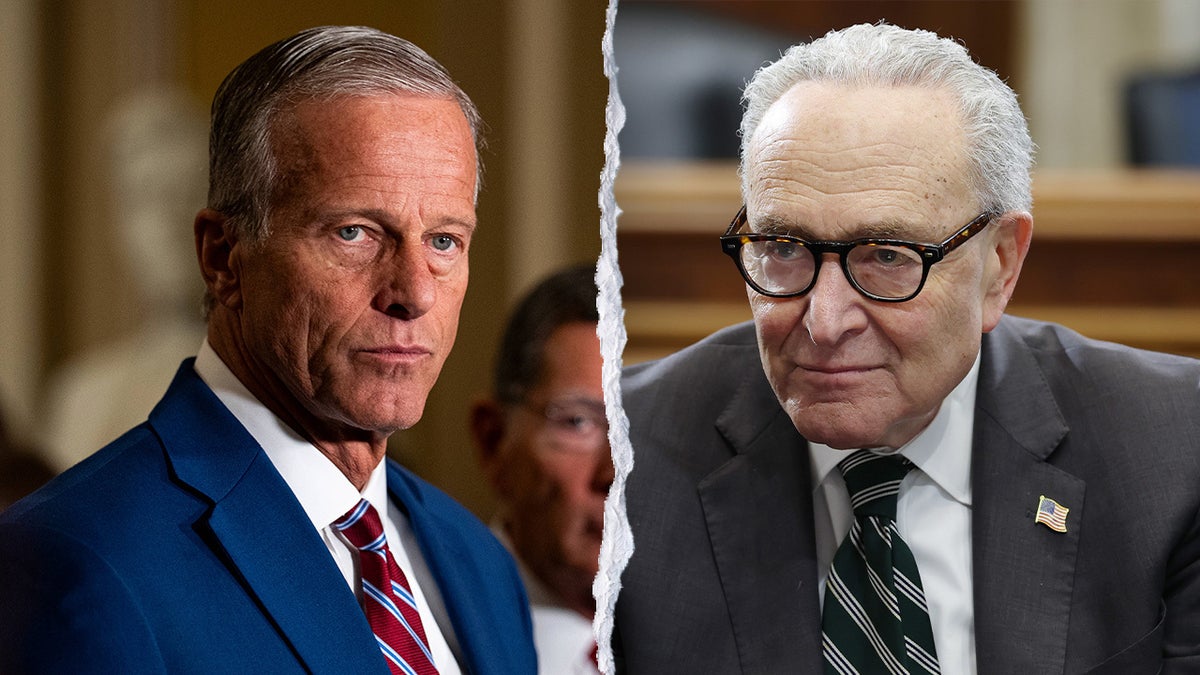
FREMONT, Neb. — Senate Majority Leader John Thune, R-S.D., maintains a flexible approach to supporting Republican candidates. “I tell all of our candidates, I’ll come out for you or against you, whichever helps you the most,” Thune stated in an interview with Fox News Digital.
Thune shared this lighthearted comment before attending a Nebraska roundtable with Sen. Pete Ricketts, R-Neb., who is in a close race against independent candidate Dan Osborn. This event was one of many stops for Thune across the country during the campaign season. He has traveled through key states such as Georgia, South Carolina, Florida, Minnesota, Nebraska, Iowa, and Ohio.
In contrast, Senate Minority Leader Chuck Schumer, D-N.Y., has participated in virtual events, leaving appearances to high-profile Democratic surrogates like former President Barack Obama and former Vice President Kamala Harris. The focus is on battleground states essential for achieving Democratic control of the Senate.
Schumer recently held a virtual fundraiser for Florida state Rep. Angie Nixon, a Democrat aligned with the Democratic Socialists of America, who is challenging Sen. Ashley Moody, R-Fla.
Several candidates in crucial elections, from Michigan to Mississippi, have distanced themselves from Schumer or openly opposed his leadership bid. Scott Colom, a district attorney in Mississippi running against Sen. Cindy Hyde-Smith, R-Miss., represents such a case. Despite the Senate Majority PAC, linked to Schumer, allocating $1.2 million in Mississippi, Colom has not embraced Schumer’s involvement.
Colom expressed concerns about party representation, saying, “We need to have people that understand rural America…we don’t have enough rural voices in leadership in the Democratic Party.” This sentiment reflects a broader challenge for the party.
Other candidates like Abdul El-Sayed in Michigan and Adam Hamilton in Kansas have explicitly stated they would not support Schumer if elected.
Sen. Bernie Moreno, R-Ohio, highlighted the issue, noting that Republican candidates are not opposing Thune’s leadership, while many Democrats oppose Schumer. He suggested this division could pose significant challenges for the Democrats.
Amid uncertainties over Senate control, Thune continues to prioritize his candidates’ needs. “We’re getting out and about — It’s whatever we can do to help,” he said.
Thune noted that the Democratic Party is grappling with its identity in a high-stakes election, arguing that the growing influence of socialists could complicate leadership. “They’ve gotten so far left that they really are out of the mainstream of where the country’s at,” he stated, positing that this shift might harm Democrats in the election. This ideological drift, Thune suggested, could impact the party in a potentially favorable political climate.