
Last month, the U.S. Supreme Court announced a decision impacting geofence warrants, curtailing their use in accessing individuals’ location data. Reflecting on my tenure as a Chicago police officer, I’d have signed such a warrant without a second thought. This ruling marks the start of a vital discourse.
The Case of the Missing Bradley Sisters
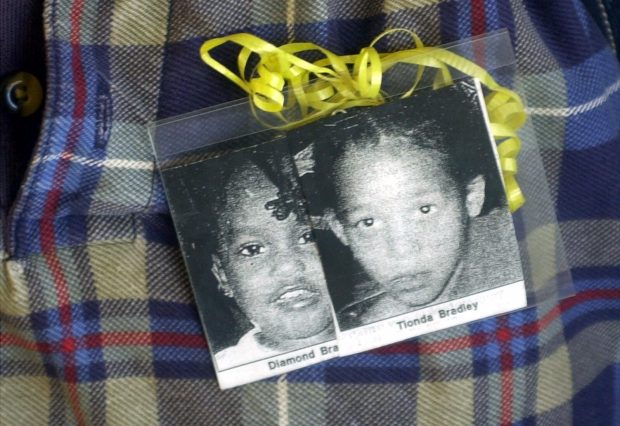
On July 6, 2001, two young sisters, 10-year-old Tionda and 3-year-old Diamond Bradley, disappeared from their apartment in Chicago. At that time, I served on the North Side. Every officer in Chicago felt the urgency to help. Photos and details of the sisters circulated everywhere as the search extended.
Wishing for available technology, I often thought drones might have aided our searches. During the Highland Park Independence Day shooting in 2022, drones existed but were legally restricted. This legislation has since been revised. The geofence warrant dilemma raises similar concerns.
Understanding Geofence Warrants
The Supreme Court evaluated a 2019 Virginia case involving an armed robbery solved through smartphone data acquired via a geofence warrant. Such warrants identify devices within a specified area during a certain timeframe. This technology enables authorities to trace who was nearby during a crime.
Before we view geofence warrants as unheard-of threats to personal freedom, consider that investigative broad sweeps are routine. In a crime scenario at a crowded venue, investigators utilize ticket records, surveillance, and parking data. That’s routine police work.
The Risks of Advanced Monitoring
When authorities access location data, they uncover more than a suspect’s presence at a crime scene. They can trace your life map – your healthcare visits, worship places, social events, residences, and personal encounters.
The distinction lies in what these tools detect. Investigators need effective resources; question is whether proper limits are in place to prevent misuse of these powers. During my service, focus was on resolving cases efficiently, not constitutional policies.
Supreme Court judgments like Carpenter v. United States recognize the need for technology boundaries. Yet, while courts set constitutional baselines, they don’t establish operational policies, which now hold greater importance.
Future Considerations
In 2023, Google’s data policies changed, complicating future geofence warrant compliance. As technology progresses, similar challenges arise unless Congress intervenes. The solution lies not in banning these warrants but in setting clear boundaries. For instance, a bank robbery might require a specific geographic warrant, not a city-wide or day-long data swipe. Just as house searches require specificity, digital inquiries should reflect similar restrictions.
Balancing Justice and Privacy
Police departments, agencies, and tech policy-makers must ensure any advancements uphold the dual integrity of justice and freedom.
Previous tech tools, such as drones or license plate scanners, faced initial resistance over privacy. As policies evolved, they became part of standard practice. However, unchecked growth dilutes initial restrictions. Crime victims often provide strong cases for expanding investigatory tools.
The pertinent issue isn’t potential misuse today but whether current frameworks can withstand unethical use in the future. Without statutory limits, frameworks often weaken. Constitutional rights shouldn’t have exceptions based on extraordinary circumstances.
Geofence warrants need not vanish, but must operate with stringent parameters, ensuring high-stakes crime resolutions are coupled with constitutional adherence. Floor-setting by courts demands appropriate subsequent framework building by Congress and law enforcement.
In critical investigations, such measures need balancing against individual liberties. While I would have readily signed warrants during crises, the necessity of regulatory guardrails becomes increasingly evident.