
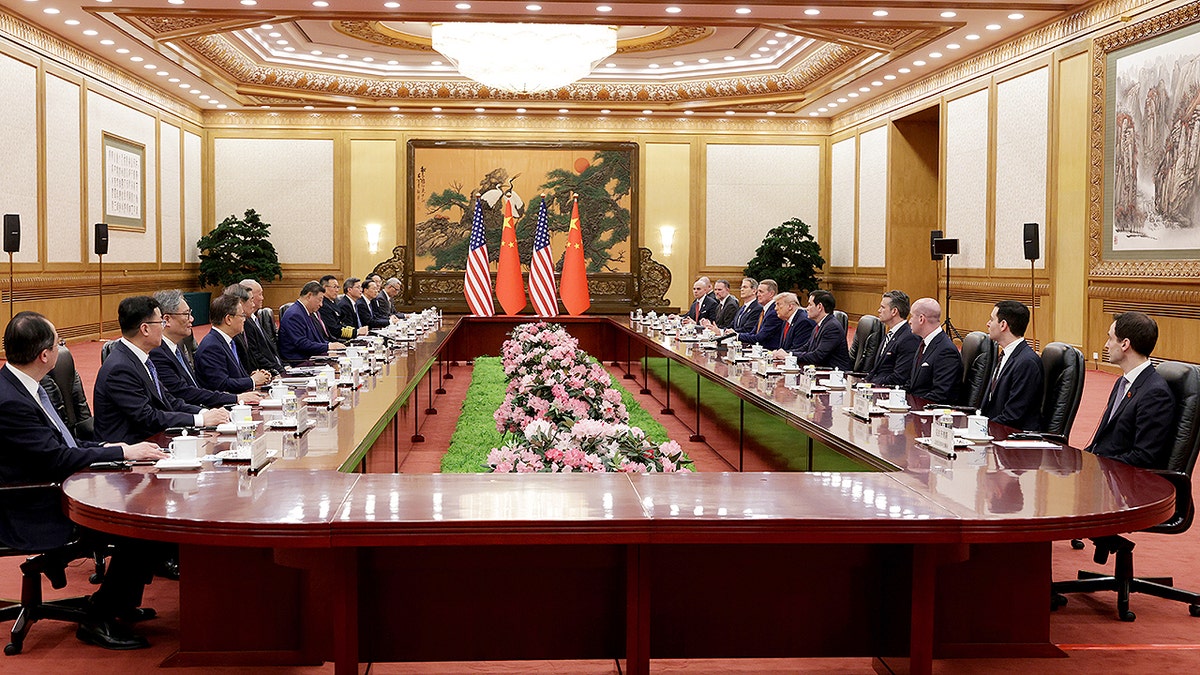
When President Donald Trump meets Chinese President Xi Jinping in Washington, their discussions will tackle a range of pressing issues.
These include trade, tariffs, rare earth minerals, and national security. However, at the forefront of this summit is a technological rivalry concerning artificial intelligence (AI). This competition is crucial as it could shape the balance of economic and military power for decades.
Trade and tech are intertwined, but the focus now is on AI control and innovation.
Technological Control
While the United States leads in advanced AI technologies and semiconductor design, China is rapidly reducing its reliance on US technology. Huawei plays a pivotal role in this effort, prompting concern in Washington.
The US has long employed export controls to limit China’s access to advanced semiconductors, especially those with potential military uses. These controls aim to curb enhancements in a competitor’s military prowess. However, China has been accelerating towards building an independent AI ecosystem.
Huawei has expanded its Ascend AI-chip roadmap. Chinese developers are adapting software to domestic hardware, while resources are poured into developing computing systems that compensate for local chip limitations. The demand for Huawei’s AI computing equipment in China exceeds supply, and they are advancing their processors aggressively.
Shifting Strategic Questions
The strategic question now extends beyond keeping US technology from China. It is also about maintaining global preference for American technology. If American tech becomes inaccessible, the incentive for China and others to develop alternatives increases.
This reflects an ecosystem competition. The choice of chips, software, and infrastructure becomes a global consideration. America aims to lead with its technology, while China aspires to offer viable alternatives, primarily through companies like Huawei.
The intricate balance lies in safeguarding US technology while ensuring it remains globally preferred.
Balancing Security and Commerce
President Trump’s administration has taken a distinctive approach from the Biden administration by rescinding the AI Diffusion Rule. It still maintains controls over technologies critical to national security while allowing some advanced chips to reach Chinese markets under specified conditions.
This strategy aims to protect crucial technologies without ceding commercial markets to Chinese competitors. The focus remains on keeping American technology competitive globally.
Future Implications
Technological leadership is not permanent, and must be defended. America possesses extraordinary semiconductor designers, leading AI firms, deep capital markets, and robust universities. Yet, sometimes, internal policies can hinder US technology’s ease of access compared to China’s aggressive alternatives.
The debate over AI’s potential risks is ongoing. Restrictions should enhance American security without excessively boosting China’s ecosystem. Since neither China nor Huawei are slowing their development, demand for AI technology continues to grow worldwide.
The next phase of competition will define which countries and companies supply chips, computing infrastructure, and software standards. The US stands to lose if it does not keep its companies central to this ecosystem.
Semiconductors are not limited to technical components; they represent strategic power.
National advantages will arise in various fields from controlling advanced computing. The Trump-Xi summit impacts far beyond immediate trade or diplomatic agreements, concerning the global technological infrastructure of the 21st century.
The US should protect sensitive technology and intellectual property, focusing efforts domestically. By fostering innovation, the US can maintain its leadership position and encourage countries worldwide to prefer its ecosystem.