
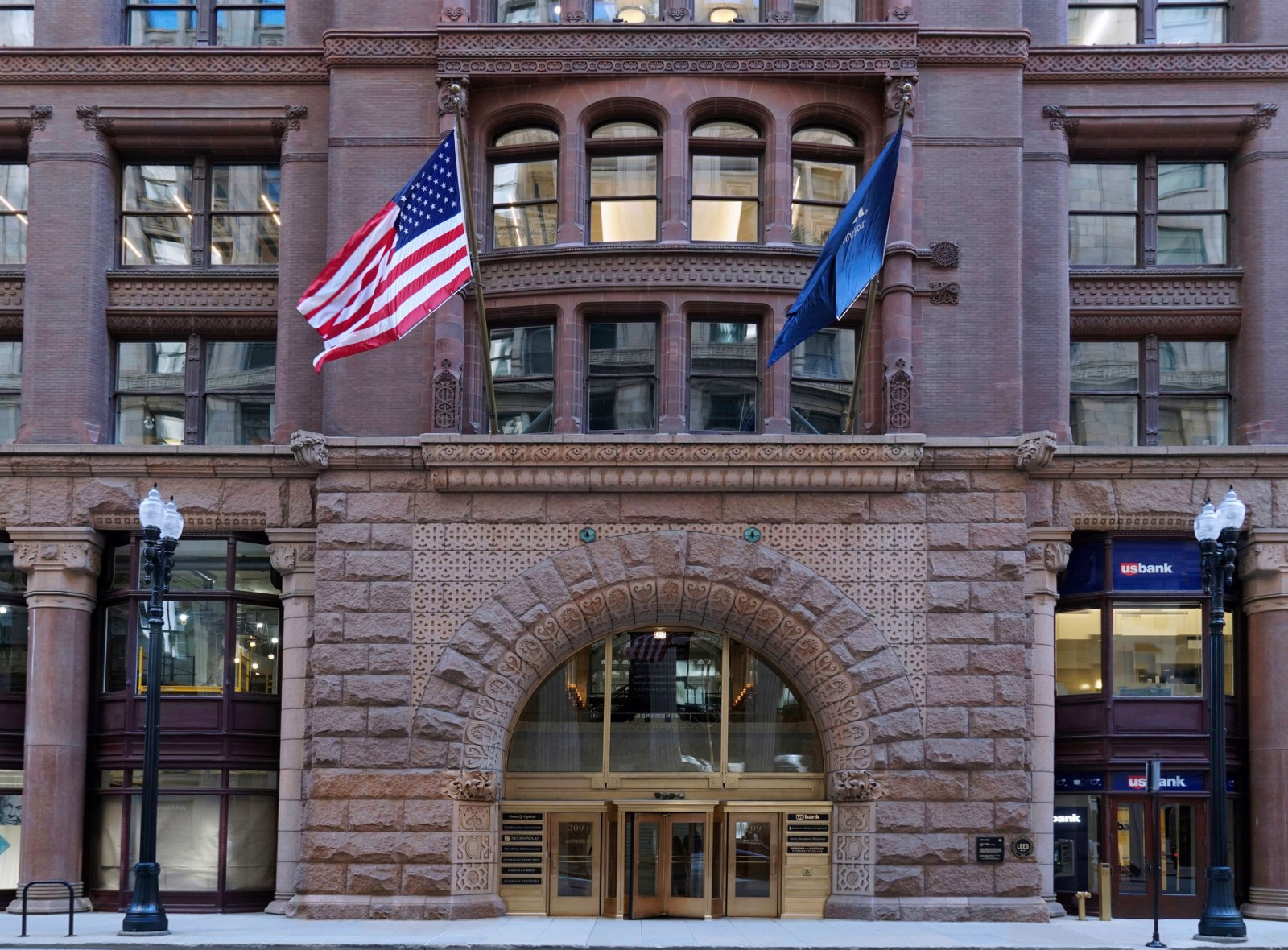
Chicago’s Rookery Building stands as a crucial link to the birth of the modern skyscraper. Commissioned in 1885, it is the oldest existing high-rise in the U.S. using a steel-frame system. This innovation reshaped urban growth by enabling vertical expansion. During a period of experimentation in construction methods, The Rookery bridged traditional masonry with iron and steel supports, defining principles for modern skyscrapers.
The Home Insurance Building in Chicago introduced a steel frame system in 1884-1885, supporting both walls and building weight, as per Guinness World Records. Its demolition in 1931 left The Rookery, completed in 1888, as the earliest surviving example of this engineering milestone. Across the U.S., historical architecture is increasingly preserved and adapted. Nearly half of the nation’s 125 million buildings are over 50 years old. Adaptive reuse led to the creation of nearly 25,000 new apartments from converted structures in 2024, a 50% annual increase, according to RentCafe.
The American Institute of Architects (AIA) highlights that reusing structures can cut 50 to 75% of carbon emissions associated with new builds. Reusing old structures prevents releasing embodied carbon emissions. Architect Gordon Gill, who designed several major skyscrapers, emphasized revitalizing older buildings rather than constructing new ones.
Born From a City Rising From Ashes
The Rookery’s beginnings are tied to Chicago’s revival post-Great Fire of 1871. As the city rebuilt, architects aimed for taller and more resilient constructions, paving the way for skyscrapers. Commissioned in 1885 and designed by Daniel Burnham and John Root, The Rookery embodied this vision. It opened three years later as “the largest and finest office building in the United States,” according to the Chicago Architecture Center, standing 12 stories and 181 feet tall.
Its structure combined old and new methods. Root devised a hybrid system of masonry exterior walls with iron and steel interior supports. This addressed issues like differential settling between materials, marking a key step in skyscraper evolution.
Engineering a New Architectural Language
The Rookery’s innovations extended beyond height. A lobby plaque describes it as “Chicago’s oldest skyscraper and the first building supported on a steel-grillage foundation.” This grillage foundation, with iron rails set in concrete, spread the building’s weight horizontally on Chicago’s soft soil, enabling taller structures. The design integrated global influences like Byzantine geometry and Islamic arches, reflecting a 19th-century interest in international styles. Its façade experimented with historical decorative forms applied to a commercial context.
Light and the Birth of Modern Interiors
A defining feature of The Rookery is its light court, addressing a key 19th-century challenge—lighting and ventilation. Coal smoke made natural light scarce, and early electric lighting was unreliable. Burnham and Root designed a structure maximizing daylight and airflow. The façade used large glass expanses, with a central light well distributing light to interior spaces.
The Chicago Architecture Center notes that the light court “maximizes light and air,” featuring a glass ceiling illuminating a two-story lobby with white marble and gold detailing. An atrium surrounded by offices reflected light deeper within and aided ventilation. Continually restored, The Rookery’s enduring relevance reflects a preservation-focused development shift, allowing this early skyscraper to inform future urban design.
For architecture or design-related stories, contact [email protected] to have your story potentially featured by Newsweek.