
Beneath the long line of tourists waiting to ascend Notre Dame Cathedral and encounter its famous gargoyles, a team of archaeologists is excavating the earth to uncover remnants of Roman Paris, dating back 2,000 years. This exploration follows the devastating 2019 fire that brought Notre Dame’s spire down, prompting rebuilding efforts that led to the cathedral’s reopening in late 2024.
Rebuilding and Excavation
With plans to revitalize the hot, barren square in front of Notre Dame with trees for shade, every part of the soil must be carefully examined to avoid damaging historical artifacts. This has transformed a section of Notre Dame’s forecourt into a bustling excavation site, complete with barriers and a wooden walkway.
A modern excavation akin to a Da Vinci Code mystery
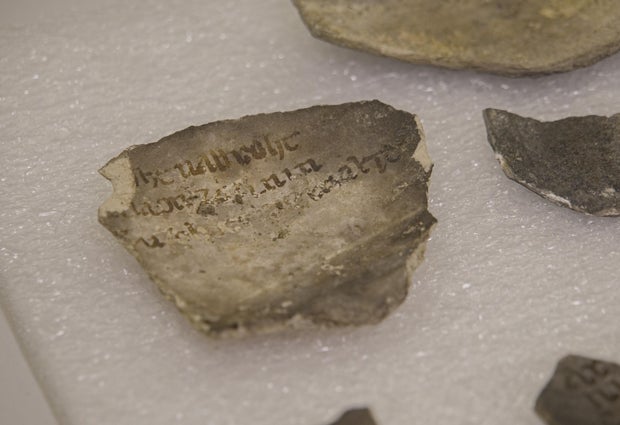
French media has dubbed the site the ‘dig of the century’ because of its potential to redefine Parisian history. Lucie Altenburg, a conservator with the Paris archaeology unit, expressed the importance of this undertaking to The Associated Press. Early finds include a coin from the fourth century bearing Emperor Constantine’s face and medieval pottery with undeciphered markings — reminiscent of a mysterious modern code.
Experiencing History
Emily Carter, a tourist from Manchester, reflected on the excitement of discovering the layered history beneath Notre Dame, saying, ‘You come to see the cathedral, then realize there’s another city under your feet.’ At around 50 centimeters deep, early signs of history appear; at 4 meters, archaeologists uncover the past, filling crates with historical artifacts each day.
Archaeologists and Ancient Cities
In ancient cities like Paris, historical layers lie beneath modern streets. As civilizations rise and fall, new constructions build upon the previous ones, creating a rich tapestry for exploration.
This parallels findings in Athens during its metro construction for the 2004 Olympics. The extensive excavation revealed tens of thousands of artifacts, some of which are displayed in metro stations.
Notre Dame’s Historical Significance
The island in the Seine, Ile de la Cite, is where Paris originated. Notre Dame was built on the same historic ground in 1163 amid densely-packed medieval housing. Camille Colonna leads the excavation, uncovering various historical layers from Roman to medieval times.
The excavation has revealed cellars and grain pits from Merovingian and Carolingian eras, as well as a dense Roman quarter dating back to the fourth century. These historical layers rise 4 meters, encompassing two thousand years of history.
Remarkable Finds
Archaeologists often uncover the most significant finds beneath medieval homes, in old latrines that once served as rubbish dumps. These conditions have preserved ceramics, animal bones, and other medieval objects.
Valentine Breloux remarks on the rarity of finding intact ceramics. Interestingly, they’ve discovered pottery with faint reddish writing, a mystery that has yet to be decoded.
The Value of Coins in Archaeology
Coins function as historical markers, aiding in dating artifacts excavated from the layers beneath. Lucie Altenburg emphasizes their importance in understanding the timeline of the underground findings.
Roman artifacts, particularly from the era when the region was known as Lutetia, offer valuable insights into early Parisian life. During the decline of the Roman empire, communities fortified the Ile de la Cite, repurposing stone remnants from older buildings.
Colonna’s team uncovered proof of this, finding a Roman doorstep used as paving stones.
A Treasure Trove of Artifacts
Every find from the excavation site is transported to the city’s archaeology center, acting as a vast storehouse full of Parisian history. This project, initiated by the city of Paris, aims to beautify the cathedral square, showcasing a rare archaeological opportunity.
By 2028, the square will transform into a woodland area with 160 new trees and water features designed to cool the area amid climate change concerns.
Deeper Exploration
The tourism landscape will evolve as shade replaces the present sun-drenched queuing area, further enhanced by a visitor center alongside the Seine. Altenburg expresses a hope to dive deeper than ever before to uncover traces of Paris’s first inhabitants, the Gauls.
Throughout previous excavations, historical tombs and sarcophagi from the 1300s were revealed, potentially belonging to significant figures of the era.
Additionally, painted sculptures identified as parts of the original cathedral architecture have been unearthed, providing insights into the craftsmanship of the cathedral’s early builders.
Scientific analyses in 2023 confirmed Notre Dame as a pioneering Gothic cathedral, utilizing iron staples during construction, exposed further by the 2019 fire.