
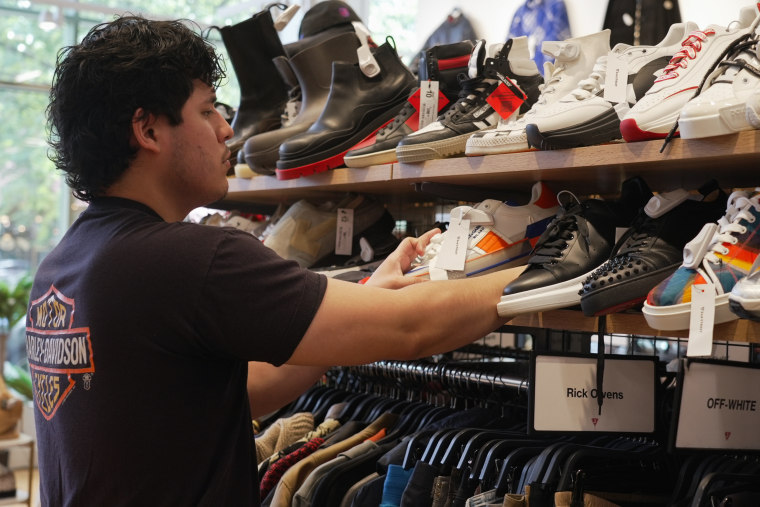
Thrift shopping has regained popularity. It’s more than wearing retro-inspired outfits; it’s about discovering unique treasures while saving money in an inflation-stricken economy. An economist at the Bank of America Institute, Taylor Bowley, highlights three main reasons for the rise in secondhand fashion: value, variety, and sustainability.
According to a recent Bank of America report, secondhand transactions have surged by 22% from the previous year. Placer.ai reports that thrift stores now outperform traditional retailers. While visits to regular apparel shops decreased from late 2022 to late 2025, thrift store visits soared by over 25%.
The U.S. secondhand market has expanded to around $56 billion, doubling from 2020 to 2025, according to online consignment store ThredUp. Gen Z is leading this trend, with 62% purchasing secondhand apparel last year. Aside from clothing, items like vinyl records, film cameras, and knitting have become popular again as younger consumers focus on quality and sustainability.
The Bureau of Labor Statistics now includes secondhand apparel in its price tracking. Retail options vary from local shops to online platforms, with businesses focusing on item quality and sometimes luxury brands. These stores provide an alternative as American consumers face rising costs for essentials. Inflation remains high, with the Bureau’s Consumer Price Index expected to show further increases. Consumer prices rose 25% over five years, while apparel costs increased by 4.2% over the 12 months ending in April, marking the most significant rise since 2022.
Economists describe this as a K-shaped economy. Wealthier households, benefiting from market gains and wage growth, drive spending, while lower-income households struggle with rising costs. Thrift stores offer a solution, providing affordable items like the $5.90 blazers and designer bags sold at 2nd Street in Montclair, New Jersey.
2nd Street, part of the Japanese GEO Holdings, operates in several states, often in affluent areas and college towns. Alongside other secondhand stores, they offer distinct items like designer boots and polka-dot dresses. Marco Alvarado, the store manager in Montclair, emphasizes that shoppers find unique and affordable items not available in malls or among fast-fashion brands like H&M and Zara.
Fast fashion has grown over the past decades, providing trendy clothes at low prices, amplified recently by online retailers like Shein and Temu. However, these clothes often lack durability, prompting environmental and health concerns. Economist Sarah A. Van Giezen from the Bureau of Labor Statistics notes that these issues, along with the COVID-19 pandemic, have shifted consumer interest towards secondhand shopping.
The secondhand market has improved quality control and allows buyers to make consistent comparisons. ThredUp advises sellers to provide clean, lightly-worn items, while 2nd Street seeks clean, in-season styles in excellent condition. Julia Laracy, an 18-year-old shopper, finds secondhand clothing to offer better quality at lower prices compared to some mall offerings.
Thrift shopping involves searching for the perfect item, turning it into a fun activity. There’s value in purchasing items with history and giving them new life, as expressed by Marco Alvarado, who appreciates the story behind his Harley-Davidson shirt. The practice supports affordability, environmental sustainability, and personal expression.