
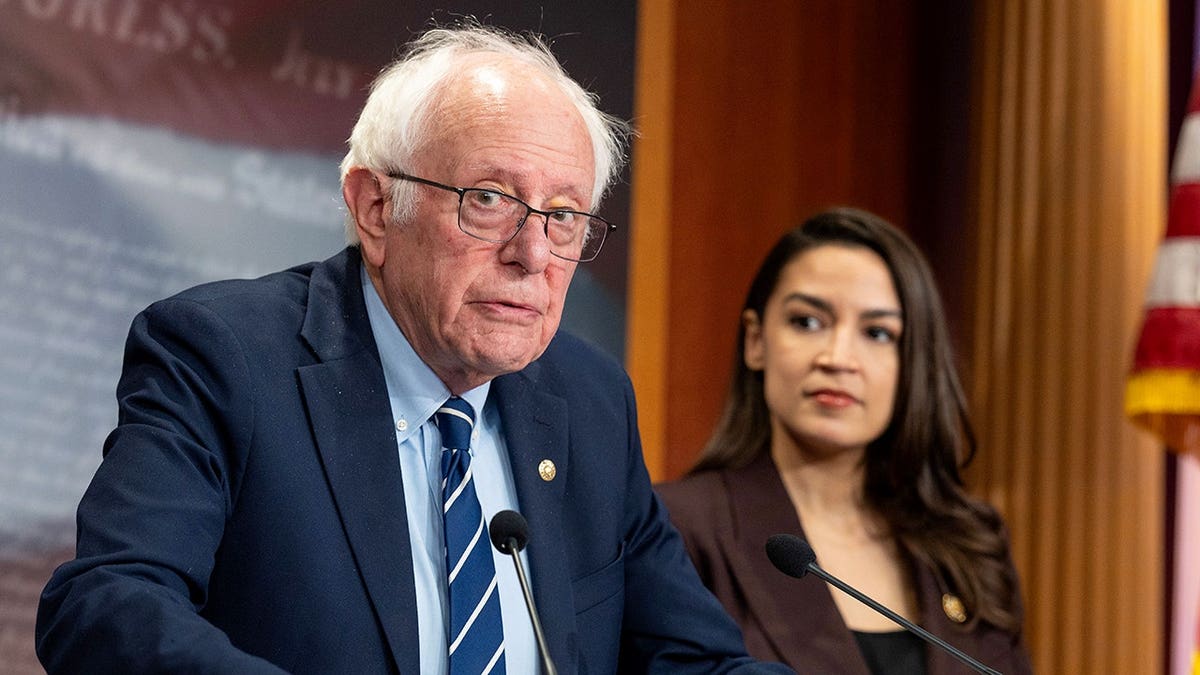
In recent months, prominent Democrats such as Senator Bernie Sanders from Vermont have expressed concerns about the influence of artificial intelligence on employment. They predict potential negative impacts on the job market and call for governmental intervention. For instance, Sanders questioned the plans for dealing with potential job losses in an April press conference.
However, data from the Bureau of Labor Statistics indicates that since AI chatbots emerged in late 2022, the U.S. has continuously added jobs, and unemployment rates have remained at low levels. This contrast highlights the differing viewpoints between those advocating for free-market solutions and those preferring more centralized planning.
“It’s showcasing the difference between free market and central planning,” commented Richard Stern, an economist with Advancing American Freedom. “It also shows what you believe it means to be human, whether merely fulfilling assigned tasks or creating new value and services.”
Stern mentioned that technological innovation often eliminates certain jobs but also frees workers to engage in other roles and develop new products. He cited the example of the Jacquard loom from the 1820s, which automated weaving patterns and revolutionized the industry.
Since 2022, while AI has increasingly integrated into the workforce, non-farm payroll employment has grown, and unemployment has stayed below 4.5%. Some businesses have adjusted their strategies after realizing AI wasn’t fully replacing junior positions, as highlighted in a Wall Street Journal report.
Despite these trends, several Democrats continue to urge for government measures to mitigate AI’s effects on jobs. Sanders emphasized AI’s transformative power, stating that it might cost many people their jobs. A Stanford study noted a 16% drop in employment among younger workers in AI-affected roles.
Concerns also come from others like Rep. Greg Casar, who noted that the U.S. government seemed unprepared for AI’s implications. A proposal for AI regulation, part of Trump’s major bill, was ultimately rejected, raising alarms about AI’s potential to enrich a few while costing jobs.
In contrast, Taylor Budowich, a former deputy chief of staff during Trump’s administration, argued that AI would enhance worker productivity. He contended that Democratic claims about job loss were misleading.
Figures like Alexandria Ocasio-Cortez and Elizabeth Warren have echoed warnings about AI. Warren stated the need for proactive measures against job disruption, while Ocasio-Cortez shared the public’s fear of job losses due to AI.
Stern believes market confidence stems from trust, whether in entrepreneurs and innovators or the government. He expressed skepticism in relying heavily on either government or AI as infallible solutions, noting the latter’s limitations as observed in AI chat outputs.