
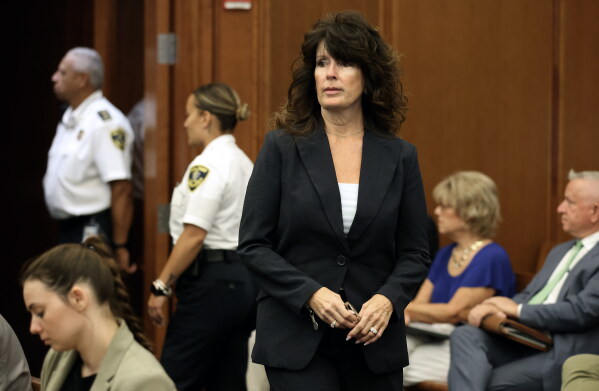
Lindsay Clancy faced emotional turmoil Thursday as jurors in Plymouth, Massachusetts, examined autopsy photos of her youngest child, who she strangled in 2023. The court had to pause the session as Clancy broke down sobbing. In the ongoing Massachusetts murder trial’s second week, prosecutors introduced more acquaintances and family members to discuss Clancy’s mental and emotional state. Although they acknowledged her struggles with postpregnancy mental health, witnesses described her as a caring mother.
Clancy has denied charges of murder for her three children, Cora, 5, Dawson, 3, and 8-month-old Callan. Her defense team agrees on the killings but argues Clancy’s mental illness makes her not criminally responsible. Prosecutors claim she deliberately planned the act by sending her husband on errands, suggesting her actions were intentional. Clancy remains paralyzed from the waist down after an attempted suicide.
If you or someone you know needs help, contact the national suicide and crisis hotline in the U.S. by calling or texting 988.
Friends Describe Clancy’s Condition
Witnesses this week detailed their observations of Clancy before the tragic incidents. Many perceived her as functioning normally, attending events and spending time with her children. Despite her mental health issues, friends did not hear her express suicidal or violent thoughts. After the birth of her third child, she struggled with sleep and adverse medication effects.
Former colleague Andrea Hennigan recalled Clancy mentioning her inability to return to her nursing job due to mental health issues. Clancy reported insomnia and described experiencing mental fog. Before the killings, Clancy texted Hennigan about negative medication side effects. Another friend, Amy Bevins, recalled Clancy mentioning dark thoughts, and Bethany Decollibus noted Clancy’s zombie-like exhaustion.
Family Perspectives
Christopher Clancy, her former father-in-law, testified about her parenting capabilities while acknowledging her struggles. He suggested having the grandchildren live with him temporarily. Despite knowing her sleep issues and emergency room visits, he understood her difficult situation. Clancy’s lawyers argue she suffered from postpartum psychosis and undiagnosed bipolar disorder, exacerbated by certain psychiatric medications. A guilty verdict could mean life imprisonment without parole, but if found not guilty due to mental illness, she could be committed to a state mental health facility.
Related Case in Massachusetts
Massachusetts faces another trial involving a mother’s mental state in relation to child murders. Latarsha Sanders’ prior murder convictions were overturned concerning her two children’s deaths in 2018. Sanders claimed external influences instructed her actions. Her defense argued mental illness as a factor, while prosecutors disagreed.
The Massachusetts Supreme Judicial Court criticized the exclusion of Sanders’ extensive medical records from her trial, impinging on her defense. The District Attorney’s office is contemplating the next steps. Sanders’ attorney, Robert F. Shaw Jr., anticipates the retrial where omitted evidence might be reconsidered.