
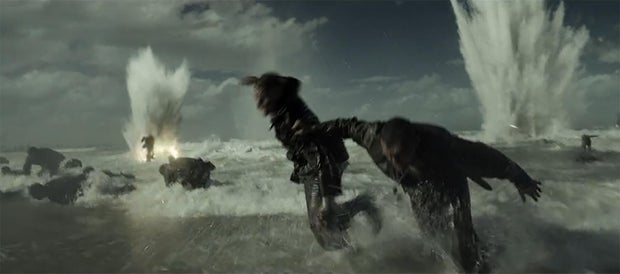
Okinawa was the final and most expensive battle of World War II in the Pacific. Director Peter Berg highlights this in his new film, “The Mosquito Bowl.” He aims to remind audiences of the sacrifices asked of young soldiers. The movie stems from a book by Buzz Bissinger, writer of “Friday Night Lights,” but despite the title, this is not a sports film. “The Mosquito Bowl” presents the harsh realities of war through the journey of four All-American football players who joined the Marines post-Pearl Harbor.
Interviewed at Parris Island, where these players trained, Berg explained the mindset they carried, likening war to their football games. Yet, they faced an enemy, the Japanese, who were ordered to fight to the end. Their first battle was on Tarawa, where American losses were first publicly shown. Berg wanted the film’s battle scenes to be as intense and terrifying as he imagined.
Known for his immersive approach, Berg involved real explosions and flamethrowers in filming. He spent time at Parris Island, writing most of the script there, saying the place influenced his work. He also carries the legacy of his father, a Marine during the Korean War, buried at Arlington.
The name “The Mosquito Bowl” refers to a football game on Guadalcanal before the Marines left for Okinawa. Berg views this game as a moment for the young men to cherish life. Marine veteran Neal McCallum, present at the game, recounted its close yet inconclusive score, with a 0-0 final. The game reflected both fun and foreshadowing of future hardships.
The movie explores challenges faced in Okinawa’s battle, recreated in Australia. McCallum reflects on the immense human loss, with over 12,000 American casualties, among them 15 players from the Mosquito Bowl. Japanese soldier and civilian losses were also high. Berg wants the audience to truly feel the human cost depicted, to remember even if numbers fade from memory.
“The Mosquito Bowl” releases in theaters on October 30, followed by Netflix streaming on November 25. It’s based on Bissinger’s book, “The Mosquito Bowl: A Game of Life and Death in World War II.” Berg desires that viewers experience the reality of war, not just intellectually grasp it. The film continues a conversation about the enduring sacrifices soldiers make.