
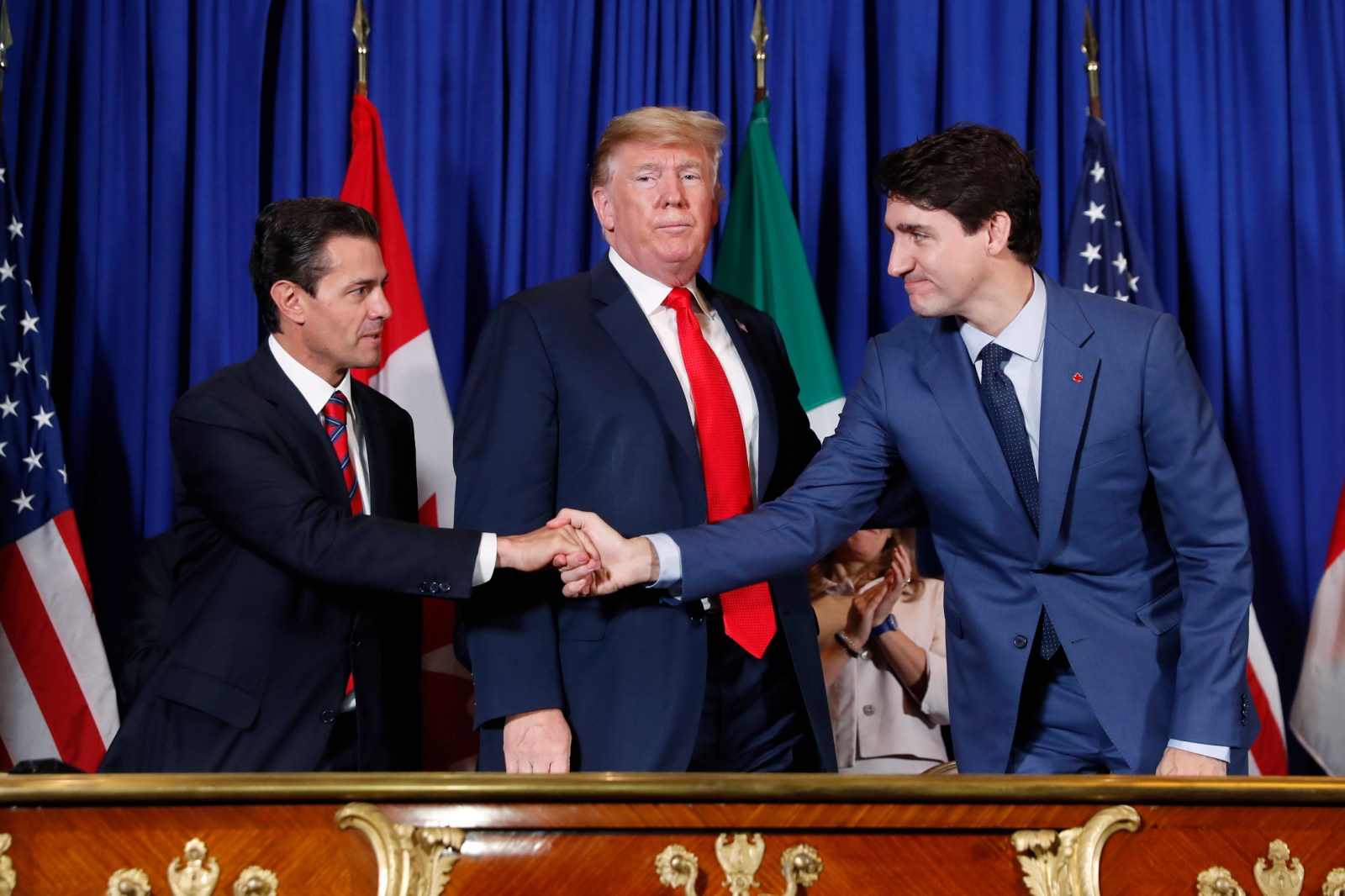
As officials from the U.S., Canada, and Mexico engage in discussions concerning the United States-Mexico-Canada Agreement (USMCA), much attention centers on tariffs and the balance of power in negotiations. This focus on transactional elements often overlooks a more crucial aspect of these talks.
For over 30 years, North America has thrived economically through integrated supply chains, cross-border investments, and cooperation. The achievements weren’t only about tariff reductions but about establishing institutions that provided investors and workers with certainty.
The decision by Washington not to renew the USMCA as it currently stands creates uncertainty in the framework that has supported North American integration for decades. This situtation has significant implications beyond immediate tariff changes.
Institutions as Pillars of Stability
Trade agreements go beyond technical details and are fundamentally about legal commitments. Their real significance lies in creating a predictable environment. Businesses can adapt to new rules, but they struggle with unpredictability. Companies hesitate to invest significant capital if they are unsure about the rules governing those investments.
This stability has been a somewhat underestimated competitive advantage for North America. It has fostered investments and built relationships across borders. American manufacturers rely on Canadian and Mexican inputs, creating a robust interconnected economy.
Infrastructure Reflecting Economic Integration
The newly opened Gordie Howe International Bridge exemplifies North American integration. This infrastructure project promises to boost commercial traffic between Canada and the U.S. Yet, its potential hinges on a stable regulatory framework.
The quest for predictability is increasingly vital as the U.S. aims to reduce dependency on China, bolster domestic manufacturing, and enhance supply chain resilience. Such goals require a steadfast legal framework to ensure continued confidence and investment.
The Cost of Uncertainty
Tough negotiations are part and parcel of agreements, but embracing uncertainty as a strategy could backfire. Immediate effects might not be apparent. However, gradual shifts in investment and strategic planning could occur if businesses and governments begin doubting the reliability of American institutions.
Uncertainty influences how allies perceive U.S. commitment to stable partnerships. The negotiations currently underway do more than seek better terms; they will influence how the U.S. is perceived in terms of fostering stability and long-term cooperation.
Throughout history, the U.S. has been successful in building institutions that other nations trust. The strategic advantage has always been its ability to offer stability, fostering alliances and cooperation. Countries like China may not easily replicate North America’s integrated market and institutional trust, a competitive edge rooted in its democratic neighbors and legal collaboration.
The ongoing USMCA negotiations will decide more than the fate of a trade agreement. They will shape whether the U.S. continues to view stability as a core strategic asset, beyond pure economic and military might.