
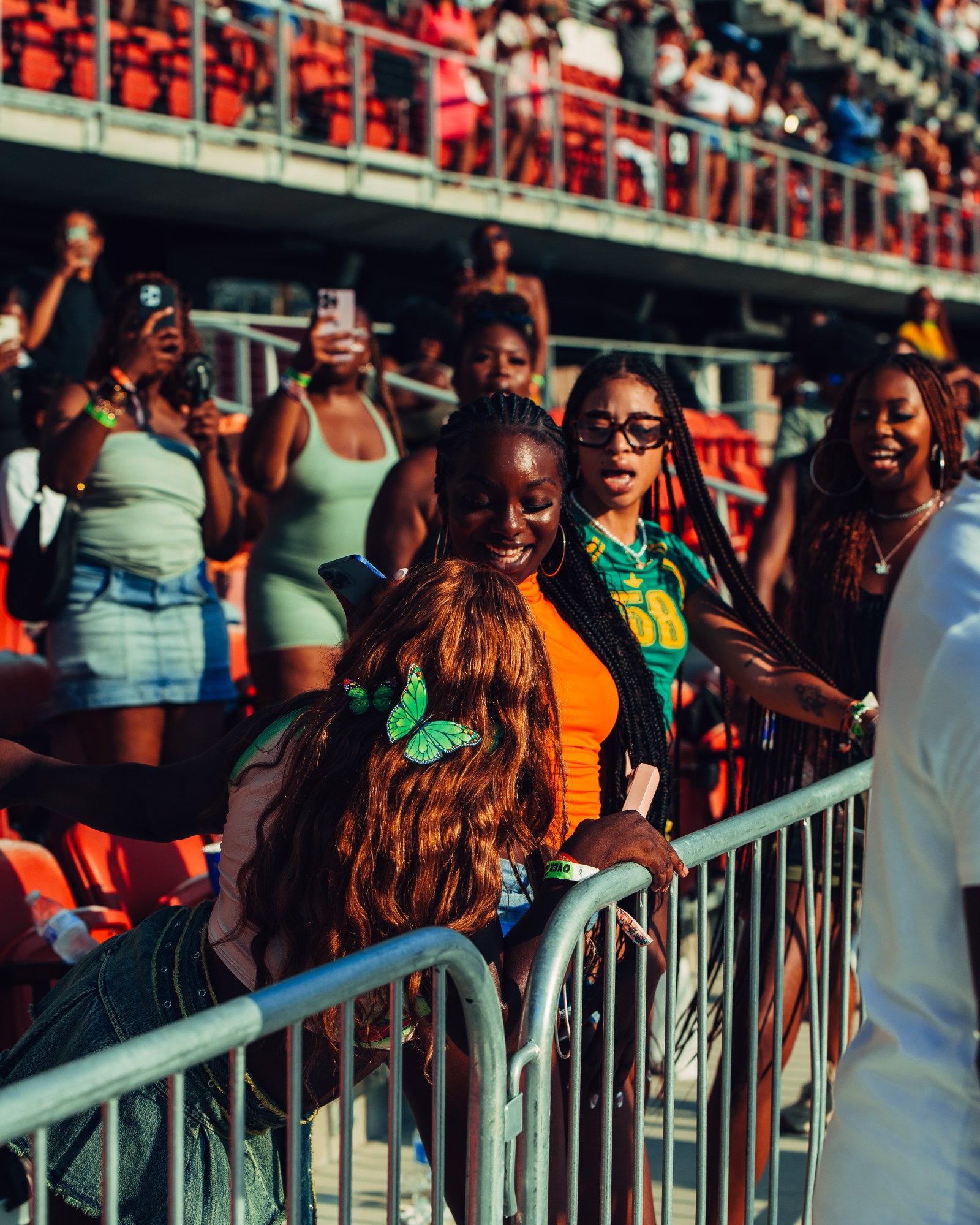
Before Brandon McEachern and his team transformed Broccoli City into a well-known cultural platform, McEachern sought a space where music, entrepreneurship, wellness, and community could coexist. During the era when music discovery happened through blogs like 2DopeBoyz, he noticed a gap. “At the time, I didn’t see anything that actually was geared toward us,” McEachern shared with Newsweek, reflecting on the formative conversations from 2009 and 2010 that shaped Broccoli City. Inspired by a clothing line for its name and Earth Day for its occasion, the first stage for Broccoli City was set in Los Angeles. While some people linked “Broccoli City” with marijuana, McEachern had broader visions of a civic identity that fostered organic living, local commerce, and culturally relevant performances. “People thought it was weed,” he said. “We were like, ‘Nah, this is really about community.’”
The inaugural event in Los Angeles featured artists like Dom Kennedy, Kendrick Lamar, Casey Veggies, and Pac Div, capturing the era’s restless creativity. When McEachern later moved the festival to Washington, D.C., Big K.R.I.T. headlined the first event there, alongside vendors, juice producers, and budding clothing labels, creating both a commercial and social atmosphere. “It was health, community, wellness, and it was also good entertainment,” McEachern explained.
Programming Across a Cultural Spectrum
As the festival grew, McEachern realized a successful lineup could not rely solely on popular rap acts. To represent its diverse audience, Broccoli City’s programming embraced a wide range of sounds and styles, actively highlighting female artists. “We need women in the mix,” said McEachern, leading to festival lineups that combined hip-hop, R&B, and alternative music. One event featured H.E.R., Daniel Caesar, Nipsey Hussle, Migos, and Cardi B, while another showcased Jhené Aiko, Anderson .Paak, The Internet, and Sango.
Black people are all through the spectrum,” McEachern observed. “Some of us like hard rap; some of us like conscious rap.
Understanding these varied tastes, the team remains attentive to younger audiences to inform programming decisions. “We were really trying to touch all those different pockets of our people,” McEachern said.
Making Live Music Affordable
Access is a recurring theme for McEachern, since festivals can build cultural credibility and sign big-name artists, but lose purpose when people cannot afford to attend. Having moved from Greensboro, North Carolina, to Los Angeles, he quickly became aware of high price tags. “I’m from North Carolina,” he recalled. “I moved to Los Angeles, and I’m like, ‘Hold on, bruh. It costs how much?’” Through Broccoli City, McEachern sought solutions by partnering with sponsors and public entities, allowing lower ticket prices without compromising the experience. “There’s no reason to do this stuff, especially in our communities, if our people can’t go and attend and have a good time,” he stated.
For the R&B-led event Holding Hands, sponsorship by AT&T enabled ticket prices as low as $25. The goal was to eliminate the need for calculations that often deter people from spontaneous night outings. “We’re reading the room,” McEachern said. “People are going through it.” Yet, talent quality remained high, exemplified by Summer Walker’s appearance, ensuring the event exceeded expectations.
A Place to See Yourself
While music attracts attendees, McEachern measures the festival’s success by interactions and connections formed beyond the stage. Many meet business partners or discover new opportunities. “I know people who have started whole businesses because they met their business partner at Broccoli City,” he said. The festival blends the reunion atmosphere of an HBCU homecoming with the discovery element of a music festival, fostering an environment where attendees feel recognized and included.
The Holding Hands format, located in an amphitheater, emphasizes inclusivity and community representation through artist partnerships. McEachern recounted an instance when Anderson .Paak’s appearance highlighted this cultural specificity. “It’s all inclusive of everybody,” he emphasized.
Building Commerce, Careers, and Confidence
The philosophy extends to Broccoli City’s marketplace, designed to support entrepreneurs. When vendors offer clothing, food, and products, the festival evolves into a mini-city, promoting financial exchanges among people who may struggle to reach audiences otherwise. “We got platforms for the artists,” McEachern said. “Why wouldn’t we have a platform for young entrepreneurs?” Additionally, BroccoliCon provides professional development opportunities, demonstrating practical skills and connecting creatives with executives.
Job-fair programming later emerged as a meaningful extension, further broadening the festival’s impact. “You can’t be what you don’t see,” McEachern noted. “Our job is to uplift.”
Taking the Model Beyond Washington
McEachern believes the Holding Hands concept can be replicated in areas lacking major cultural events. A strong support network and venue alignment are crucial, but the model can succeed elsewhere. “We need some good acts, and we would love to work with the local community,” he said. However, audience engagement remains key, as feedback impacts future investments and opportunities. “If you had a good time, say that,” McEachern encouraged.
The Broccoli City journey, originating from an organic T-shirt line, underscores the power of live entertainment to foster excitement, opportunity, and validation. Each success story relies on participation and shared experiences. “There needs to be more Broccoli Cities,” McEachern asserted. “More experiences from our vantage point.”