
Warning: This post contains spoilers for The Good Daughter finale.
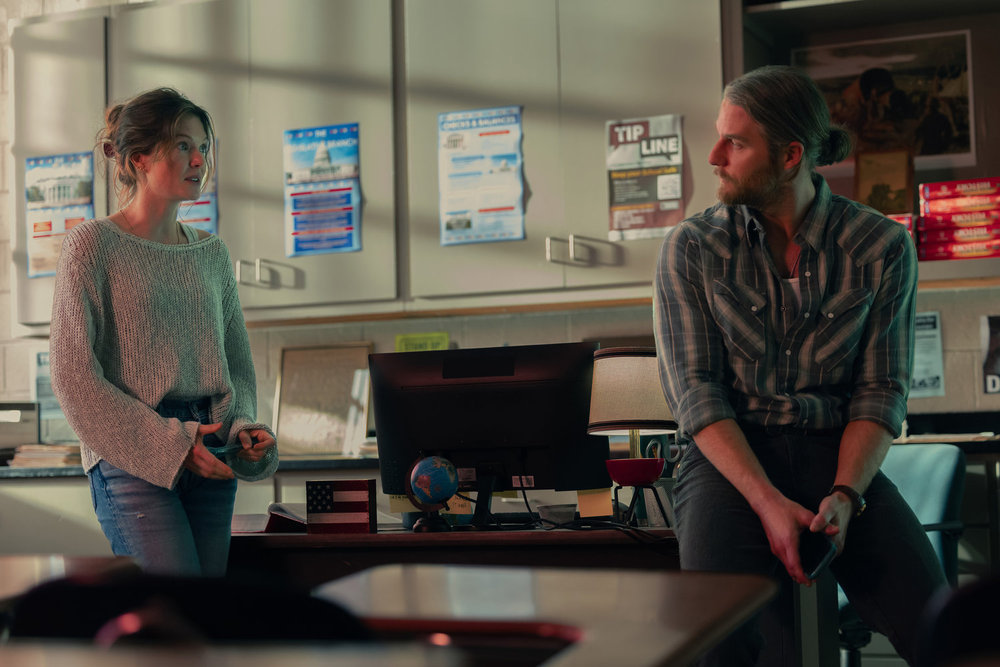
Charlie Quinn (Meghann Fahy) rushes out of the farmhouse, her hair trailing behind her, as Mason “Huck” Huckabee (Jake McDorman) arrives on the lawn. She demands to know why he is there. Huck asks if her sister is home, but Charlie informs him that her husband is. Huck offers condolences for her father’s death. Behind the screen door, Samatha Quinn (Rose Byrne) gets close enough to hear Huck say he needs to speak with both sisters, emphasizing its importance.
This opening sets the stage for the finale of The Good Daughter, a six-part series on Peacock, adapted by Karin Slaughter from her 2017 novel. Over two decades earlier, the Quinn family faced a horrific event when two masked men invaded their home in Pikeville, Georgia, seeking Rusty, a defense attorney (Brendan Gleeson). They found his wife, Gamma, and daughters instead. Gamma was killed. Sam suffered a head wound and was left for dead. Charlie, the younger sister, escaped after being assaulted by Zach Culpepper. Zach was imprisoned, but his brother Daniel, identified as the second assailant, was killed by the police. The Culpepper family claimed Daniel’s innocence, which the finale reveals to be true.
Over the years, the sisters grown up and drift apart. Sam pursued a career in patent law in New York, while Charlie became a public defender in their hometown. A school shooting that resulted in fatalities, including a student named Emma, draws them back together. Kelly Wilson, an intellectually disabled teenager, is found with the gun. Rusty took her case, but died before its resolution. By the finale, Sam defends Kelly, while Charlie shares her trauma with her sister.
The episode “What Really Happened” solves both crimes within 40 minutes. The revelations match those in Slaughter’s novel, but the series diverges in its aftermath, presenting a different prison sentence and allowing the sisters to reclaim a piece of their past together. “I’ve written a lot of crime novels,” Slaughter tells TIME, “and one thing I think is very important to readers and viewers is the feeling that justice has been done, and that there’s hope.” For Sam and Charlie, this comes only after revealing their truths to each other.
The Second Masked Man
Just minutes into the episode, Sam accuses Huck of an older crime: the arson of the Quinns’ house over 20 years ago. It occurred shortly after Huck’s sister, Annalie, accused a man of rape. Rusty defended that man, allegedly destroying Annalie’s reputation in court. That week, Annalie’s family home burned down. Huck admits to setting the fire as a warning. Annalie later died by suicide, and Huck, just 17 at the time, found her body, blaming Rusty for her death.
Charlie’s estranged husband, Ben (Michael Dorman), enters quickly and confronts Huck, holding him accountable for the trauma inflicted upon Charlie. This reveals Ben’s fierce loyalty. Meghan Fahy, who plays Charlie, explains that this moment brings a sense of relief to Charlie, despite the shock.
The story shifts focus to Sam’s intense sense of responsibility as the eldest sibling. From a flashback, we understand the severity of the night when the attackers first arrived. Gamma kept her composure and tried to placate the intruders with cash, underscoring her bravery.
Huck is cornered when Ben discovers a written confession upstairs from Huck’s past. Huck confesses to paying Zach to kill Rusty; however, he maintains he never intended for the sisters to be harmed. Despite his attempt to justify his actions by recounting his own difficult past, neither sister is willing to accept Huck’s version of events.
Charlie confronts Huck over his complicity in events from years ago. For both sisters, Huck’s actions led to irreversible trauma. With palpable disdain, they reject his plea for forgiveness.
The Secret Rusty Kept
Rusty Quinn’s actions and choices come into focus when Huck reveals more about the payment scheme to keep Zach’s accomplice a secret. Rusty wanted to protect his daughters from further trauma by avoiding new trials and appeals. This decision was made out of a father’s attempt to shield his daughters from repeated tragedy.
Slaughter reflects on Rusty’s internal conflict and decisions. His objective was to maintain his daughter Charlie’s trust when it came to her assault. In doing so, Rusty honored Charlie’s wish for privacy.
Byrne, playing Sam, highlights Rusty’s protective nature over his daughters. The series emphasizes the moral complexities involved in Rusty’s past decisions.
The Price of Being The Good Daughter
In a significant scene, Charlie learns how Ben knew about her assault. He explains that Rusty confided in him before passing. Charlie clarifies that her confidentiality was a matter of personal boundaries, not shame, providing a healing moment between her and Ben.
The character’s trauma extends to her beliefs about her fertility problems, which she associated with the assault. Ben reassures her, emphasizing acceptance regardless of their ability to have children. This exchange marks a pivotal moment in their relationship, allowing for new beginnings.
Charlie finds a semblance of peace after revealing the hidden truth. The series explores the stigma around assault survivors, underlining the importance of facing the truth.
A Confession Over a Broken Plate
Later, Judith Pinkman, once a trusted figure for Charlie, confesses her role in the school shooting. Judith explains how she manipulated Kelly, who was coerced into shooting. Her husband, Doug, had been abusing Kelly, and Judith’s manipulation led to tragedy.
Judith’s calm demeanor contrasts with her confession, where she admits to pulling the trigger to frame Doug as a hero who stopped a shooter. In a final act, Judith records her confession on Charlie’s phone before ending her own life.
This revelation adds another layer of betrayal for Charlie, whose relationship with Judith dates back to the night of her own trauma.
Five Years for Kelly Wilson
The series turns to the courtroom, where Sam negotiates a plea deal for Kelly Wilson. The District Attorney dismisses calls for leniency despite evidence suggesting a mishandling of the case. Sam leverages these oversight failures to secure a reduced sentence of five years for Kelly, challenging the local authorities.
The scene parallels the advocacy displayed by Rusty, Sam’s father, emphasizing empathy for marginalized individuals. Byrne notes that Sam’s legal approach reflects her father’s influence, providing a degree of closure in their complex relationship.
Slaughter draws real-world inspiration from cases such as the West Memphis Three while crafting Kelly’s character. The nuanced portrayal of Kelly’s predicament highlights inconsistencies in the justice system.
The Photograph Rusty Hid
The story shifts focus to the Quinn sisters, now moving forward from their past ordeals. Charlie plans to move to Atlanta with Ben, anticipating a fresh start, while offering Sam a chance to reconnect.
The sisters, alongside Lenore, Rusty’s secretary, reminisce over Rusty’s letters. Amidst these memories is a quest for a photograph of Gamma that Rusty cherished. His cryptic instructions allude to deeper truths about their family. Charlie surmises that he left them together for a reason.
In a poignant conclusion, the sisters find the cherished photograph in a hidden frame, representing unity through shared family history. The photograph symbolizes their coming to terms with their past.
The finale concludes with the Quinn sisters standing side by side, united by their heritage and journey to confront the past. Slaughter emphasizes the significance of their discovery, allowing for healing and connection.