
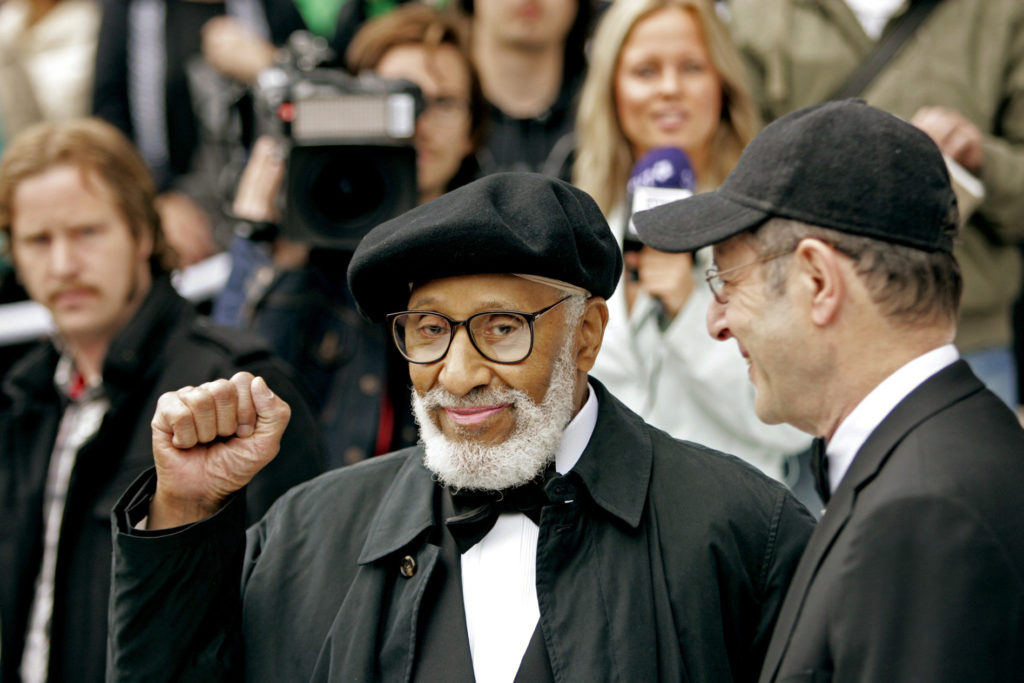
Sonny Rollins, an iconic tenor saxophonist known for his innovative and bold approach to jazz over five decades, passed away at the age of 95. His spokesperson, Terri Hinte, confirmed that he died at his Woodstock, New York home, although no specific cause of death was given. Rollins had been facing various physical challenges that had kept him largely housebound.
The Legacy of a Jazz Innovator
Rollins began his career as a teenage prodigy and was esteemed for his improvisational talent. He stood alongside John Coltrane and Charlie Parker as one of the most influential saxophonists of his time. Despite being a part of the bebop era, his reach extended beyond the jazz community. For instance, rock fans will recognize his sax solo on the Rolling Stones’ 1981 track “Waiting on a Friend.”
Throughout his career, Rollins remained restless in his art, frequently exploring new styles and occasionally stepping away from music altogether to focus on his personal growth. In his earlier days, his bebop contributions were notably popular, yet he often found revisiting his past work to be “excruciating” due to perceived flaws.
Milestones and Achievements
In the latter part of his career, during the 1990s and 2000s, Rollins released several critically acclaimed albums and won Grammy awards for his work. He retired in 2014 due to pulmonary fibrosis, yet his legacy as a performer endures. His album “This is What I Do” won a Grammy in 2001, and he captured another in 2006 for “Why Was I Born?”—a track from his live album recorded shortly after the 9/11 attacks.
He recounted feeling a greater connection during performances, saying, “I played a couple of concerts early on where I was out in the open… I felt I was part of something bigger.”
Early Career and Obstacles
Rollins’ journey commenced when he joined Thelonious Monk’s band in his late teens, quickly immersing himself in the jazz scene alongside legends like Miles Davis and Bud Powell. However, addiction to heroin posed significant challenges. After spending time in jail and overcoming addiction through a rehabilitation program in Kentucky, Rollins emerged with a renewed sense of purpose.
By the late 1950s, he had produced seminal works like “Saxophone Colossus” and experimented with a different musical approach by forming a pianoless trio. Despite his rising popularity, he chose to retreat into seclusion to hone his craft on the Williamsburg Bridge, highlighting his commitment to personal and artistic growth.
A Continued Influence
Upon returning to the jazz scene in 1961, Rollins embraced the emerging free jazz movement, which divided some of his fans but reinforced his reputation as an evolving artist. The mid-1960s saw him contributing to film soundtracks and discovering Zen Buddhism, sparking yet another sabbatical.
When he resumed recording in the 1970s, he had attained legendary status, earning accolades like a Guggenheim fellowship and being inducted into the Downbeat Hall of Fame. Though mostly self-taught, Rollins’ profound impact on jazz remains indisputable; his career serves as a testament to his continuous pursuit of artistic excellence.
Reflecting on a Legend’s Passing
Theodore Walter Rollins was born in Harlem in 1930 into a musically inclined family. Despite financial challenges, he mastered the saxophone and played New York clubs as a young man. His passing leaves a wealth of unreleased recordings, yet he expressed no concern over their future. “After I get out of this planet… I’m not worried about that,” he said, embracing a release from the burden of his music.
A free press is a cornerstone of a healthy democracy. Support trusted journalism and civil dialogue.