
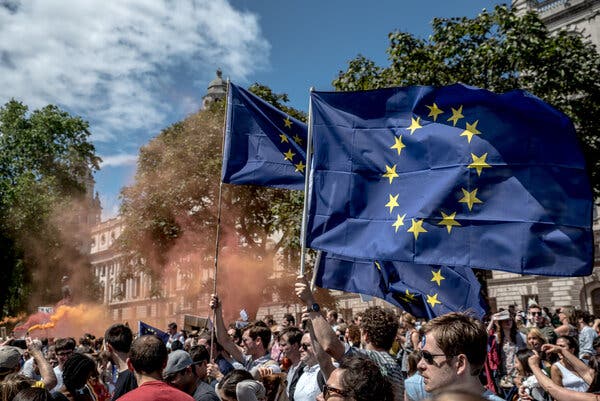
A decade has passed since British citizens voted to leave the European Union. Analysts largely agree that this choice has negatively affected the United Kingdom’s economy. According to economists, the economy is smaller now than it would have been if the UK had remained in the EU.
In a referendum ten years ago, British voters narrowly supported leaving the European Union. Despite the warnings from the government at the time, which predicted a swift and deep economic impact, the vote went ahead. While these predictions may not have been immediately correct, the long-term consequences have proved damaging.
Economic Impact Since Brexit
Brexit has significantly impacted the British economy, with increasing costs over the years overshadowing any advantages. Politically, it has also caused considerable instability. The nation is preparing for its seventh prime minister since the referendum after Keir Starmer announced his resignation.
This instability is mirrored by public disappointment. A recent poll indicated that nearly half of the British population believes Brexit has not met expectations. Another survey showed that over fifty percent would back rejoining the EU.
Assessing Brexit’s Economic Costs
Quantifying Brexit’s cost is challenging due to concurrent economic pressures such as the COVID-19 pandemic, tariffs from President Trump, and ongoing conflicts in Ukraine and Iran. Nonetheless, recent reports provide some insights.
Economists generally agree that Britain’s economy is 4% to 6% smaller than if the country had remained in the European Union.
Prior to the 2016 vote, the British government anticipated an immediate severance of trade ties with the EU’s 27-member states. The reality was more drawn out. The official EU departure didn’t occur until January 2020, followed by an 11-month transition period. These delays meant trading rules didn’t change until 2021, compounding the difficulty in isolating the vote’s economic effects.
While the full ramifications of Brexit are complex and intertwined with other global events, its negative impact on the UK’s economy remains a significant consideration. It continues to be a contentious issue within the country, affecting both economic policy and public sentiment.