
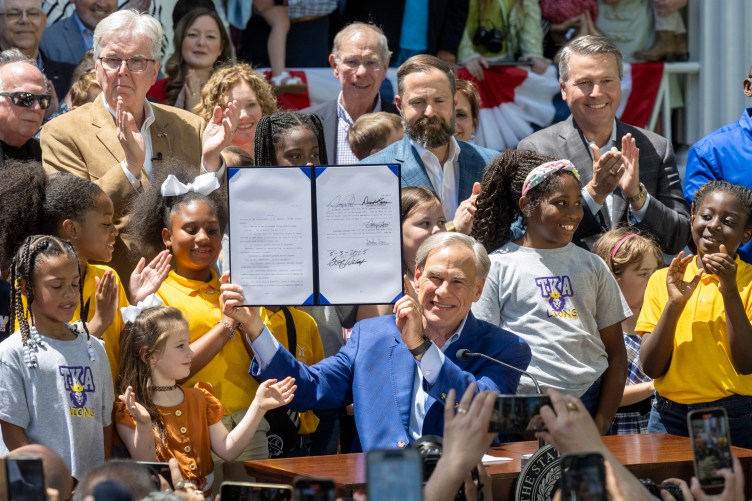
Texas Governor Greg Abbott’s education agenda, once a cornerstone of his administration, faces significant challenges. His vision included a private school voucher program that enabled around 110,000 students from over 5 million in Texas to attend private schools using taxpayer funds. Mike Morath, Abbott’s appointee as Commissioner of the Texas Education Agency, spearheaded a large-scale takeover of public schools. Additionally, the Texas State Board of Education, with Abbott’s backing, endorsed a new social studies curriculum. This curriculum incorporated Bible stories and emphasized Texas and United States history over world history.
However, this approach has met with resistance. On election night, Texas Gov.-elect Gina Hinojosa announced plans to reverse Abbott’s educational reforms. She expressed her intentions to dismiss Morath and halt the public school takeovers. Central to her campaign was a promise to eliminate the school vouchers, which she branded as a scam. While abolishing the program requires legislative action, incremental changes are possible with Democratic influence growing. Democrat Sarah Eckhardt, opposed to vouchers, is poised to increase accountability and transparency within the program.
Though Democrats regained control of the Texas House, Republicans still hold a majority in the Senate. Deputy House Education Committee Chair, Democrat Diego Bernal, remains optimistic about curtailing the voucher program. Bernal believes that with former Republican opposition now out of power, progress can be made. He contends that the program will face substantial changes and may even be dismantled entirely.
“That program is not going to remain unchanged,” Bernal said. “By the time we’re finished, it might not even exist.”
Abbott’s persistent advocacy for a statewide voucher program faced significant opposition from rural Republicans. In 2024, rural lawmakers resisted such measures, supporting public schools as critical community institutions. Frustrated by this resistance, Abbott invested millions to elect pro-voucher Republicans, aiming to pass the $1 billion program. Yet, the latest election saw backlash against Abbott’s candidates. At least 13 Republicans endorsed by Abbott lost or trailed in tight races against Democrats.
As a result, Abbott’s stronghold among rural voters weakened. Democratic candidates gained ground in rural and semi-rural areas, many of which voiced concerns over vouchers. Abbott’s margin declined by 16 points in rural counties compared to his 2022 campaign. In exurban areas, the drop was even greater at 20 points. Former anti-voucher Republican Rep. Dewayne Burns noted constituents felt let down by Abbott’s voucher initiative. Former Rep. Steve Allison echoed these sentiments, citing his district’s opposition to vouchers, despite being unseated by an Abbott-backed candidate.
Pro-voucher Republican Marc LaHood faced similar opposition in races like that for Allison’s former seat. In Bell County, pro-voucher Rep. Hillary Hickland conceded defeat after a close contest, highlighting the public’s dissatisfaction with vouchers.
Looking forward, Rep. Zack Dunn intends to support measures ensuring accountability in voucher spending. He strives for full program repeal, emphasizing public education funding as a priority. New Comptroller Sarah Eckhardt aims to increase financial scrutiny and transparency within the program. She criticized previous administrations for withholding financial details, justifying it as privacy protection.
Sen. Paul Bettencourt, a voucher supporter, advocates for evaluating the program’s outcomes objectively and engaging in informed legislative debate. Meanwhile, private schools involved in the program face uncertainty. Attorney Scott Schneider predicted a challenging period for them if state funding dwindles, indicating potential lobbying efforts to protect current grant beneficiaries.
“It’s going to be a hot mess,” Schneider remarked, reflecting on the schools’ future without state aid.