
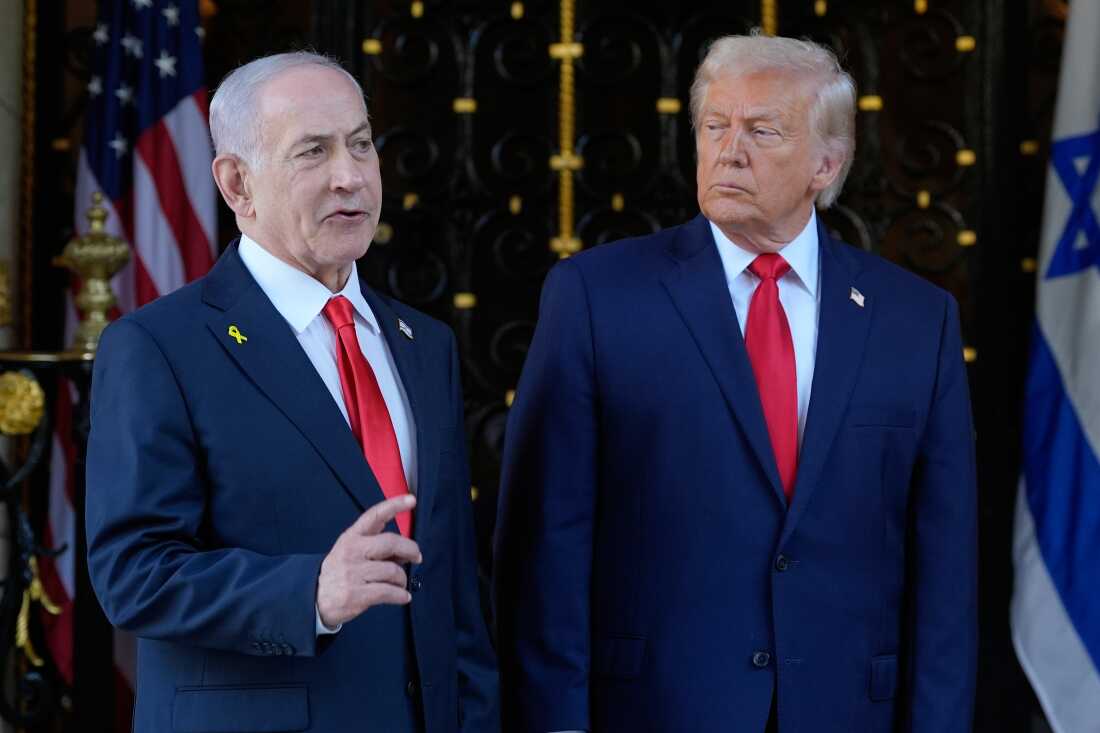
President Donald Trump and Israeli Prime Minister Benjamin Netanyahu were present at a meeting at Mar-a-Lago in Palm Beach, Florida, where a significant disagreement surfaced. On December 29, 2025, the central topic was Trump’s 15-point peace plan for Gaza, which Netanyahu publicly rejected.
Netanyahu firmly stated, “Israeli forces will not withdraw from Gaza until Hamas is genuinely disarmed.” He emphasized that the disarmament should be authentic, not superficial.
This statement followed Trump’s earlier announcement of a historic agreement with the Palestinian militant group Hamas. Trump declared on social media that the Board of Peace had achieved a complete disarmament deal for Hamas and other Gaza armed groups, calling it a major move towards peace and security.
Trump’s proposed peace deal included a plan where Hamas and other groups would submit their arms to a vetted international policing force. However, a senior Hamas official informed NPR that Hamas would only consider disarmament if Israel agreed to withdraw from certain Gaza areas first.
The disagreement followed an October 2025 ceasefire, a part of Trump’s earlier 20-point Gaza plan. This ceasefire had ended significant hostilities, secured the release of hostages in exchange for 2,000 Palestinian prisoners, increased humanitarian aid, and proposed a limited Israeli pullback.
More complex issues, such as Hamas’s disarmament and further Israeli withdrawals, were left open for future discussions. On July 31, Trump’s new 15-point roadmap aimed to advance these unresolved matters. The plan envisioned a phased process where Israel’s withdrawal from Gaza and Hamas’s disarmament would occur concurrently, rather than requiring complete disarmament before any Israeli retreat.
Supporting Netanyahu, the Board of Peace stated on August 3 that there would be no withdrawal beyond the Yellow Line until all weapons were decommissioned by Hamas.
Netanyahu’s insistence on his terms comes amid an impending election on October 27, with polls indicating his coalition risks losing its majority.
Currently, Israel maintains control over approximately 70% of Gaza, according to Palestinian officials and aid agencies. Despite the impasse, Hamas expressed its continued commitment to the roadmap in a press statement released Sunday.