
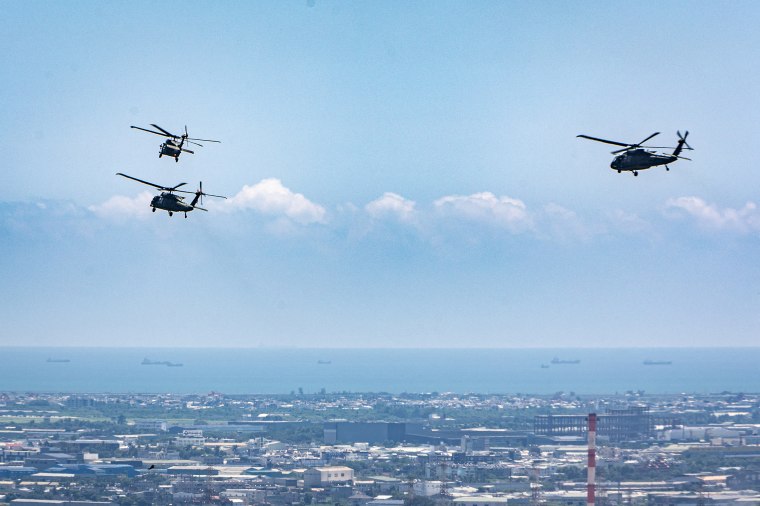
On August 5, 2026, Taiwan initiated major military exercises aimed at enhancing commanders’ ability to adapt to unpredictable enemy actions. These drills, lasting ten days, are designed to test combat readiness, incorporating fighter jet dispersals and emergency naval deployments. Initiated by an underground command center in Taipei, the exercise also temporarily limits internet access for the first time, according to senior Taiwanese officials.
The Han Kuang annual exercise introduces a backbrief method modeled on U.S. military practices. Junior officers are required to restate mission orders to ensure alignment with commanders. This approach is intended to improve operational coordination.
Taiwan aims to balance commanders’ and subordinates’ understanding of operational intent.
The exercises focus on the risk of China attempting to disable command centers, ports, logistics, and defense sites early in a possible conflict. China claims Taiwan as its territory, though Taiwan objects to this claim. Currently, China’s defense ministry has not commented on the drills. Historical tension remains, with China never ruling out force to assert control over Taiwan.
Since 1984, these exercises have been conducted annually, but this year includes deliberately slowing mobile internet speeds. The aim is to simulate scenarios where civilian communication could be impacted during wartime.
The military will simulate relocating a major arsenal and mobilize civilian factories. Escort drills off Taiwan’s Pacific coast address increasing Chinese military activity, as concerns grow about the potential isolation of Taiwan from its allies.
A defense official emphasized that these drills are meant to be challenging, transitioning from highly controlled exercises to real-world scenarios. The goal is to reach realistic training conditions and make exercises more effective.
Resilience drills test local officials’ ability to maintain government operations during crises like earthquakes or invasions.
Commanders will assess and adapt strategies if enemy actions differ from expected scenarios. Over 20,000 reservists will participate, practicing live-fire exercises on locations such as Zhongfu Beach.
This year’s drills implement an embedded reporter mechanism to evaluate wartime frontline news releases and efforts to counteract disinformation. Officials highlight the importance of uniting the population in facing the realities of war.