
In Syria, the death of a young man with a serious medical condition has ignited memories of torture and abuse under the long reign of the Assad dynasty. Citizens have taken to social media and the streets to demand answers about Mohammad Ghamira’s death. Ghamira was buried in al-Haffah, Latakia province, on Monday.
The overthrow of former President Bashar Assad in December 2024, after a nearly 14-year civil war, led to the exposure of the country’s infamous prisons. Rights groups report thousands of prisoners died from executions, injuries, and diseases during Assad’s rule. Many endured torture, beatings, and rape.
Government Response
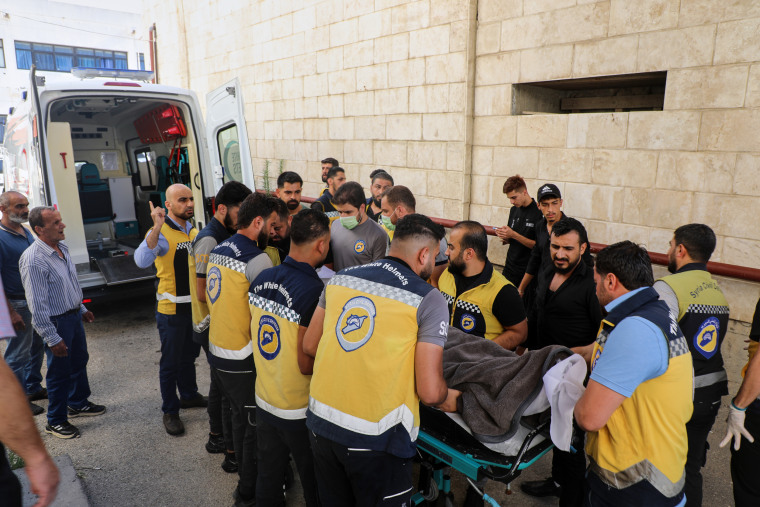
Officials with interim President Ahmad al-Sharaa’s government promise accountability in Ghamira’s case. However, rights groups assert that such abuses continue in detention centers. Photos from various sources show members of the White Helmets carrying Ghamira’s body before his burial in al-Haffa, Latakia province.
Ghamira, a 29-year-old father of two, was a former volunteer with the White Helmets civil defense organization. He died in a Latakia hospital on Sunday, shortly after his release from jail. Detained days earlier on a theft allegation, Latakia’s internal security provided no further details.
Medical Condition and Allegations of Abuse
Raed al-Saleh, Syria’s Minister of Emergency and Disaster Management and former White Helmets head, stated that Ghamira died from complications of cerebral and gastrointestinal hemorrhaging. This resulted from beatings during his detention at the al-Haffah police station. Ghamira’s hemophilia, a condition affecting blood clotting, was also noted by al-Saleh and Ghamira’s family.
Ghamira’s uncle, Issam Ghamira, mentioned in a video interview that the family informed police of his condition and warned against physical harm. Yet, Ghamira was reportedly hit while in custody. Syria’s interior ministry announced an investigation and detained seven personnel for questioning.
Syria’s Interior Ministry spokesperson, Noureddine al-Baba, acknowledged shortcomings in some police departments while praising others. He expressed hope that the incident would spark positive changes in the operations of the ministry.
Broader Context of Abuse
The UN Independent International Commission of Inquiry on the Syrian Arab Republic reported documentation of torture and ill-treatment in 18 official detention facilities and 12 makeshift ones, following Assad’s ouster. Recorded practices included beatings, electric shocks, mock executions, and sexual violence.
Syrians for Truth and Justice, a human rights organization, reported widespread severe beatings, electric shocks, threats, and deprivation in custody still occurring. Their conclusion highlighted these incidents as too extensive to be isolated, yet lacking a centralized system akin to Assad’s torture apparatus.
Bassam Alahmad, the group’s executive director, noted, “For us, there is no evidence that these orders came from the commanders to torture people, but still the authorities have a responsibility to stop this behavior.” Syrians whose loved ones disappeared or died in detention during Assad’s rule express concern over repeated patterns under the new government.
Families for Freedom, representing relatives of detainees, stated, “What happened to Mohammed reopens the wounds of torture and death in detention for thousands of Syrian families — practices Syrians have struggled for years to end, and the recurrence of which cannot be accepted today.”