
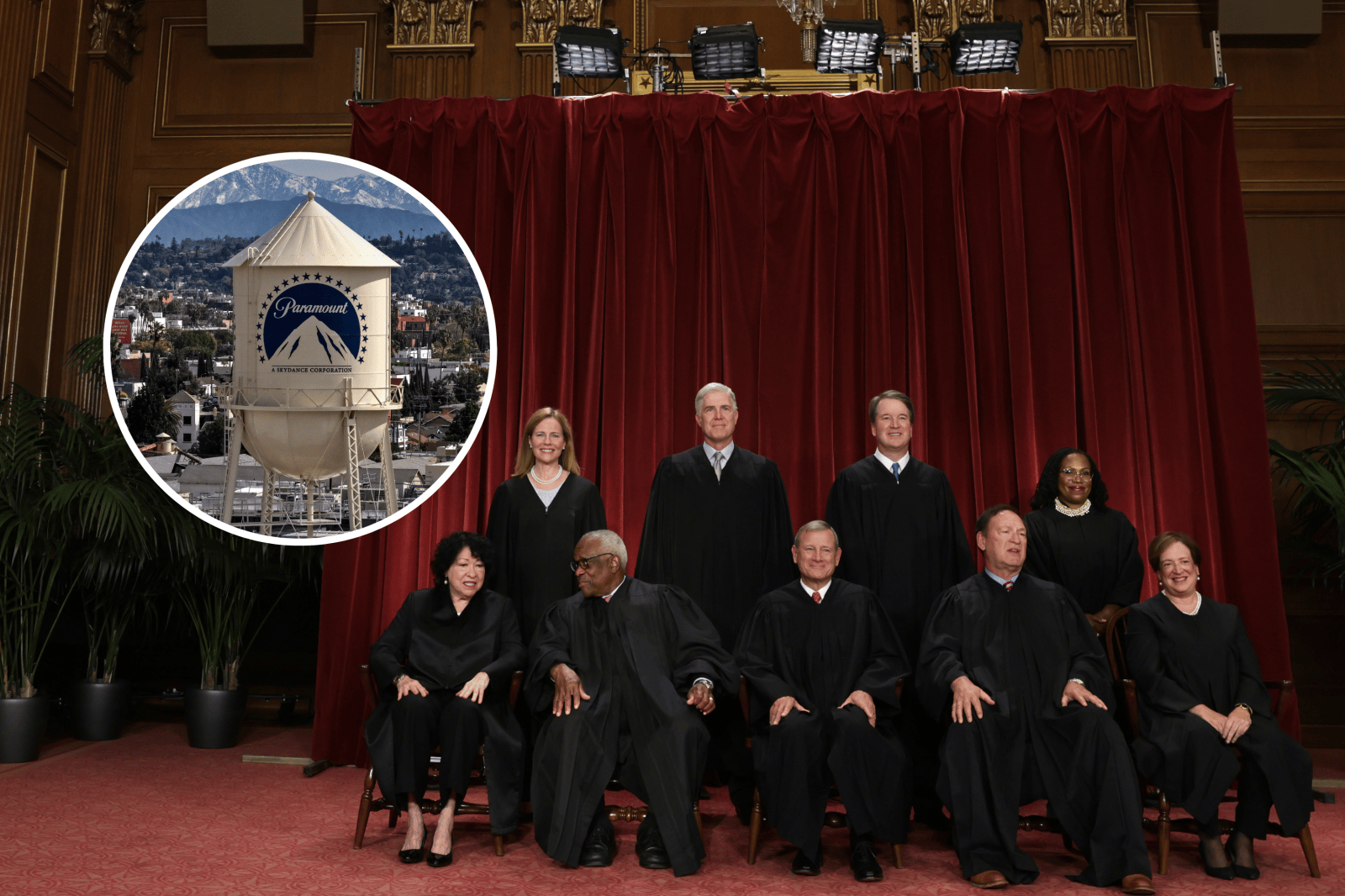
The Supreme Court recently engaged in arguments for the case of Salazar v. Paramount Global, which may impact digital privacy litigation. This case revolves around the Video Privacy Protection Act (VPPA) of 1988, a law designed to safeguard consumers’ personal information. The central issue for the Court is how this law applies in the current digital age.
Michael Salazar, the plaintiff, contends that Paramount violated the VPPA by sharing details of videos he watched on 247Sports.com with Facebook, without his consent. These actions, he argues, are prohibited under the 1988 law. He has pursued similar legal challenges previously.
On the other hand, Paramount argues that Salazar does not qualify as a protected consumer. They assert that subscribing to a newsletter does not equate to subscribing to a video service, isolating the case’s crux to the nature of Salazar’s subscription.
Paul Clement, representing Paramount Global, utilized several analogies. He compared Chick-fil-A’s hypothetical video offerings on their website, emphasizing that such provisions do not make a business a video service provider.
Chief Justice John Roberts questioned Clement’s choice of analogies, noting they favored Paramount’s stance. Clement humorously defended his approach, which elicited laughter from the justices. Roberts suggested focusing on complex hypotheticals, promoting a probing exploration of the law’s application.
Understanding the Supreme Court Arguments
The term “consumer” under the VPPA is a focal point. Salazar’s legal team argues that a newsletter subscription suffices, which differs from the previous court’s decision. Other rulings have interpreted such subscriptions as qualifying someone as a consumer.
Clement suggested that the statute is being repurposed inappropriately to include individuals not directly linked to audiovisual subscriptions. He argued that the law should be interpreted within its original context, maintaining focus on strict definitions.
Salazar’s attorney, Joshua Hammack, highlighted that Paramount seeks to restrict the VPPA’s scope unfairly. He emphasized that Congress specified where limitations apply, stressing that the statute’s definition of a consumer is broader than Paramount suggests.
The Significance of the Video Privacy Protection Act
The VPPA emerged from a controversy involving video rental records of Robert Bork, a Supreme Court nominee. It was enacted to protect consumer privacy following public backlash over Bork’s rental records being leaked.
As the case progresses, the justices will deliberate the nuanced definitions and broader implications of privacy laws in the digital era. Their decisions will reflect on how modern interpretations of old laws can balance emerging privacy concerns with existing legal frameworks.
The Supreme Court’s ruling on the case is anticipated before the end of its current term in June 2027, alongside considerations of other critical issues this term, including voting rights and climate change lawsuits.