
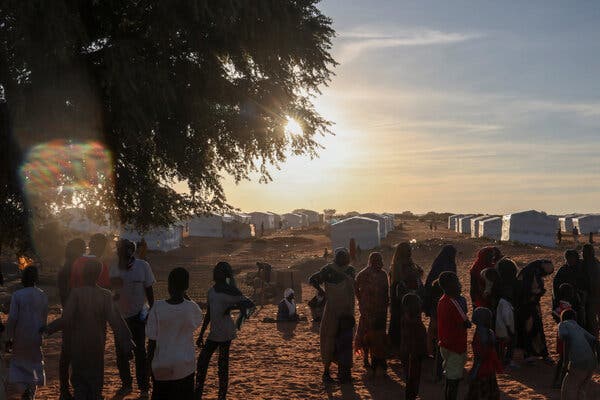
Photo Credit: Amr Abdallah Dalsh/Reuters
Five months after the United Nations reported acts of genocide in Sudan, another human rights catastrophe looms.
The Rapid Support Forces (RSF), a rebel group notorious for committing atrocities, has stationed itself outside El Obeid, a critical city in Sudan. Nearly 600,000 residents face severe shortages of essential goods. The RSF has already carried out lethal drone attacks on civilians.
The signs from El Obeid are clear and unmistakable: Another human rights catastrophe is unfolding in Sudan,said Volker Türk, U.N. High Commissioner for Human Rights.
Despite Sudan’s dire situation, its conflict often goes unnoticed. The wars in Ukraine and the Middle East fit larger global political narratives. Africa, on the other hand, suffers from racial and economic double standards and receives less attention. Sudan’s prolonged state of war also contributes to the perception that peace efforts are futile.
These excuses are unacceptable and exacerbate the conflict’s devastating impact. Independent monitors estimate Sudan’s war has caused between 150,000 and 400,000 deaths. Millions have been displaced, with many fleeing to neighboring countries. The region risks further destabilization as the conflict persists.
The global community must intensify efforts to stop the violence and displacement in Sudan. The threat to El Obeid requires immediate action. The United States can leverage its influence over Egypt, Saudi Arabia, and the UAE to restart peace talks and broker a cease-fire.
The U.S. should renew its commitment to peace in Sudan to protect civilians from threats of assault, torture, and death. Achieving peace will be challenging. Since gaining independence in 1956, Sudan has experienced coups, civil wars, and the Darfur genocide.
Sudan’s conflict is primarily ethnic rather than religious. Although over 90% of its population is Muslim, the division lies between an Arab majority and various non-Arab Black groups. During the Darfur genocide, Arab militias killed hundreds of thousands of Black civilians.
The current conflict began when dictator Omar al-Bashir cut fuel and wheat subsidies in 2018, sparking protests. In 2019, the military and private militias united to overthrow the government. However, their temporary alliance gave way to division, sparking civil war. The factions vie for control over territory and resources like gold and oil, with both sides committing atrocities.
The Sudanese Armed Forces, led by Gen. Abdel Fattah al-Burhan, are recognized by many as the country’s head of state. They have links to the Muslim Brotherhood and support from Iran and Egypt. The United Nations accuses them of war crimes, including torture and chemical weapon use.