
Jenney Bitner cherished her family’s yearly visits to her mother in San Diego. For her children, it was a two-week stay at their grandmother’s. For Bitner and her husband, it was a break from the wet February weather in Washington. The 2020 trip held additional significance as Bitner, 22 weeks pregnant, anticipated family time during the latter half of her pregnancy.
After a single day, Bitner experienced severe sickness: headaches, nausea, vomiting, and dizziness. Two urgent care visits suggested they were pregnancy symptoms. Doubtful, Bitner awaited answers from her obstetrician. Back in Washington, Bitner fell twice, prompting her husband to insist on an emergency room visit.
An MRI revealed a massive brain tumor. Doctors planned surgery to remove as much as possible. Tests identified Stage IV melanoma spread to her brain—a startling diagnosis as melanoma typically presents with skin lesions. When the disease reaches this stage, the five-year survival rate is about 35% according to the American Cancer Society.
“I had just turned 38, and I was pregnant with my fourth kid,” Bitner recalled. “I was thinking, ‘I’m too young for this to be happening.’ I was thinking, ‘There’s no way I’m going to make it through this. I’m never going to see this baby survive to a year old.’ I was terrified.”
Bitner’s treatment options required aggression. The initial surgery couldn’t remove all the tumor without causing brain damage. Tests found a sizable cancerous nodule on her back. Immunotherapy was necessary but posed risks to her unborn child, necessitating a premature delivery.
Bitner experienced severe symptoms leading up to the delivery. A scan revealed the tumor regrew rapidly in weeks. Alongside immunotherapy, another brain surgery was needed.
“I had these three and a half children, and my thought was, ‘I’m not going to see them grow up,'” Bitner said. “I started writing them letters, like, all these things that I was going to want to say to them, because I didn’t think I’d be there to say it to them.”
On May 4, Bitner’s son, Marcus, was born prematurely. Weighing 3 pounds 12 ounces, Marcus required NICU care. Bitner’s husband described him as “a fighter” and “feisty.” A week later, Bitner underwent surgery, successfully removing the tumor.
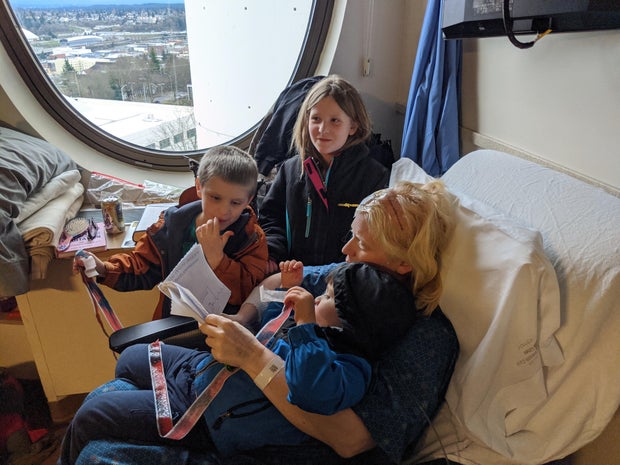
Bitner and Marcus were discharged on the same day, bringing joy to their family. Her older children eagerly met their baby brother.
“And so begins the sleepless nights. I’ll take ’em,” Bitner’s husband wrote in his journal.
In June 2020, Bitner began immunotherapy, aimed at enhancing her immune response to combat cancerous cells. Early progress included diminishing nodules near her lung, thigh, and brain.
Despite rare side effects, including allergic reactions and encephalitis, Bitner’s therapy proved successful. By October 2020, her oncologist announced she had no evidence of disease.
Dr. Alicia Zhou of the Cancer Research Institute highlighted the transformative impact of immunotherapy, offering hope and potential cures for patients like Bitner.
“Before immunoncology, we weren’t really able to say the word ‘cure’ for these patients who were suffering from Stage IV metastatic disease, and now we can,” Zhou said. “It’s truly transformational for these patients.”
Nearly six years later, Bitner not only defied expectations but actively champions immunotherapy research and treasures her time with family.
“I feel like every day I’ve had since all this has happened has been a gift. I shouldn’t have had all this time, and so I take every day as something precious,” Bitner said. The chaotic house is now a blessing, filled with sounds she once feared she’d never hear.