
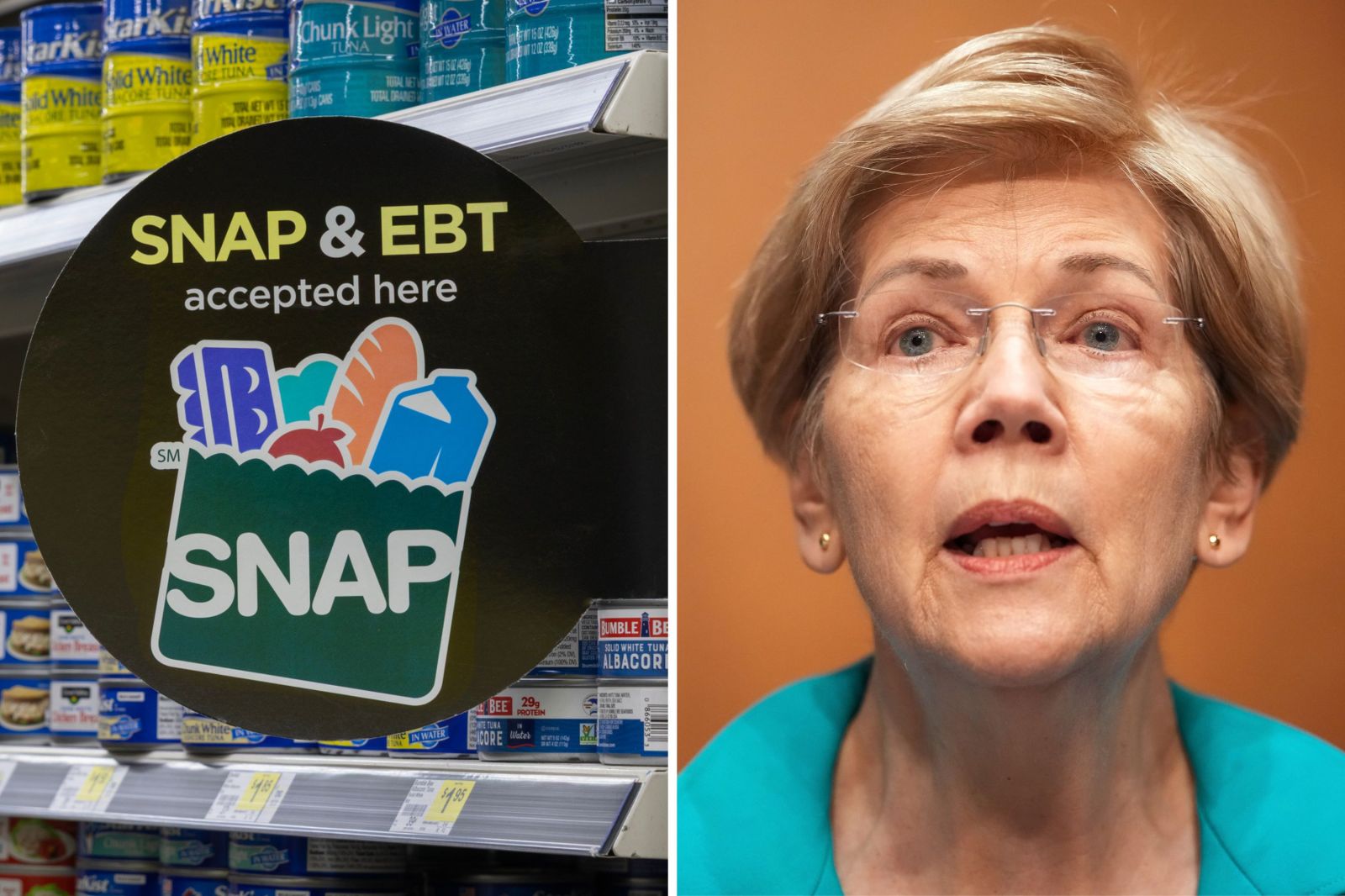
Senator Elizabeth Warren has issued a warning about a significant funding shift for the Supplemental Nutrition Assistance Program (SNAP). She highlighted that states might soon face a major crisis due to changes in federal funding. This shift involves the federal government’s reduced contribution from covering 50% of administrative costs to only 25%.
Warren expressed her concerns on X. She insisted that states should not be forced to choose between essential services like SNAP and other critical public needs.
“States are about to face an ‘existential crisis’ as the federal government slashes its share of SNAP funding from 50% to 25%,” Warren stated. “Families shouldn’t have to choose between food and rent. States shouldn’t have to choose between SNAP and schools. Congress must reverse these cuts.”
This funding change is part of President Donald Trump’s One Big Beautiful Bill Act (OBBBA), effective July 4, 2025. Moving forward, states might have to pay a portion of the food benefits, potentially shifting billions from Washington to state budgets.
New SNAP Cost Rules
Previously, the federal government covered 100% of SNAP food benefits. Administrative costs were split 50-50 between the government and states. However, the OBBBA alters this setup.
From October 1, 2026, the federal government will cover just 25% of administrative costs, transferring 75% to the states. The USDA projects this change will shift approximately $16.9 billion in spending to states from FY2027 to FY2031, averaging $3.4 billion annually.
Beginning October 1, 2027, states must contribute to SNAP benefits if their payment error rate exceeds 6%. Those with lower error rates will not contribute. States with error rates between 6% and 7.99% contribute 5%, between 8% and 9.99% pay 10%, and those at 10% or more pay 15%. The initial year allows states to use the lower error rate from 2025 or 2026.
A Senate committee proposal aims to delay this cost-sharing by a year, but no full Senate consideration has occurred yet. Under current law, October 1, 2027, remains the implementation date.
Potential Financial Impact on States
According to the Center on Budget and Policy Priorities (CBPP), a think tank, estimates based on USDA’s 2025 error rates suggest 35 states and one U.S. territory could face a cost burden. The shift could transfer about $9 billion from the federal government to states in FY2028 alone. Nearly half of states may owe $100 million or more.
Some states with high 2025 error rates, such as Alaska, Delaware, Georgia, Illinois, New Mexico, and Oregon, qualify for a delay and will not pay the full share immediately.
Republicans Advocate for Increased State Accountability
The Trump administration, alongside Republicans, argues that these changes prompt states to minimize improper payments. A national SNAP payment error rate of 10.62% was reported in FY2025, equating to roughly $10.1 billion in combined overpayments and underpayments.
Agriculture Secretary Brooke Rollins emphasized the need for increased state accountability. Senate Agriculture Committee Chairman John Boozman and House Agriculture Committee Chairman Glenn Thompson echoed the sentiment, viewing the reforms as measures to better use taxpayer money.
Budget Concerns for States
Governors and officials have expressed concerns that the new expenses may lead to difficult budgeting decisions. The National Governors Association and other groups have warned Congress about the potential threat to program viability. They urged a delay in funding requirements while states adjust.
For example, New York’s officials project that the new costs could lead to as much as $1.4 billion annually in SNAP expenses. The breakdown includes $1.2 billion for benefits and over $200 million in administrative costs shared at various governmental levels.
California anticipates over $1.8 billion in new benefit expenses and another $600 million in administrative costs, cumulatively increasing costs by nearly $2.5 billion each year. These financial pressures could challenge the state’s ability to balance its budget effectively.
The CBO predicts varied responses from states, ranging from accepting new SNAP costs to altering eligibility or benefits. Some might even contemplate leaving the program altogether due to reduced federal funding.
For more information, please contact Daniel Orton and Sam Wilson, Newsweek editors.