
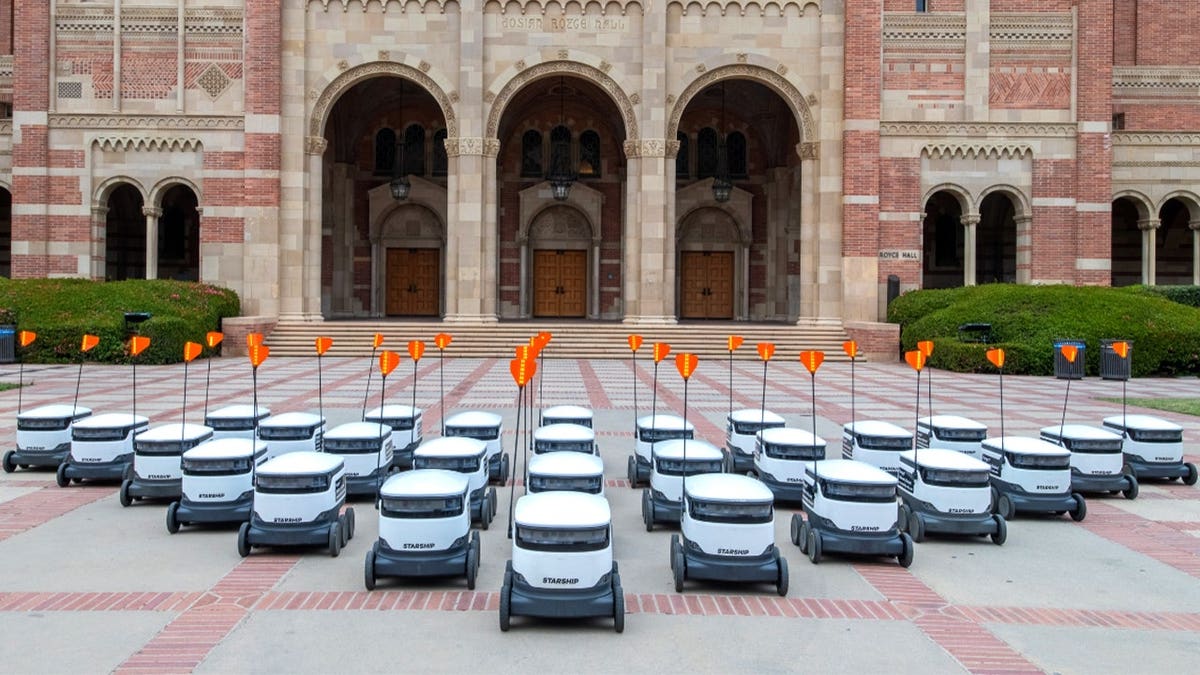
Fox News now offers audio versions of their articles. Starship Technologies has announced a shift in its strategy regarding its delivery robots. The company will reduce its operations on U.S. university campuses and will redeploy over 1,200 robots to focus on grocery chains and hot food delivery across cities in the U.S. and Europe.
These robots are familiar to many who have seen them traversing college sidewalks, delivering snacks, and becoming part of the campus culture. Now, Starship Technologies aims to test its robots on city sidewalks, which pose a new and challenging environment compared to the controlled settings of university campuses.
Starship Technologies has made this move to focus on areas with higher demand. The company projects a significant growth trajectory in grocery delivery operations, driven by major retailers in both the United States and Europe.
Currently, in Finland, Starship Technologies completes around one in five grocery deliveries through its robots. To expand this model, robots formerly used on U.S. campuses will join the company’s grocery delivery efforts.
The change marks a major transition from the initial role these robots played on college campuses, providing convenience and learning opportunities.
Why College Campuses Were Ideal for Initial Testing
Starship Technologies launched its U.S. operations at George Mason University in 2019. The campus setting provided an excellent testing ground for the robots as students needed food delivery services at odd hours and were open to using new technology. During the COVID-19 pandemic, contactless delivery became particularly valuable, enhancing the utility of these robots.
The transition from campuses will be gradual, with Starship coordinating with universities and partners to ensure service continuity until the 2026-2027 school year. This move is part of preparations for scaling up activities in grocery and restaurant delivery.
The Challenges of Moving to Urban Sidewalks
Deploying robots in cities comes with challenges due to the diverse activities on urban sidewalks. Robots must navigate effectively around pedestrians, strollers, and people with mobility aids. Instances have been reported of robots causing inconveniences by blocking curb ramps or getting stuck.
Chicago has expressed concerns regarding the safety of sidewalk delivery robots, indicating the need for Starship to address these issues to ensure robots are accepted by city dwellers.
The Importance of Grocery Delivery
While college students order simple snacks, grocery deliveries typically involve heavier items and require efficient logistics. The potential for cost savings in grocery deliveries is substantial, as Starship’s robots can operate more economically than traditional couriers.
With the global food delivery market valued at $650 billion, a successful integration into grocery delivery could be significant for Starship Technologies.
Estonia’s Role in Starship’s Development
Founded in Tallinn, Estonia, in 2014, Starship continues to rely on its engineering and AI development teams based there for advancements.
The Future of Delivery Robots on Sidewalks
This transition highlights the evolving role of delivery robots. While campuses helped boost their popularity, their performance in grocery delivery will gauge their success. Ensuring these robots do not disrupt sidewalk use is crucial.
If you start seeing more robots in urban neighborhoods, observe their behavior and how they interact with pedestrians. It’s important to have clear guidelines and ensure robots don’t hinder accessibility.
Kurt ‘CyberGuy’ Knutsson provides his insights through newsletters and reports, offering tech tips, security alerts, and exclusive deals. For more information and to access his Ultimate Scam Survival Guide, visit CyberGuy.com.