
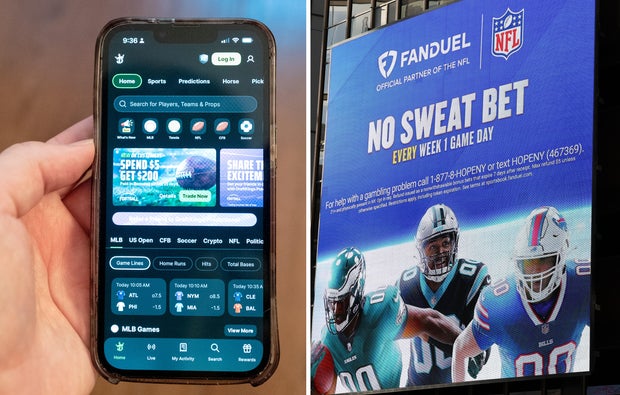
Meta’s recent agreement to pay $17.1 billion in penalties and change policies over claims of addictiveness has sparked interest in similar issues in sports betting. Attorney Jennifer Hoekstra, who previously won a case against Meta, has filed 15 lawsuits against major sports betting apps FanDuel and DraftKings. These legal actions assert that the apps are designed to be addictive.
“I represent individuals who have lost homes, families, and futures over this,” Hoekstra said. “It’s similar to how social media hooks users with notifications and workflows.” As online sports gambling has gained popularity, wagering reached $167 billion last year, according to the American Gaming Association. Concerns over financial impacts like increased bankruptcies are growing.
A UCLA study noted a 25% rise in financial distress in states that legalized sports gambling. The National Council on Problem Gambling reported 8% of adults experienced problematic gambling behaviors. Despite these concerns, gaming companies strongly defend their practices. FanDuel claims they invest in responsible gaming and removed over 5,700 people for gambling issues.
FanDuel, with 18 million users, spent $158 million on responsible gaming initiatives. They argue against implications of fostering addictive behavior. However, strategies are in place to keep users engaged, as a former FanDuel employee revealed.
“It’s about slowing them down, not cutting them off,” he noted.
The apps offer incentives like VIP perks to encourage continued betting. Users receive rewards similar to casino hospitality. Esteban Ruiz-Haynes became a VIP member with FanDuel, enjoying access to exclusive sports experiences.
Despite benefits, there are risks. Louis Ruggiero, a recovering gambling addict, recounted his story of heavy losses and VIP offers. He emphasized the dangers, labeling such treatment as “predatory.” Companies extensively collect data to monitor users and prompt them back into gambling if engagement falls.
Hoekstra’s lawsuits leverage a legal theory applied in a California social media case. That case argued platform designs caused addiction and harm, which the jury upheld, leading to damages against social media firms. Hoekstra aims to adapt this argument for gambling apps.
While DraftKings refrains from commenting on ongoing litigation, they emphasize their responsible gaming efforts. They claim to provide tools for users to manage spending and engagement, backed by a dedicated team.
Critics acknowledge tools available for responsible gaming, but they highlight instances like Ruggiero’s to argue structural flaws. Joe Maloney from the Sports Betting Alliance contends most users gamble for entertainment, not wealth.
If gambling poses issues, resources and help are available through the National Problem Gambling Helpline and Gamblers Anonymous.