
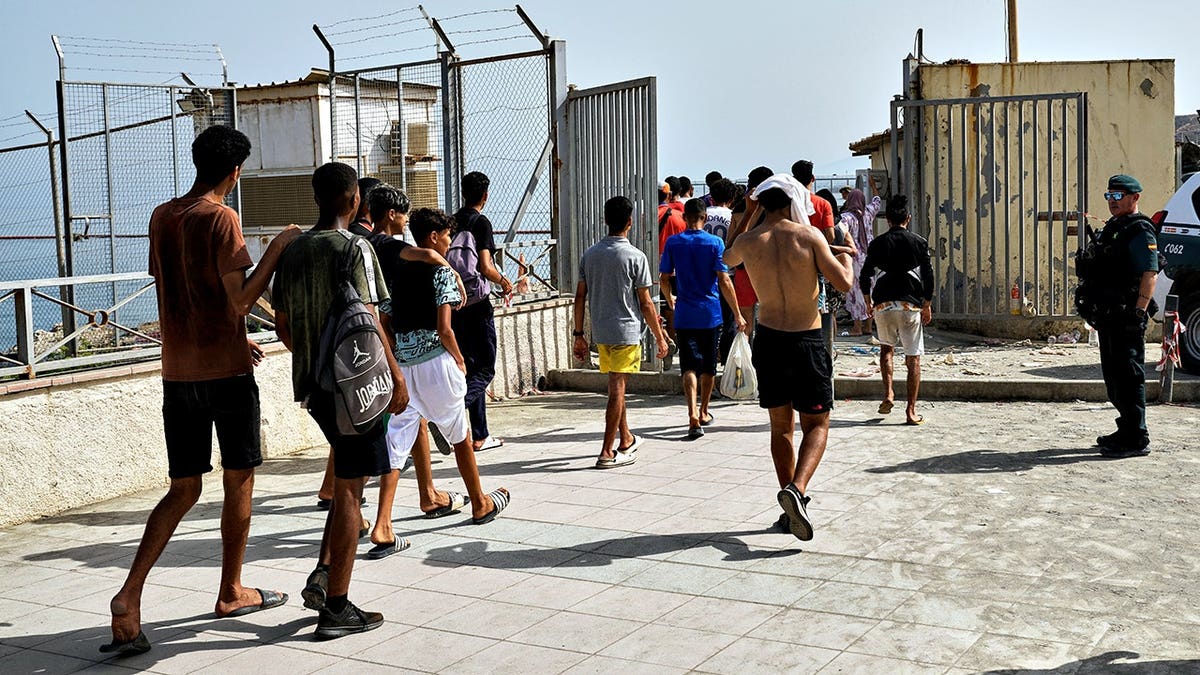
At least 72 migrants have died after attempting to enter the Spanish enclave of Ceuta, marking a severe crisis at Europe’s borders. Spanish authorities continue to search the waters surrounding Ceuta, hoping to find additional victims after an estimated 50,000 to 60,000 migrants, primarily young men, entered the small territory situated in North Africa.
Authorities report that many migrants drowned during their crossing attempts, while others died in a stampede near a barrier. The influx temporarily increased Ceuta’s population of around 84,000 by over half. As of Sunday, some migrants have returned to Morocco, while others remain in Ceuta or try to evade detection.
The situation has intensified political debates on immigration within Spain and throughout Europe. Far-right leaders are demanding more stringent border controls and the expulsion of migrants still in the area. Santiago Abascal, leader of Spain’s Vox party, dubbed the migrant influx an “invasion” and criticized the Spanish government for not securing the borders effectively.
Tensions flared when European Parliament member Alvise Pérez encountered counterprotesters at a rally in Ceuta. He eventually took refuge in a nearby bar until police escorted him to safety.
Local residents have expressed their sorrow over the loss of life. Karima Abenaz, a French visitor with family in Morocco, told Reuters, “It pains me deeply that young people are dying at sea. It’s not right that, in the year 2026, women with children as young as two months old should be crossing the sea only to die.” She emphasized the availability of resources in Morocco and suggested advocating for rights instead of risking lives at sea.
Other residents, including Mohamad Abdelkader Driss, a waiter in Ceuta, argued that the authorities are to blame. “If you open the border, of course everyone comes in, but the young men aren’t to blame. The authorities are responsible,” he said.
Some Ceuta residents worry about the impact on the city’s multicultural reputation, historically home to Christian, Muslim, Jewish, and Hindu communities. Concerns about security and the potential for future crossings were also raised.
The U.S. State Department has upgraded its Travel Advisory for Ceuta to Level 3: Reconsider Travel, citing the potential for dangerous security situations due to the uncontrolled arrival of migrants.