
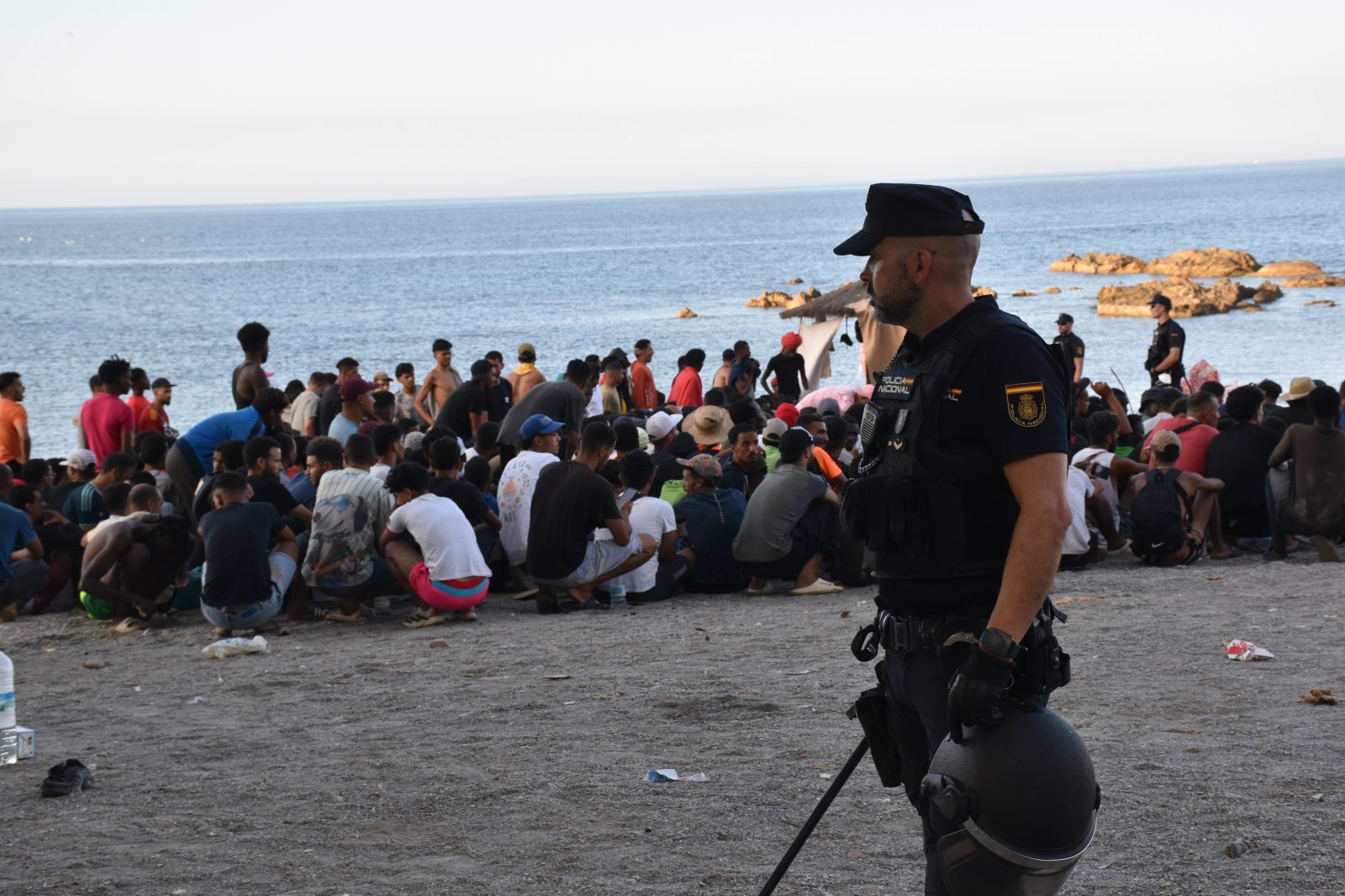
Spain’s Foreign Minister, José Manuel Albares, has committed to returning all individuals who entered Ceuta irregularly back to their countries of origin. The sudden arrival of approximately 72,000 people in the autonomous city from July 30 to 31 has strained the region and affected Spain’s diplomatic relations.
Ceuta, situated in northern Africa and bordering Morocco, has a population of about 84,000. During the rapid influx, Spanish authorities deployed additional police and military personnel to manage the situation. Tragically, at least 80 individuals lost their lives as some tried to enter by swimming around the border fence or crossing by land.
Albares, speaking from Ceuta, emphasized cooperation with Morocco in returning its citizens. He met with Ceuta’s conservative leader, Juan Jesús Vivas, who noted that approximately 11,000 people from the influx remain in Ceuta.
The Spanish government reports that most returned to Morocco by early August, leaving around 2,000 individuals. Asylum applications are an option for those fleeing conflict, and unaccompanied minors will receive hearings with local officials.
Vivas previously described the situation as an “invasion” and demanded the “immediate expulsion” of individuals who entered illegally.
Ceuta and Melilla represent the only land borders between the European Union and Africa and occasionally experience surges of migrants attempting to reach Europe. Spanish Prime Minister Pedro Sánchez labeled the events a “violation and attack of Spain’s territorial integrity,” attributing the influx to human trafficking gangs.
Social media misinformation, including false claims that the Ceuta border was open due to a Supreme Court ruling, fueled the crisis. The court had ruled against immediate expulsions of new arrivals by sea without due process.
The incident also strained Spain’s relationship with Italy, where tensions arose following the crisis. Italy’s right-wing leadership, led by Prime Minister Giorgia Meloni, began checking Spanish travelers, prompting a reciprocal response from Spain.
Spain criticized some European countries for their “polarizing” and “selfish” reactions, as Prime Minister Sánchez accused them of spreading “fake news.” Although Spain is part of the European Union and Schengen Area, allowing free movement, these rules do not apply to Ceuta.
Albares urged migrants to avoid risking their lives and resources on a “doomed” journey to Ceuta.