
The Kospi index in South Korea experienced a substantial decrease of over 11% on Tuesday. This drop resulted from significant selling of chipmaking stocks. The decline reflects fears that the boom in artificial intelligence might be a bubble. Other Asian markets followed a downward trend and U.S. futures also saw slight decreases. Oil prices dropped as well.
Trading on the Kospi was temporarily halted as the index fell to its lowest point since April. Stocks of key chipmakers, such as Samsung Electronics and SK Hynix, saw a notable decline. The Kospi ended at 6,012.68 following an 11% tumble. Samsung Electronics’ shares fell by 13.1%, and SK Hynix saw a decrease of 13.5%. The U.S.-traded shares of SK Hynix dropped below its $149 IPO price, settling at $143 per share on Monday.
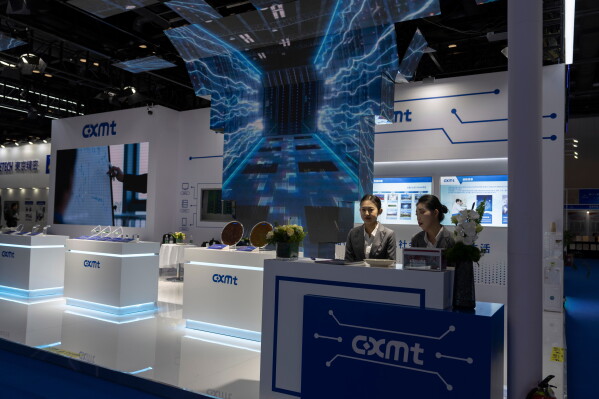
Market analysts pointed out that competition from Chinese AI startups and chipmakers is raising concerns. This could potentially affect the earnings of major global companies that have seen a surge in stock value in recent months due to AI interest. For example, Chinese memory chipmaker CXMT saw a 466% increase at its trading debut, raising $8.6 billion in its Shanghai IPO.
Tensions rose further when The Information reported that China has started mass production of deep ultraviolet (DUV) chipmaking tools. Jing Jie Yu, an equity analyst at Morningstar, mentioned that China’s advancements in chipmaking equipment might have triggered market concerns. However, Yu noted that the panic sell-off is likely an overreaction, saying that the key positions of global chipmakers would remain secure.
Other Asian markets also faced declines. Tokyo’s Nikkei 225 fell 4.3% to 62,127.57. Taiwan’s Taiex skidded 4.7% with TSMC shares falling 3%. Hong Kong’s Hang Seng slightly moved to 25,196.42, and the Shanghai Composite went down by 1.4% to 3,805.06. Meanwhile, Australia’s S&P/ASX 200 saw a 0.4% increase to 8,932.90. India’s Sensex dropped by 0.1%.
Oil prices continued their downward trend amid diplomatic efforts between the U.S. and Iran. Brent crude decreased by 0.5% to $85.48 a barrel. It had been around $72 per barrel before the Iran conflict began in February. U.S. benchmark crude fell 0.4% to $82.25 a barrel.
In the U.S., the S&P 500 rose by less than 0.1%. The Dow Jones added 0.5%, while the Nasdaq composite edged down by 0.2%. Major chipmakers like AMD experienced a 5.2% dip, while Nvidia and Micron Technology saw respective declines of 5% and 2.3%.
In currency exchanges, the U.S. dollar slightly fell to 163.71 Japanese yen. The euro remained steady at $1.1369.
Report by Kurtenbach from Bangkok.