
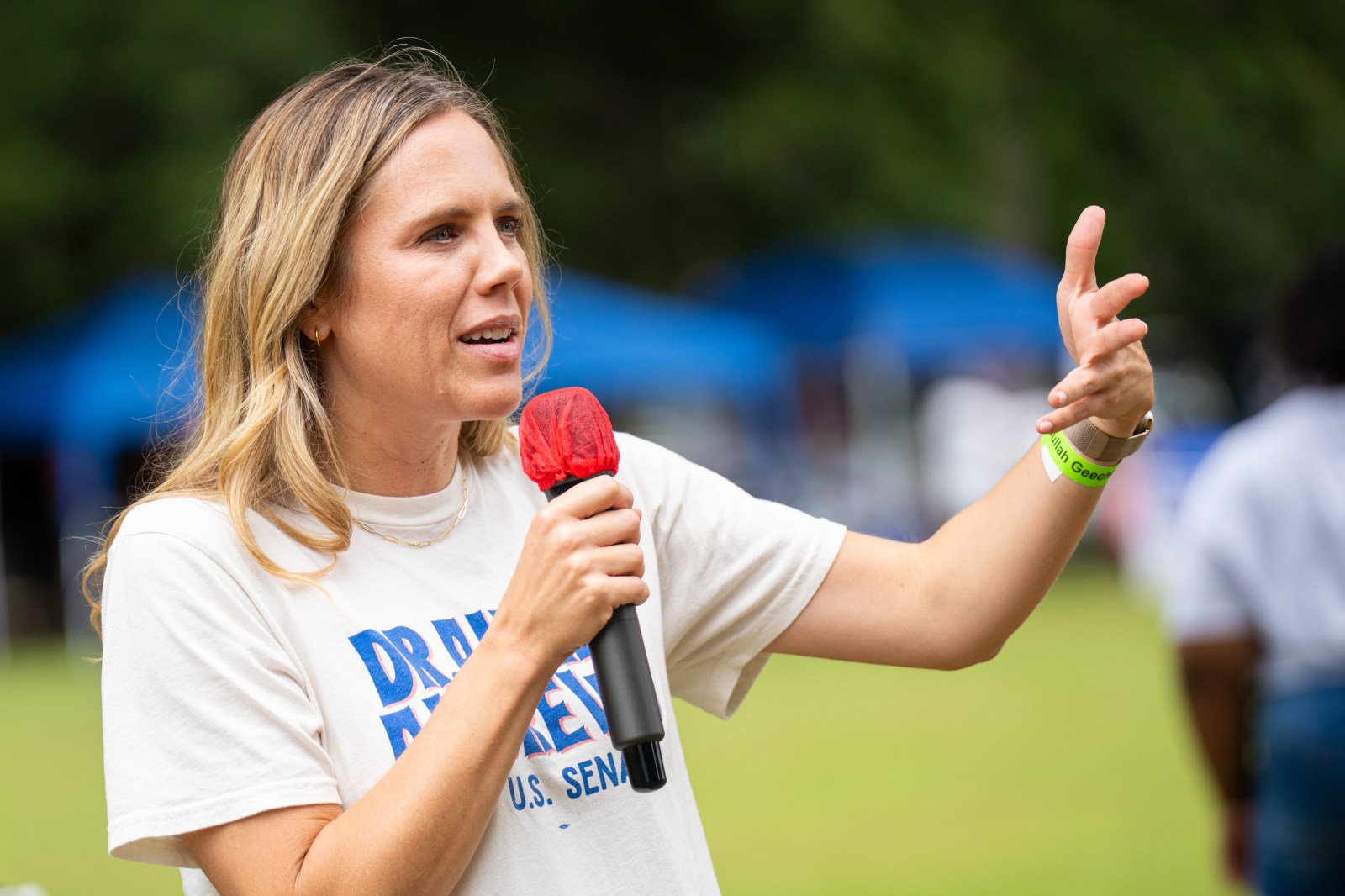
Republicans Darline Graham and Ralph Norman have progressed to the runoff in the South Carolina Senate primary. They will compete against Democrat Annie Andrews in the November general election to succeed the late Senator Lindsey Graham. As no candidate surpassed 50 percent in the special primary, the two leading candidates, Graham and Norman, will advance to the runoff. CNN and AP announced this shortly before 9 p.m. ET on Tuesday.
Despite backing from President Donald Trump, Graham, Lindsey Graham’s sister, received 32.6 percent of the vote on Tuesday. Norman garnered 24 percent. The Democratic side had no primary, as Andrews, a pediatrician, secured the nomination in June during the regular primary.
The special primary election followed the death of Lindsey Graham, who served South Carolina in the Senate since 2003. He passed away on July 11 due to an aortic dissection. His sudden death required Republicans to choose a new candidate, as he had already secured the party’s nomination in June.
At Trump’s suggestion, Republican Governor Henry McMaster appointed Darline Graham to complete Lindsey Graham’s term. However, Andrews faces a difficult task in South Carolina, a state that last voted Democratic at the presidential level in 1976. The state supported Trump by 18 points in 2024, maintaining its strong Republican alignment. Some Democrats hope for a competitive race in 2026 due to Trump’s declining approval ratings and rising concerns over living costs and inflation.
Norman addressed his supporters, acknowledging that he might not have been their first or second choice. He expressed his desire to unite voters by appealing to their shared interests. Norman had sought Trump’s endorsement, which he did not receive, but he emphasized that the state’s voters, not Trump, will decide the next senator.
“I want everybody to unite and come with us because we’ve got the right message,” Norman stated. “I’ve got a great resume that I’m proud of. I really feel like South Carolina and the country are at a tipping point.”
Concerning Graham, Norman looked forward to debates to understand her stance on key issues. He mentioned the importance of topics such as pro-life policies, the death penalty, and government spending.
In her statements to Newsweek, Andrews highlighted her efforts across the state discussing Medicaid cuts and gas prices. She noted a growth in her campaign’s fundraising efforts and expressed confidence in building support for her campaign.
Andrews criticized Republicans for their strong alignment with Trump, which she believes doesn’t match voters’ needs. She sees 2026 as an opportunity for South Carolina to possibly shift due to lack of incumbency and inefficiencies of the current administration in addressing key issues like gas prices.
Primary Key Takeaways
Following Tuesday’s primary, Graham and Norman advance to the August 25 runoff, leaving them a few weeks to win voter support. Early voting will be on August 19-21, as per the South Carolina Election Commission.
This election drew notable candidates, including Darline Graham, Representative Norman, Representative Russell Fry, former Governor Mark Sanford, and conservative Mark Lynch. Trump’s endorsement made Graham the frontrunner, yet it wasn’t enough for a victory in the special primary. Despite Trump’s support for Graham, polls indicated a tight race without a clear frontrunner.
Annie Andrews’ Prospects
Limited polling on the South Carolina seat existed due to uncertainties around the Republican nominee. Andrews’ internal poll showed a close race, but independent surveys, generally seen as more reliable, haven’t been publicized. Her internal poll showed a slight lead against Lynch and a narrow margin over others, except for Norman, who led by one point. The poll involved 577 South Carolina voters with a 4.1 percentage point error margin.
Republican metrics appear more favorable, as prediction markets show high chances for a Republican win. As of Tuesday evening, Republicans had an 87 percent chance on Kalshi and 91 percent on Polymarket. These markets operate through contracts tied to political outcomes, although they aren’t foolproof.
Elections forecasters like Cook Political Report and Sabato’s Crystal Ball deem the race a likely Republican win. Andrews remains optimistic about competitiveness but sees extremism within Republican ranks, feeling a need for a return to more centrist values.
South Carolina’s Republican History
South Carolina last voted for a Democratic presidential candidate in 1976. The state has traditionally favored Republican candidates in recent cycles, with Trump securing significant margins in past elections. South Carolina’s last Democratic senator was elected in 1998, with Ernest Hollings winning a seat in the Senate.
Democrats continue their efforts to increase competitiveness in South Carolina. The state has a significant Black population, with cities like Charleston and Columbia leaning Democratic. Despite this, rural areas and suburbs, alongside racial polarization, maintain the GOP’s strength.
In 2020, Democrat Jaime Harrison attracted media attention and funds in his bid against Graham but lost by about 10 points. In 2018’s “blue wave” cycle, McMaster won by 8 points, a narrow margin for South Carolina.