
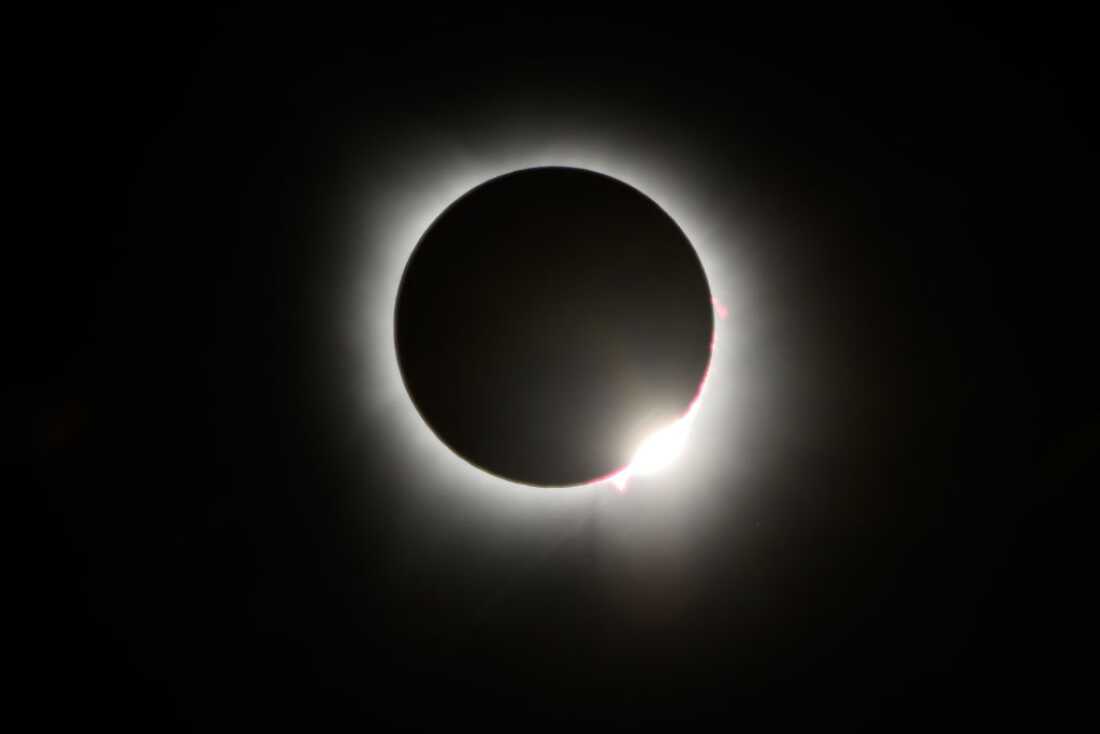
On April 8, 2024, a total solar eclipse will captivate observers at Lake Monroe in Indiana, U.S., as the Moon eclipses the Sun. This celestial event, captured by Edward M. Pio Roda, presents a rare visual phenomenon.
Totality Across Europe
Astronomers predict that people in Iceland, Greenland, northern Russia, Spain, and a portion of Portugal will witness a total solar eclipse. The Moon will entirely block the Sun, creating a moment of total darkness. The European Space Agency notes that Spain’s mainland hasn’t seen such totality since 1905.
In Reykjavík, Iceland, the eclipse is scheduled to start at 5:48 p.m. local time. Meanwhile, in León, Spain, totality will commence at 8:28 p.m. and last for two minutes.
Partial Eclipse in the U.S.
Across the northern U.S., from Alaska to North Carolina, a partial solar eclipse will occur. During this event, the Moon will not completely cover the Sun, leaving a portion visible. NASA reports that in Washington, D.C., the eclipse will start around 1:17 p.m. ET with roughly 4% coverage.
Safety Precautions
Viewing either the total or partial eclipse requires special protective gear. Eclipse glasses or handheld viewers with distinct filters are recommended. Regular sunglasses will not shield your eyes from the risks associated with looking directly at the Sun. The American Academy of Ophthalmology warns that direct exposure could lead to burns and permanent vision loss.
Scientific Exploration
This eclipse offers more than a spectacle for skywatchers. Scientists at NASA will leverage the event to study the Sun and atmospheric changes. They will deploy scientific balloons and a high-altitude jet during the eclipse. Kelly Korreck from NASA emphasizes that such eclipses provide unique study opportunities of the Sun’s outer atmosphere, or corona.
Future Eclipses
The next partial solar eclipse in the U.S. will occur on Aug. 2, 2027, visible from various parts of the country. Totality will be experienced in Spain, the Middle East, and parts of North Africa. On Aug. 23, 2044, another total solar eclipse will traverse parts of the contiguous U.S.