
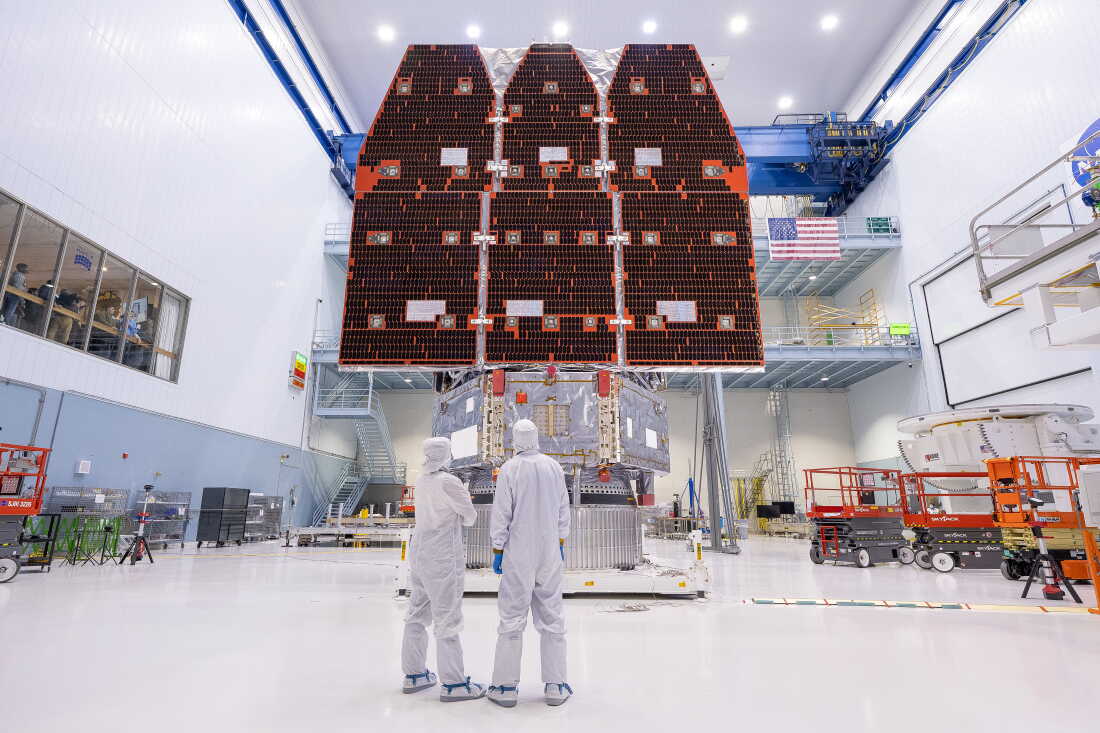
Technicians at NASA’s Goddard Space Flight Center in Greenbelt, Maryland, are scheduled to connect the inner and outer segments of the Nancy Grace Roman Space Telescope in 2025. The launch of this telescope from Florida marked a significant milestone after 15 years of preparation and $4 billion investment. The primary goal is to gather data on the universe’s expansion and uncover hidden planets in the galaxy.
Engineers at Goddard were tasked with delicate projects under challenging conditions. NASA’s decision to relocate scientists multiple times since last November affected the telescope’s preparations. Propulsion engineers had to conduct tests with inferior tools after the move led to the loss of specialized equipment. Staff at a radio communication lab faced similar issues, missing their $6 million antenna chamber before testing Roman’s antenna.
Seven current and former NASA scientists and engineers disclosed that relocations led to lost workspaces and valuable equipment. While NASA cited cost reduction and elimination of waste as reasons, it disrupted critical projects. Goddard’s compromised capacity impacts project timelines and NASA’s future ability to produce spacecraft.
NASA employees assembled components in Goddard’s specialized “clean room” in 2024. These moves add risk to space endeavors like Roman, which is a substantial taxpayer investment. Engineers recounted launching the GRITSS satellite prematurely due to missed testing opportunities, raising concerns about its efficacy.
NASA’s forced relocation during a government shutdown caused engineers to lose key equipment from a unique radio communication testing facility. Employees were hindered from retrieving their tools, affecting projects like the DAVINCI spacecraft exploration of Venus. Engineers lacked space to assemble components and plan without key lab features available.
NASA’s Office of Inspector General reported no disruption from the relocations, contradicting scientists’ statements to NPR. Equipment was auctioned, donated, or discarded without proper disposal procedures. Some auctioned items were classified as restricted due to their importance to national security, a point questioned by engineers.
NPR investigations found auction items, like the aspheric test blank, which originally cost NASA over $250,000, sold for fractions of their value. Equipment donated to Capitol Technology University occurred without consulting scientists, who later learned about the donation without the chance to reclaim their gear.
NASA’s workforce reductions impacted Goddard, losing a third of employees by 2025. This imbalance affected the agency’s ability to meet demands, with further budget cuts proposed. The upcoming White House budget request signals a 23% reduction from NASA’s budget in 2026, posing risks to agency performance, scientists warned.
“When packing our labs,” an engineer said, “we were told to pack as if we would never build another propulsion system again.”